Living with AIDS, a silent struggle
Confession of a seropositive mother.

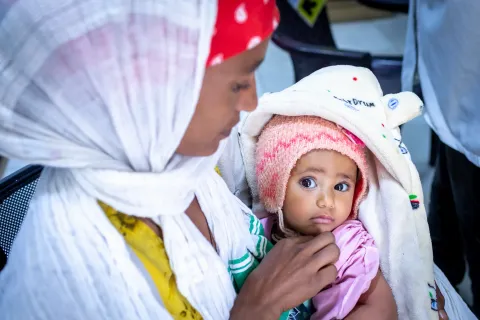
Tigist (the name has been changed) is a widowed mother with four children. She thought she had experienced the worst when she fled the conflict in northern Ethiopia. Until, during a routine blood test, she learned that she was seropositive.
"We had just arrived in the town of Debark," says Tigist. “In the school where all the families who had fled the conflict had taken shelter it was very cold. I got sick and it was only when, on the advice of the Social Worker, I had a blood test that I was told I have HIV. It was a shock for me, but I didn't tell anyone. Since that day, I live in fear of what people will think if they find out.”
To help people displaced by the conflict in northern Ethiopia, UNICEF, in partnership with the Bureau of Women, Children and Social Affairs, has trained and deployed teams of social workers. Their mission is to identify the needs and support the most vulnerable people living in internally displaced persons camps and within the host community.
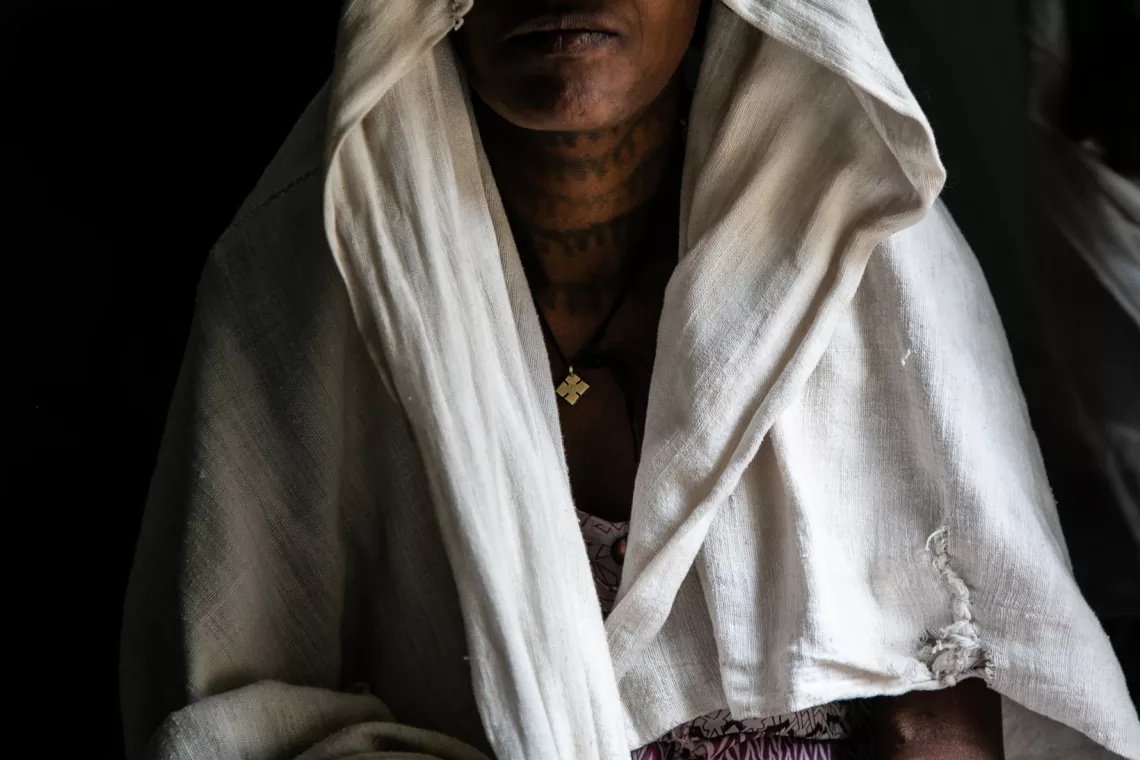
"Before the conflict, I had a small livestock farm with a few head of cattle," recalls Tigist. "We lived modestly since my husband died. The day I heard the first shots, I took my children and we left everything behind. After two months of wandering, walking and even sleeping outside sometimes, we finally reached the town of Debark."
"I know I am sick and I wonder what will happen to my children if anything happens to me.”
The conflict in northern Ethiopia had left thousands of families, women and children in a desperate situation. To help communities regain their normalcy and live their daily lives, UNICEF, with funding from the Swedish International Development Cooperation Agency (SIDA), has set up a humanitarian cash transfer programme to help the most vulnerable people buy essential goods.
"With the money I received from UNICEF (7,200 etb, about $135 for 3 months) I was able to buy clothes for the children and food," says Tigist. "Before that, we had no incomes and nothing to eat. The antiretroviral treatment made me very weak and it was my children who supported the household. They brought small income by doing daily labor activities like shoe shining. Of course, during this time they were missing school."
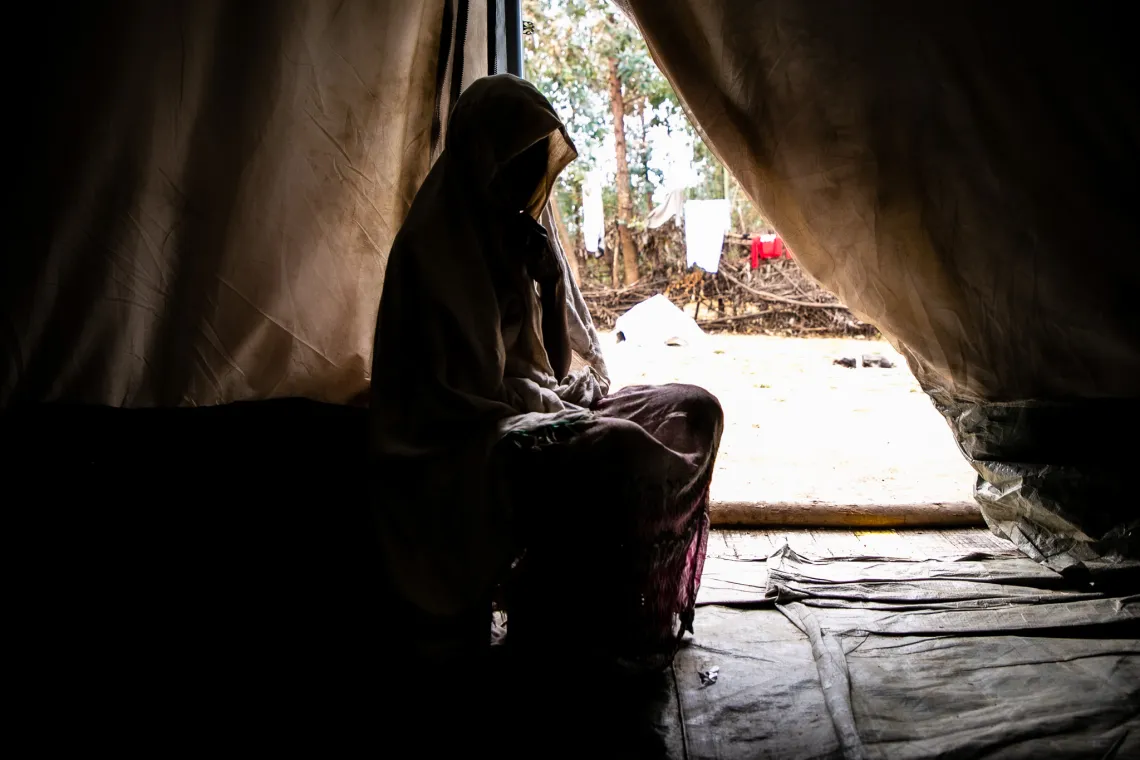
With funding of more than $3.6 million, the SIDA funding has already provided assistance to more than 68,000 internally displaced persons and conflict-affected people. The Humanitarian Cash Transfer programme particularly targets the most vulnerable: female and child-headed households, households with pregnant and lactating women, or persons with disabilities. Tigist now lives in a displaced person's camp for women, children, and elderly people, hoping one day to return to her normal life.
"I would like to return home but we are still traumatized by what we have been through." concludes Tigist. "Even though the situation has improved a little with the cash we received, I know I am sick and I wonder what will happen to my children if anything happens to me.”