A modest cash grant, a brighter future
UNICEF supported child grant programme help families improve their livelihood in Ethiopia
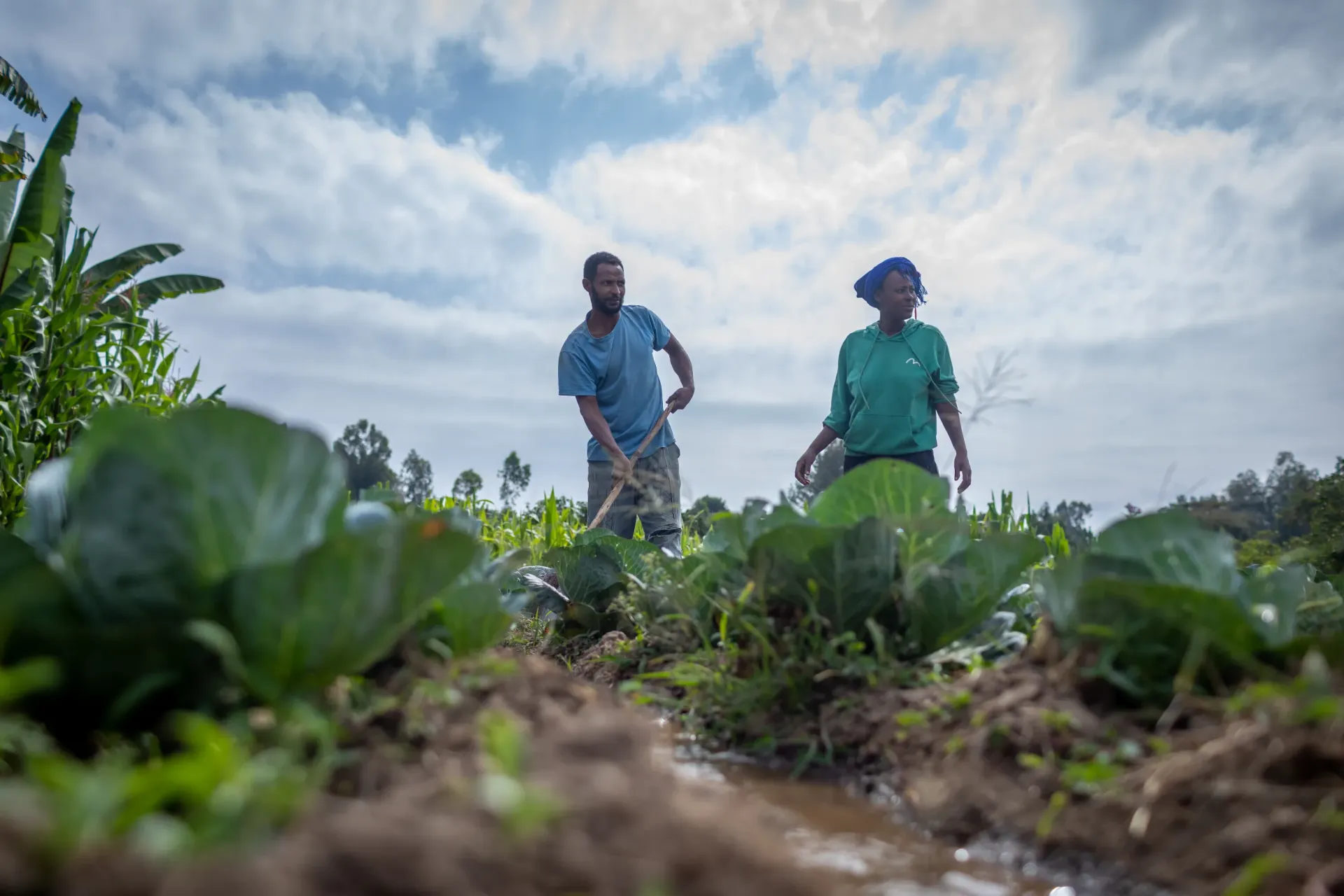
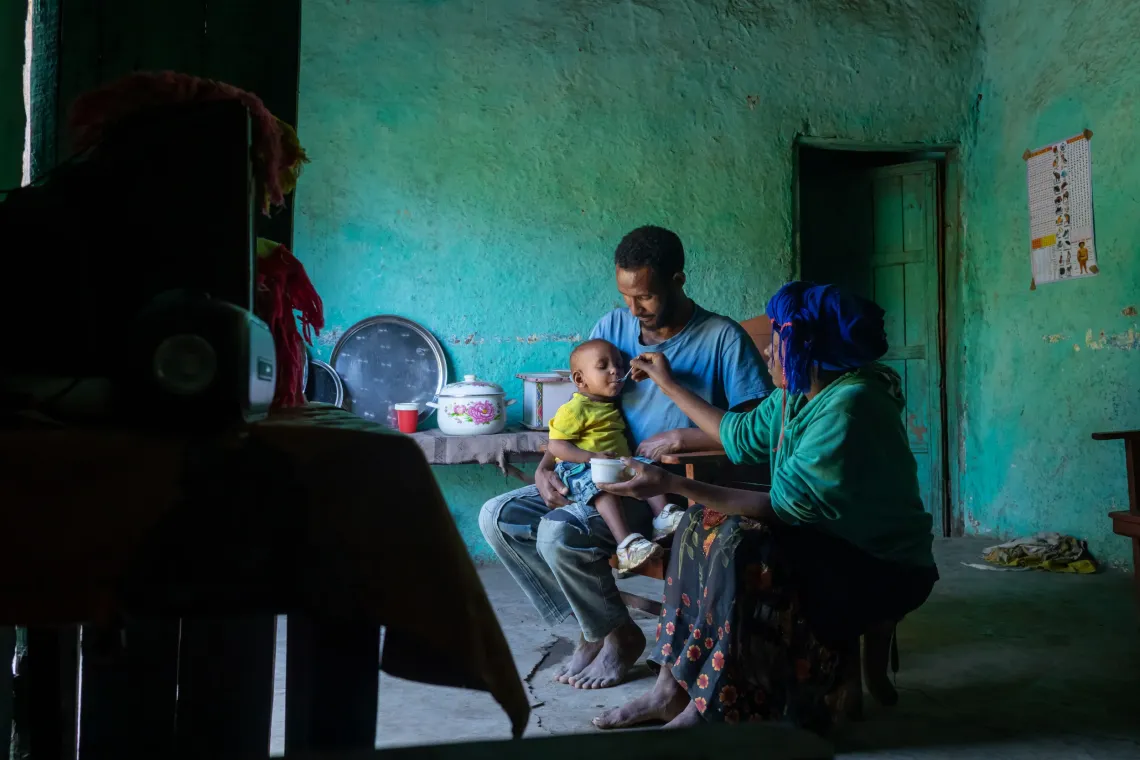
Shebedino, Sidama region, Ethiopia - As Tsehaynesh feeds her 18-month-old daughter a nutritious porridge made from corn flour, eggs and vegetables, her husband, Tariku, cradles the child in his arms. At home and on their farm, the couple work side by side, sharing responsibilities as they build a better future for their family.
Today, vegetables grow across their fields, and the family owns two cows and a goat with a young kid. Their livelihood has become far more secure than it once was.
"We are grateful for what we have now. We farm our own land, feed our children nutritious meals three times a day and live a much better life."
"We are grateful for what we have now," says Tsehaynesh. "We farm our own land, feed our children nutritious meals three times a day and live a much better life."
Yet just two years ago, the family's future looked far less certain.
Despite working hard to support their family through farming, Tariku and Tsehaynesh found it increasingly difficult to make ends meet. Rising seed prices, costly agricultural inputs and limited access to irrigation restricted farming to the rainy season, making it harder to produce enough food and earn a reliable income.
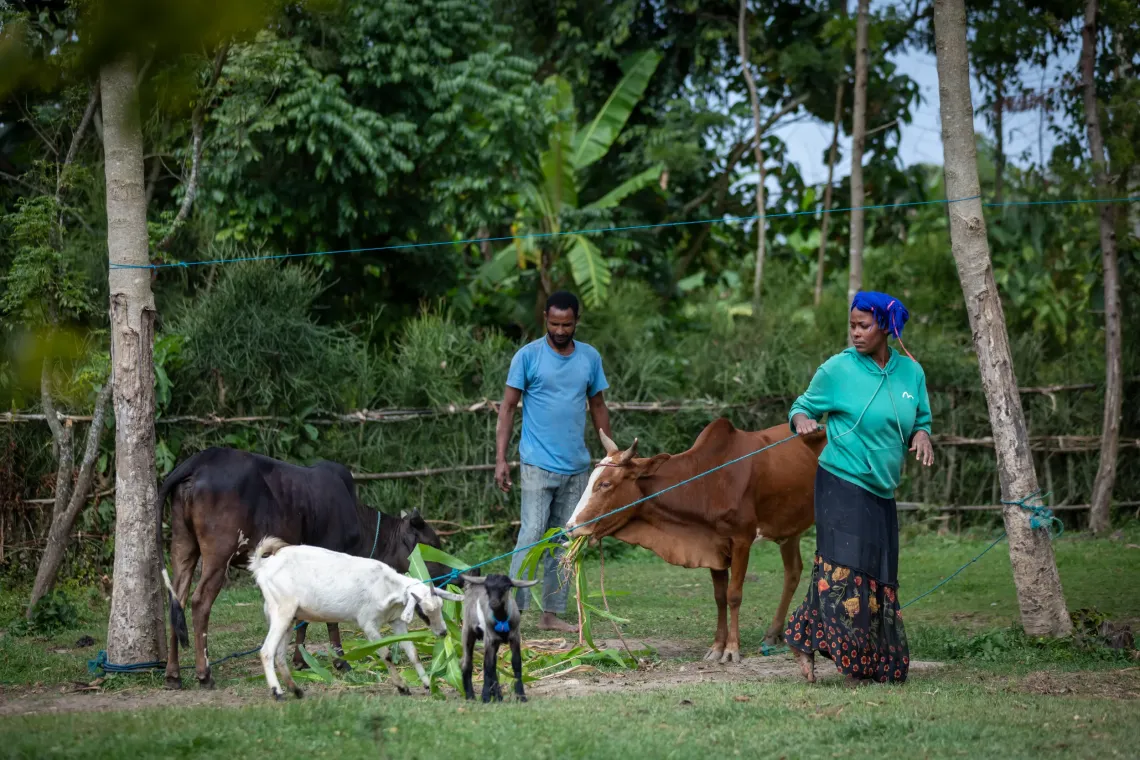
"We struggled to produce enough food for the year and feed our children properly," recalls Tsehaynesh. "Eventually, we had no choice but to rent out half of our farmland."
As the family's challenges mounted, support arrived at a critical moment.
With support from SIDA (the Swedish International Development Cooperation Agency), UNICEF provides unconditional cash transfers to vulnerable households with young children, helping families meet immediate needs while making small investments in their future. The child grant programme supports household food security and dietary diversity, particularly for pregnant women and children under one, while linking families to essential health, nutrition and education services. For families like Tsehaynesh's, the support provides an opportunity to build a more secure future for their children.
Over an 18-month period, Tsehaynesh and her family received monthly cash transfers and regular support from a social worker, helping them meet immediate needs while planning for the future.
"With the first payment, I bought a goat," says Tsehaynesh. "With the second, my husband planted chilli peppers. When we sold the harvest, we began earning additional income for our family."
As their vegetable sales generated more income and the cash transfers continued, the family gradually invested in new assets, purchasing a heifer and a calf and strengthening their livelihood.
"You start with one and work hard to get another," says Tariku. "Now the goat has a kid, and we expect the cow to give birth soon. Little by little, our assets are growing."
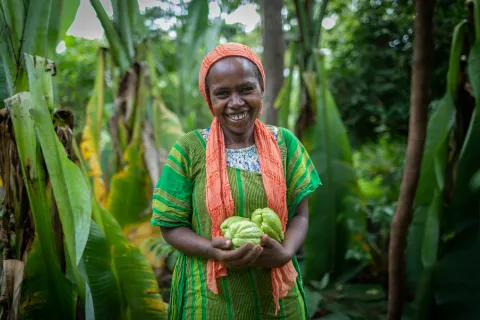
Access to irrigation has helped Tariku transform the family's farming activities. He now cultivates his land two to three times a year, increasing production of vegetables and other cash crops. Meanwhile, Tsehaynesh contributes to the family's growing income by raising poultry and saving through her village women's savings and credit group.
Increased income has enabled the family to put a wider variety of nutritious foods on the table. Fresh vegetables, eggs and goat's milk now complement their staple foods, helping to provide their three children with a healthier and more diverse diet.
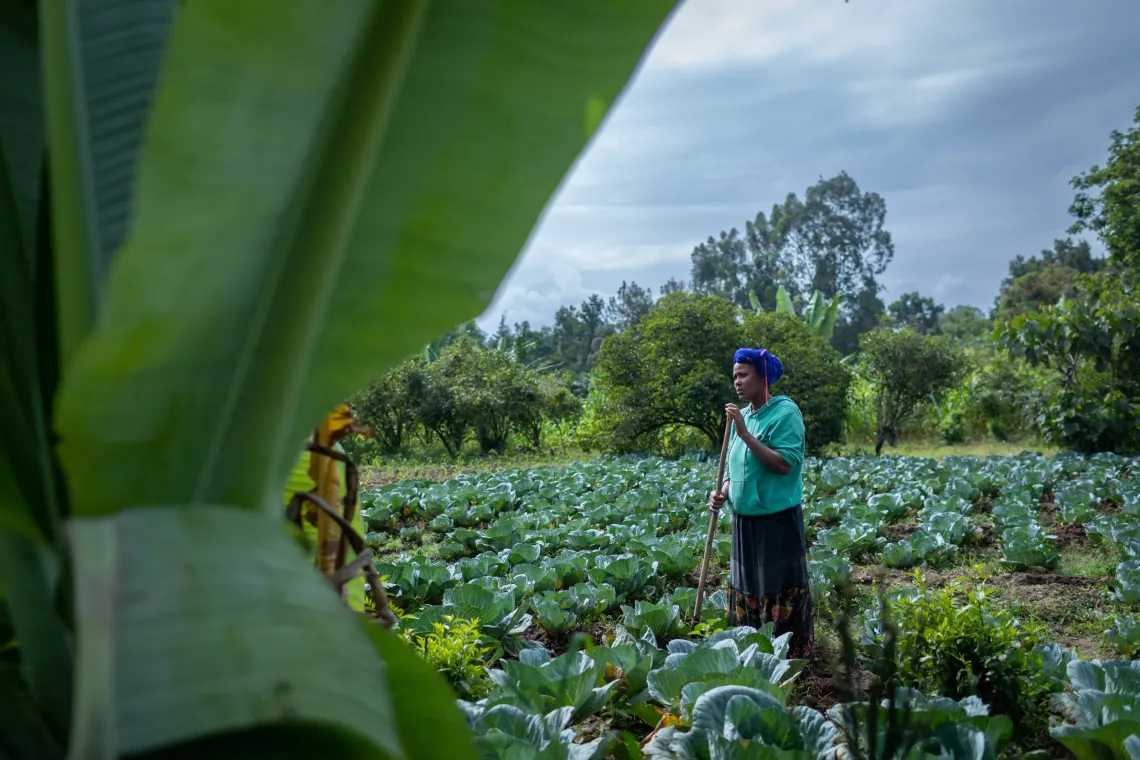
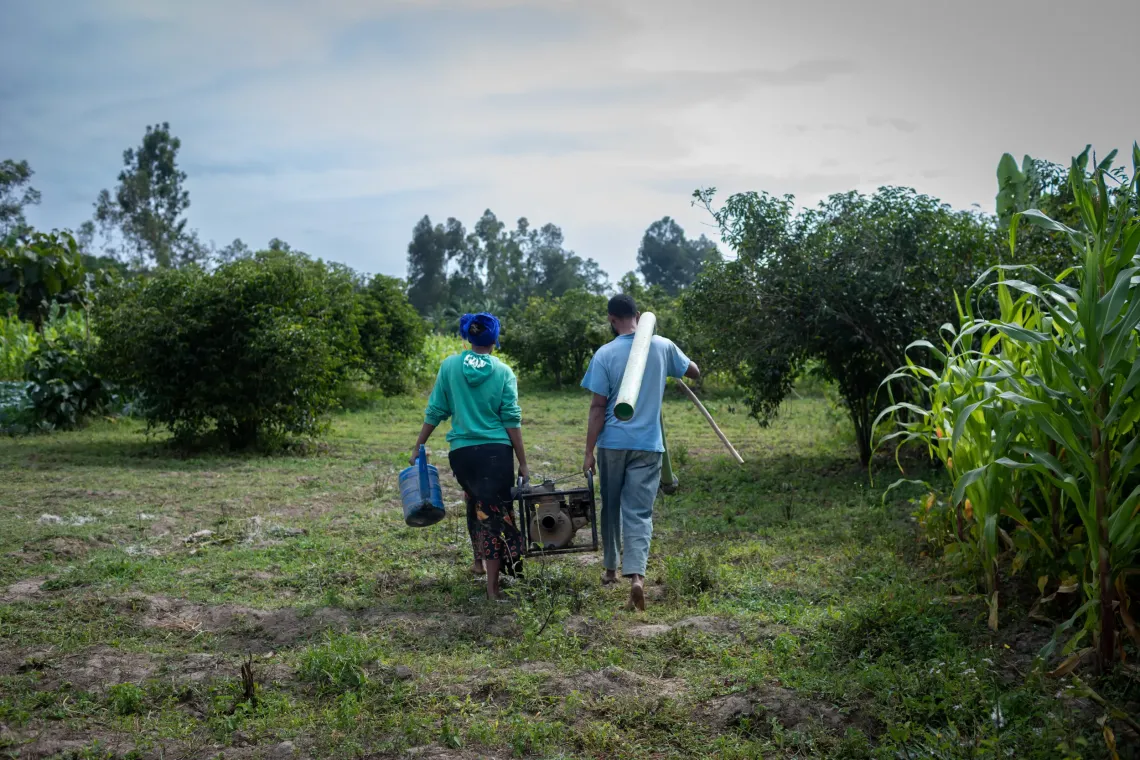
While the family's situation has improved, they continue to face challenges. They have not yet fully reclaimed their one-hectare farmland and still depend on a rented water pump for irrigation. Rising fuel prices also place pressure on the income they earn from farming.
"Our goal is to make full use of all our land so we can increase production and offset rising costs," says Tariku. "One day, I'm confident I'll be able to buy my own water pump."
The experience of families like Tsehaynesh's shows how timely support can help prevent vulnerable households from falling deeper into poverty. A modest cash grant, combined with livelihood opportunities and guidance from social workers, can help families build resilience, strengthen their incomes and create a brighter future for their children.