“Being a social worker is the best thing that happened to me”
Meet Ojulu Okello, a social worker from Ethiopia who helps vulnerable children in rural villages

Social workers are essential workers. In Ethiopia, they play a crucial role in providing case management and outreach and awareness-raising activities empowering communities to become better informed about child protection issues. Among them is Ojulu Okello, a social worker in the Gambella region of Ethiopia.
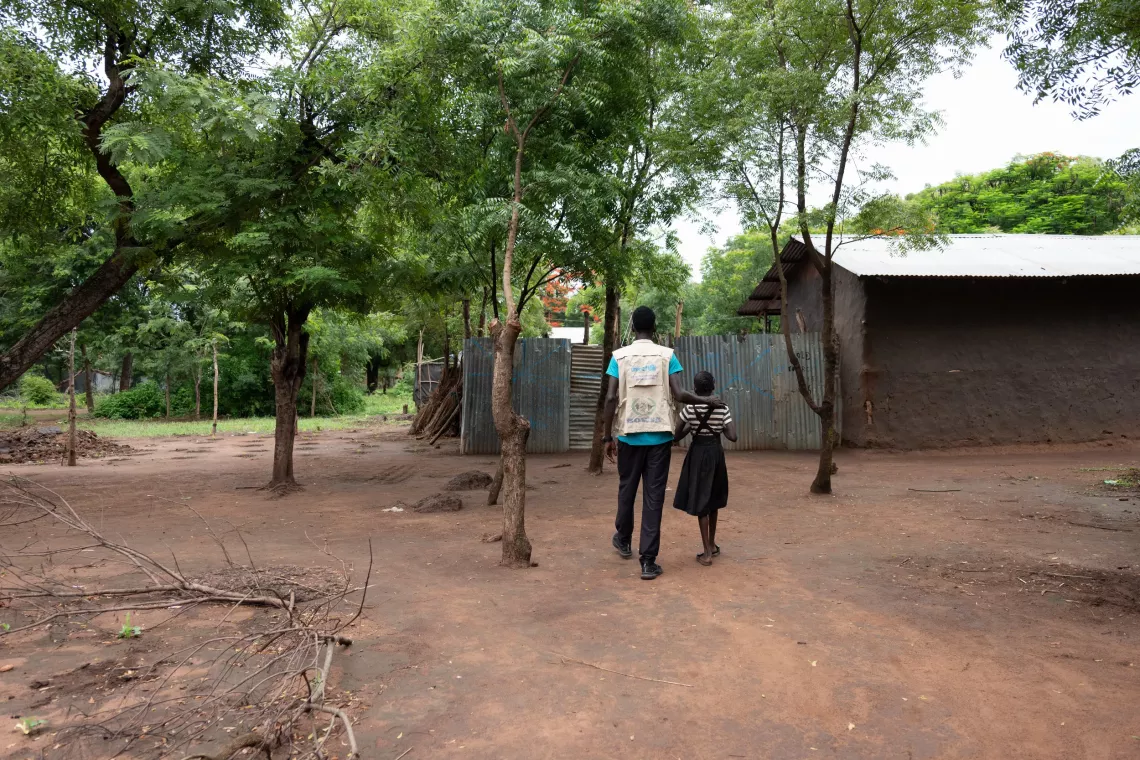
“The best part of my job is when I help vulnerable children in the villages recover from trauma,” says Ojulu Okello, a dedicated social worker who is always there to help his community. Ojulu played a critical role in reuniting abducted children with their families working closely with local authorities, elders, and families. His hard work made him the go-to person when it comes to child protection issues in the community.
“The role of social workers was not given enough attention by the community like health and education sectors previously,” says Ojulu. “But when they see that we can fill gaps that other sectors can’t, especially in the prevention of violence and harmful practices, the community started appreciating our contribution.”
“The best part of my job is when I help vulnerable children in the villages recover from trauma,”

Ariet [name changed to protect identity] endured an ordeal when she was abducted from her village. “When children like her are separated from their families, they often feel confused and unable to comprehend what is happening to them. So, as a case worker, I make sure that they get psychosocial support first,” says Ojulu.

Ojulu looks for creative ways to help children express their feelings while dealing with trauma. When children struggle to communicate their feelings through words, he encourages them to express themselves through drawing.

This technique works for many children including Ariet, who is slowly beginning to open up. During one of their sessions, she draws a picture of her house, the very place she missed when she was taken away, then she continues drawing her school and her friends and family members.

She is now reunited with her family, thanks to the hard work of Ojulu and the local authorities’ intervention. Still, there is a long way in her recovery. And Ojulu keeps visiting her to see how she is coping.

“As a case worker, I know that I have an added responsibility for solving problems in our community,” says Ojulu. “Sometimes, I must travel long distances crossing a river. It is not easy, but it gives me a sense of fulfilment doing my everyday job.”
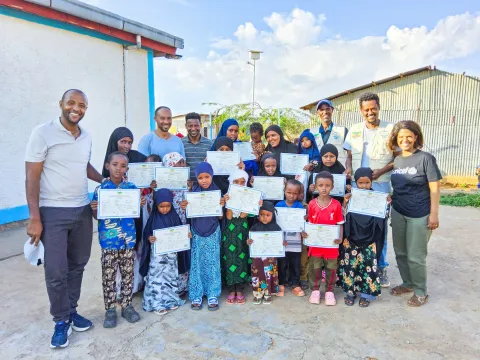
UNICEF advocates and supports the deployment of social workers in rural villages to help vulnerable families working closely with Women and Social Affairs Offices. In the Gambella region of Ethiopia, UNICEF, with support from the Government of Norway, has deployed 55 social workers and 6 supervisors. These essential workers are raising awareness of child protection issues and empowering communities to protect children from potential violence and harm. Social workers also provide case management services to women and children facing violence and refer them to essential services.