Inside the milk preparation room
In drought and conflict-affected areas of Southern Ethiopia, lifesaving nutrition supplies help children recover from severe malnutrition

The effects of drought, conflict, and displacement spiked cases of child malnutrition in the Konso zone of southern Ethiopia. According to the Zonal Health Department, the number of severely malnourished children increased from 1,800 in 2021 to 2,500 in 2023 putting pressure on the Karat Hospital where severe cases get care and treatment. UNICEF, with thanks to funding from the European Union, is providing lifesaving nutrition services thanks to the dedication of health workers like Amsalu Hailu. While health workers are busy saving children’s lives, we make sure that enough supplies are in place to support their work. Amsalu leads the milk preparation in the hospital’s stabilization centre and here is how he does it.
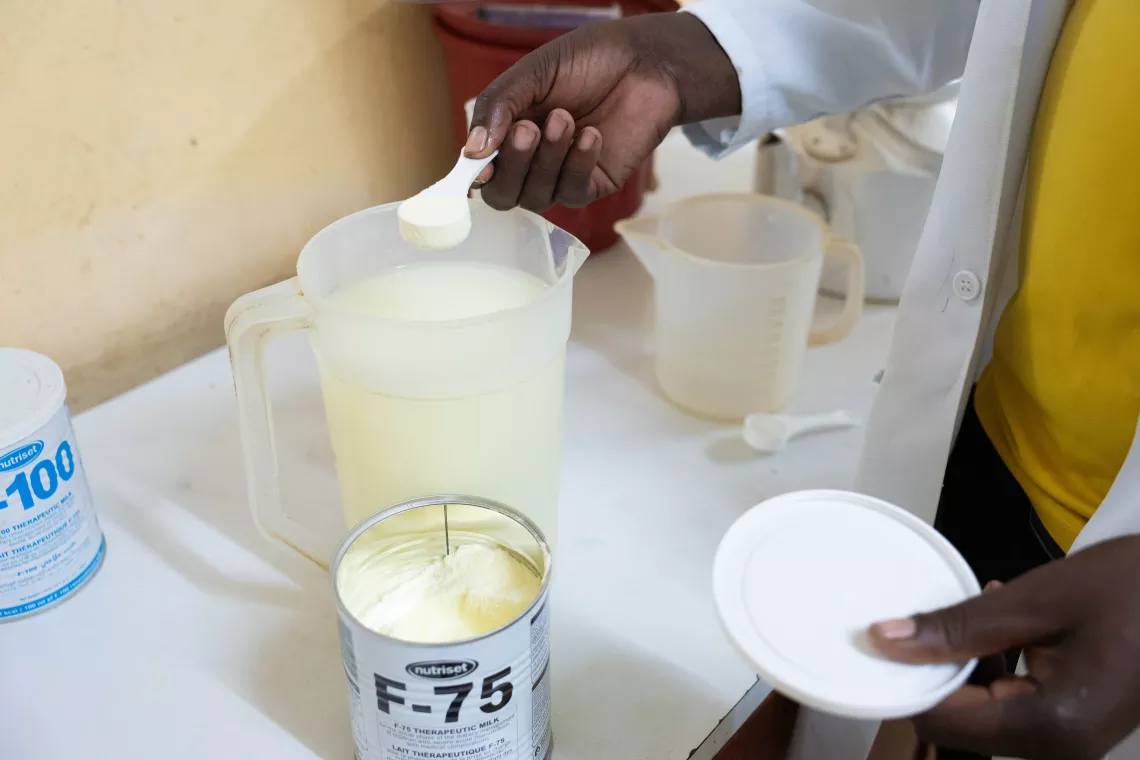
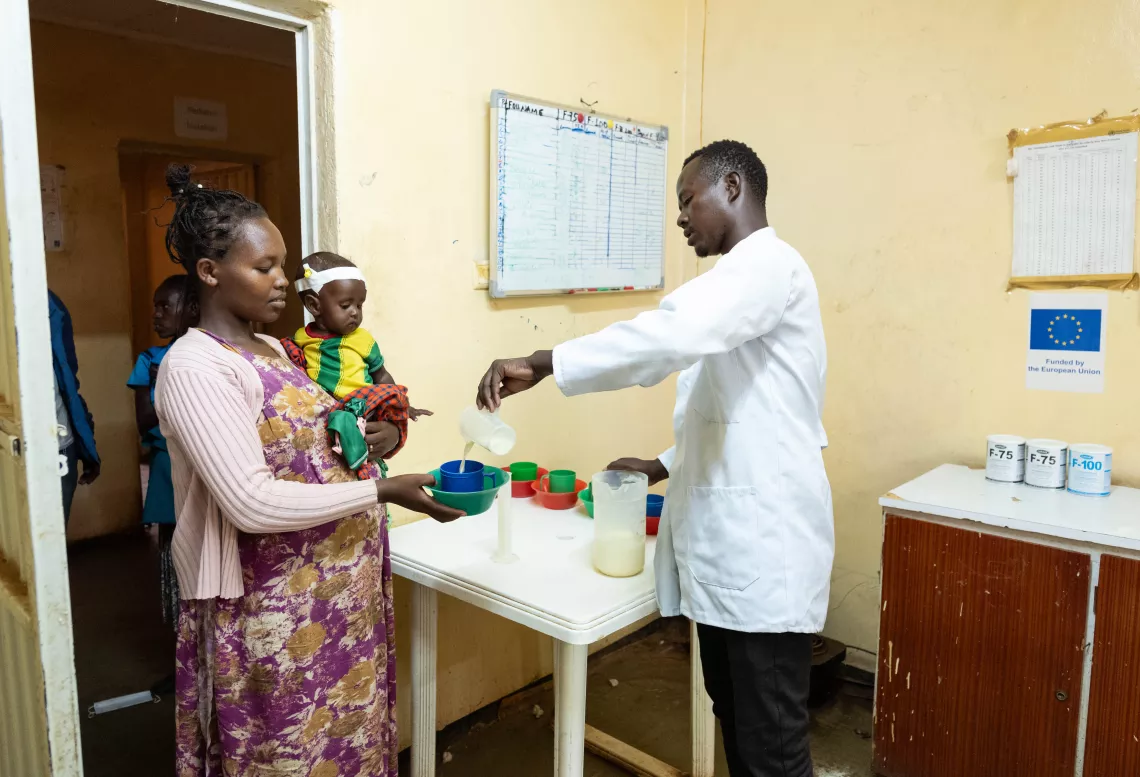
After reviewing his handover document, Amsalu makes a calculation on how much milk is needed for the afternoon treatment. The list on a whiteboard mounted on the wall shows there are currently 24 children with Severe Acute Malnutrition (SAM) and other medical complications. He scoops the powdered milk into a sterilized jar and pours mildly boiled water. Depending on the conditions of the children, he prepares the F-75 and F-100 treatment formulas.
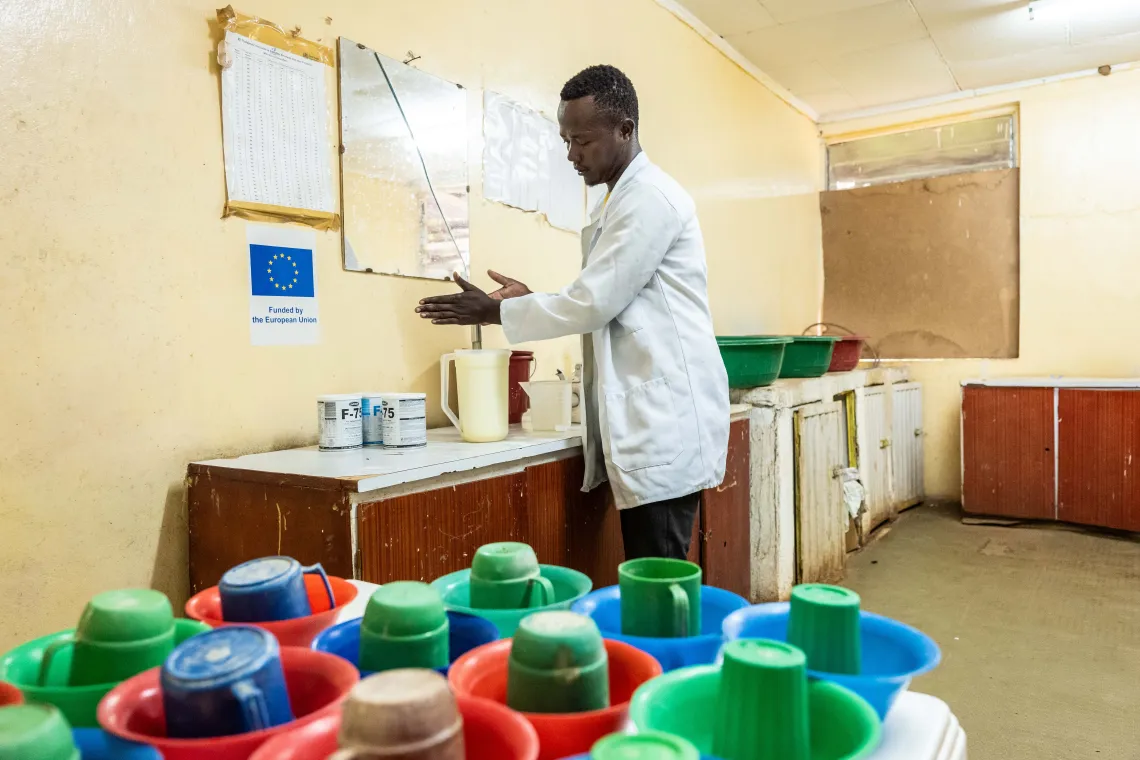
Then he stirs it thoroughly. “The milk preparation needs to be done with care. Each millilitre matters and I must get the composition right,” he says.
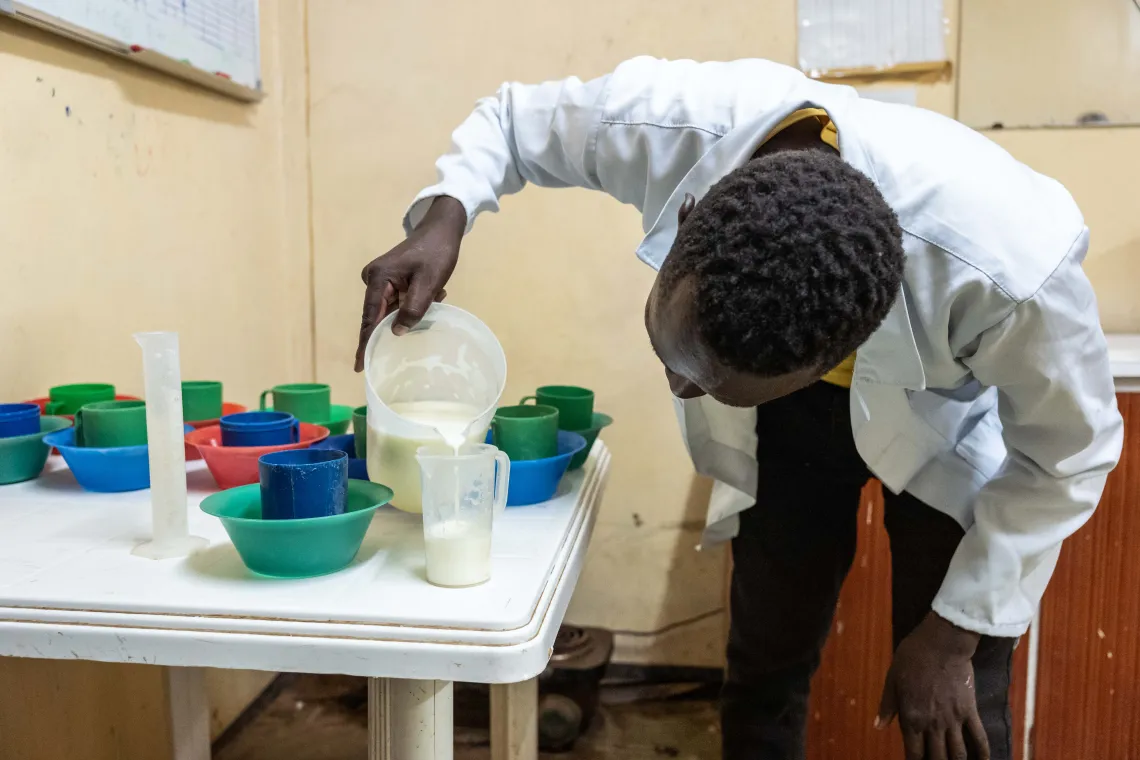
He carefully pours the formula into a smaller measuring cup. The lifesaving milk is now ready to be served.

Amsalu’s next task is to ring the bell so that mothers and caregivers know that the milk is ready. “This is our alarm system,” says Amsalu smiling. “When I ring the bell, they know what to do. It is the best moment in my daily routine. The milk is ready for the children, and it will give them strength.”
“When I ring the bell, they know what to do. It is the best moment in my daily routine. The milk is ready for the children, and it will give them strength.”
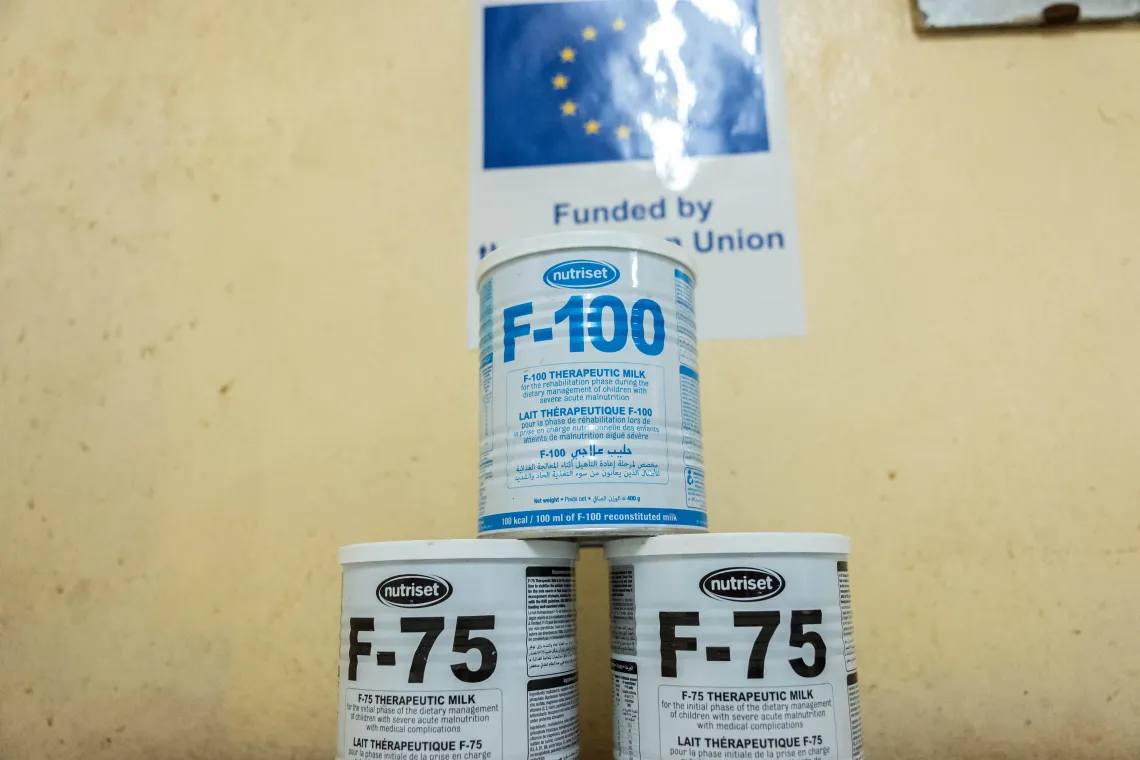
He is indeed right. Both F-75 and F-100 therapeutic milk are vital for the treatment of children with SAM and medical complications in an inpatient setting. Both products require reconstitution with clean and safe drinking water before use. They are to be administered by trained healthcare staff like Amsalu. UNICEF provides these supplies to health centres and hospitals.
Amsalu is a dedicated young nurse with more than seven years of experience. Lately, he observed an increase in admissions at the stabilization centre in the hospital. “Cases are increasing because of the drought. “Families are struggling to feed their children,” he says. “They often have to work far on the farm leaving the children behind. This makes it worse for the children who are already suffering from malnutrition. Then, they become vulnerable to diarrhoea and other illnesses.”
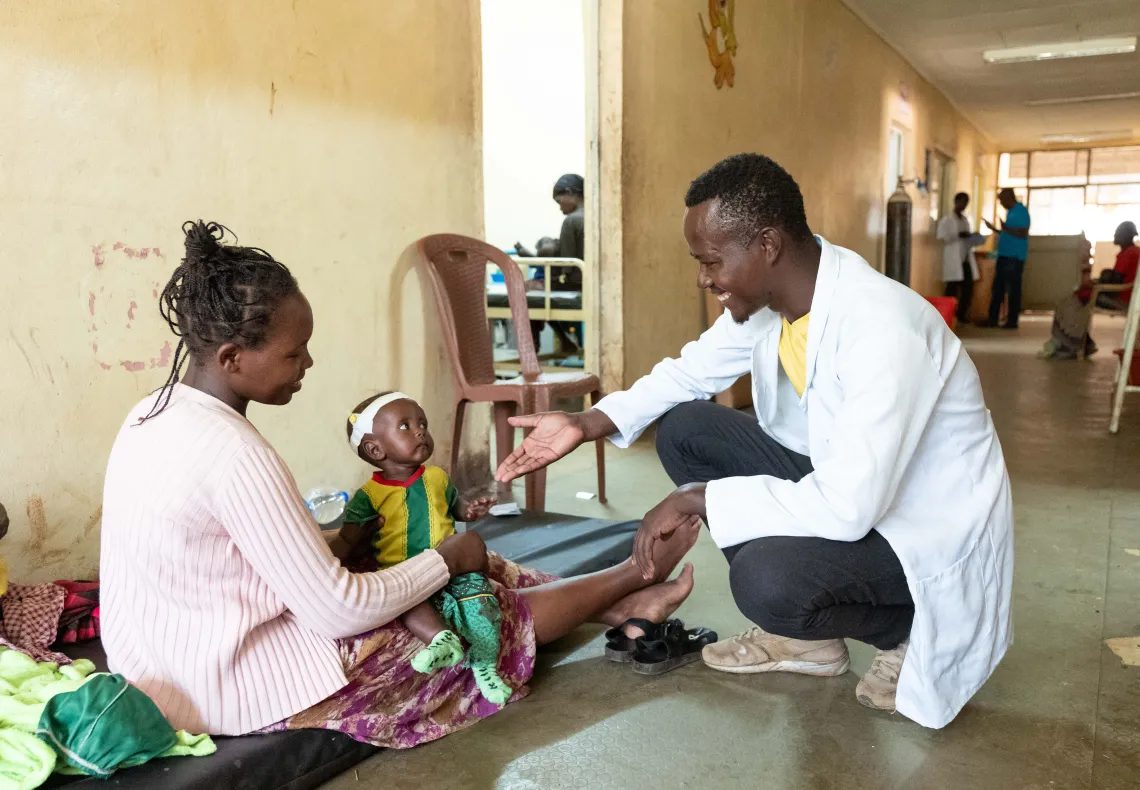
“When children recover and leave the stabilization centre, all of us here feel delighted,” says Amsalu proudly. I am also happy to serve here in the hospital in this capacity. I know my job is important and I do my best to support my community.”
Amsalu plans to continue his education further and get his master’s in public health. We wish him well.