Hope in Berhale
How a Hospital’s Upgrade Saves Newborn Babies

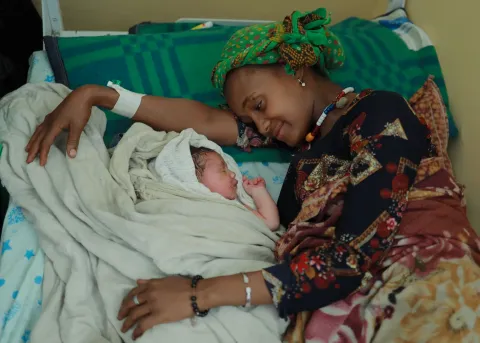
When her newborn daughter, Fierdos, fell ill just two days after birth in Ethiopia’s Afar Region, Aisha Mohammed feared the worst. “Fierdos wouldn’t breastfeed or open her eyes,” Aisha said. She rushed to the local health centre, where medical staff quickly intervened, treating Fierdos and monitoring her condition closely.
“She got better after three days,” Aisha recalls with relief. “They kept me there for five days, and then I took her home. Alhamdulillah, she is fine now.”
Her story is one of many that reflect the growing impact of Berhale Primary Hospital’s transformation. Once a modest health centre, the facility has undergone significant reconstruction with support from the Korea International Cooperation Agency (KOICA) and UNICEF and now offers specialized services that were previously unavailable. Among the most vital additions is the Neonatal Intensive Care Unit (NICU), which has been operational for the past 17 months.

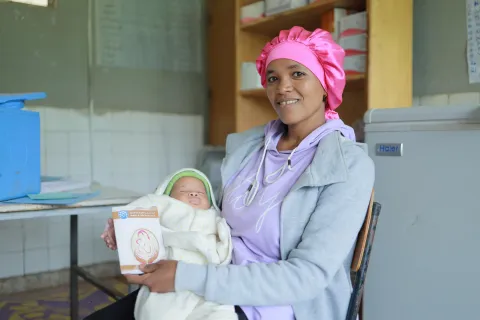
Ahmed Mohammed Ali, a nurse at the hospital, works in the NICU and has seen firsthand how the changes have saved lives. “We treat newborns under one month old who are born prematurely or with medical conditions,” he explains. “Before, we didn’t have a proper NICU. We treated babies in the delivery room, right next to their mothers.”
The lack of equipment and space made it difficult to provide adequate care. But with support from KOICA, the hospital now has a dedicated NICU ward equipped to handle complex cases. “On average, we treat three to four children every month,” Ahmed says.
The NICU offers pre-term care and Kangaroo Mother Care, where mothers hold their babies skin-to-skin to promote healing. The hospital also offers antenatal care, encouraging best practices such as exclusive breastfeeding for the first six months, followed by a diversified diet. “Now we have the right conditions to deliver proper services,” Ahmed adds. “We’re working to make sure every child we treat recovers.”

“They’ve built good beds and facilities.” Aisha says reflecting on the changes. “The treatment has improved.”
The establishment of a fully equipped Neonatal Intensive Care Unit (NICU) was made possible through the generous funding of KOICA and carried out by UNICEF. The new facility allows Berhale Primary Hospital to expand its services and provide life-saving care to newborns and mothers in need.