A Day with a Health Worker
A closer look at the treatment of a malnourished child in southern Ethiopia

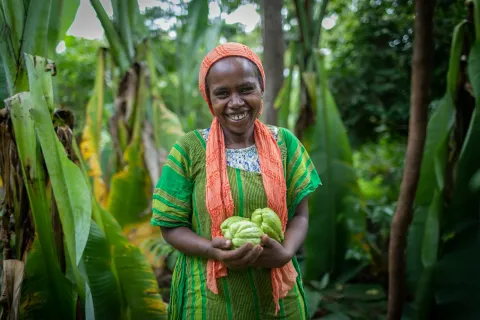
The Konso zone in the Southern Nations Nationalities and Peoples (SNNP) region of Ethiopia recently experienced conflict, displacement and drought, all happening at the same time. It has been difficult for women and children to cope with all these crises and malnutrition cases show a sharp increase in the zone. The livelihood of the hard-working farming community of the Konso is tested to the limits. Since the onset of the crisis, UNICEF is supporting health workers who are providing lifesaving nutrition services. We followed Ajuna Afarta, one of the dedicated community health workers, in her daily routine treating a malnourished child.

Early morning at Buso health post, community health worker Worker Ajuna Afarta gives a valuable lesson on child health and good feeding practices. Pregnant women and mothers with little children gather around and listen to her explanations. As she takes them through the illustrations on a big flip chart, the women sometimes stop her to ask questions. Before she moves to the next lesson, she does a short recap and checks if they understood what they were taught and if there are any questions.

After the lessons, she started screening children to see their nutrition status. It didn’t take long before she finds out that 8 months old Michael Kusa was severely malnourished. “The household farming land is small in Konso. Good harvest doesn’t come easily. When the drought persisted, it made life difficult. People were also displaced by the conflict. We are observing a spike in Severe Acute Malnutrition (SAM) cases because of this. We have now 26 children in the Outpatient Therapeutic Programme (OTP). Before the drought, we only had six to seven children,” she says.
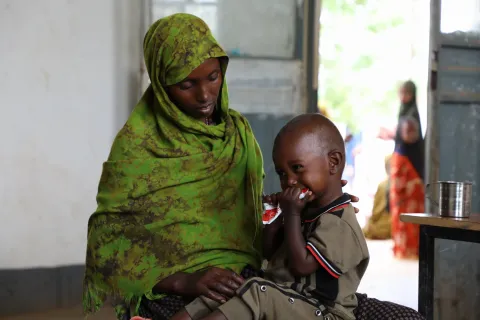
“The past three years have been difficult for us. We only had a small sorghum harvest last year. I was not able to feed my child properly. Then, my son started to get sick,” adds Kasasa Giloya, Michael’s mother.
“The past three years have been difficult for us. We only had a small sorghum harvest last year. I was not able to feed my child properly. Then, my son started to get sick,”

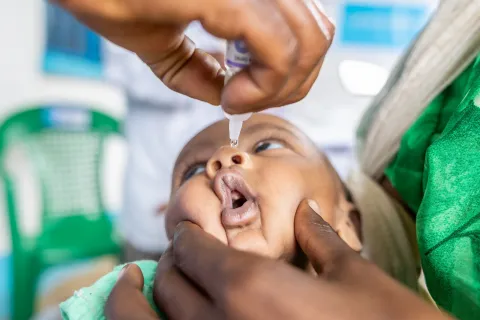
After the step-by-step checkups, she prepares Amoxicillin tablet and dissolves it in water so that Michael drinks it easily. “That helps him fight infection. I am administering this treatment because children with malnutrition can easily get sick.”
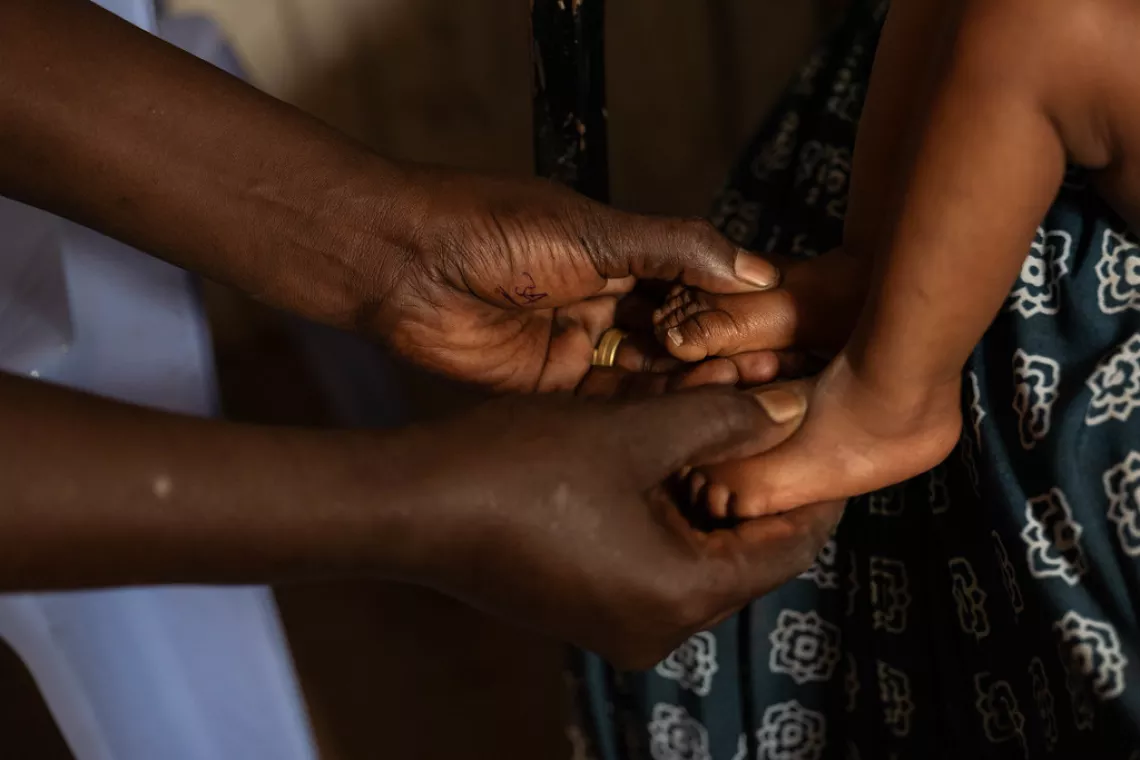

Ajuna also gently presses and releases her fingers on the dorsum of Michael’s feet. She repeated the procedure few times. When she noticed that there is no pitting on the child’s feet, she ruled out oedema, a condition which makes swelling of legs in children with SAM.


Then she puts Michael’s name on the OTP card for further follow up. Ajuna’s job is not done yet. She takes few more minutes to counsel Kasasa on how to make nutritious food for her child with locally available food items and to continue breastfeeding him. She also advised the mother that her son needs special care as he is susceptible to infection.

Finally, Ajuna feeds Michael ready-to-use therapeutic food (RUTF) that will help him recover and regain his strength soon. She also gave his mother more sachets of RUTF that he needs to eat in the coming days.

After taking the medication and the therapeutic food, Michael fell asleep peacefully in his mother’s arms. He is expected to be back in a week’s time for further follow-up. The good thing is that he has no further complications, and he will recover soon.
UNICEF, with thanks to funding from the European Union, provides critical emergency nutrition services for children affected by multiple humanitarian crises.