Breaking the Cycle
How preventative deworming transformed a community in Ethiopia

Tariku has full, round cheeks. His arms and legs are plump with baby fat.
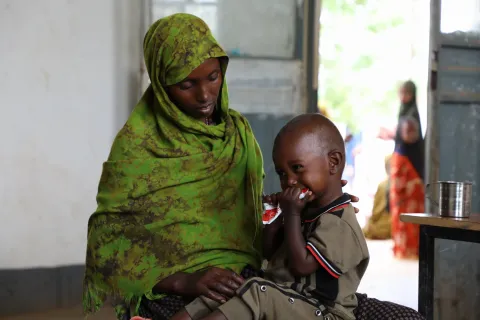
As he sits on his mother’s lap, Meseret, his pudgy fingers grab handfuls of porridge mixed with eggs, spinach, carrots, and peas. He tries to feed her the bits he doesn’t like as much – spinach – while she laughs.
At one year and nine months, Tareku is the picture of a healthy toddler. But that wasn’t always the case. Over a year ago, at just seven months old, he was a shadow of his current self.
Tariku suffered from relentless bouts of diarrhoea and vomiting, causing him to lose weight rapidly. His cheeks became hollow, his once plump limbs grew thin, and his clothes hung loosely on his frail frame.
Desperate for answers, Meseret took him to the nearby health post, where he was assessed by Abebech Melese, a dedicated health extension worker. Abebech quickly identified the symptoms, which were all too familiar in this rural community.

In Ethiopia, a pressing public health problem is affecting millions of children: soil-transmitted helminth (STH) infections, also known as worms. With approximately 29.1 million preschool and school-age children at risk, Ethiopia is one of the highest-burden countries globally for these infections.
“Toddlers are especially vulnerable to worms. They crawl, walk, and explore everything as they play. They pick up what they see and put it in their mouths,” says Abebech. “I used to see many children fall ill from repeated worm infections within a year.”
Even low levels of worm infection can impede a child’s healthy growth and development, leading to serious vitamin A deficiencies, exacerbating undernutrition, anemia, and stunted growth. They also do not respond as effectively to vaccines.
In Tareku’s rural community in Sire, Oromia, children frequently touch soil that may contain worm eggs and interact with animals that can spread worms through manure.
After suffering from repeated worm infections, Tareku became severely acutely malnourished and required treatment in a stabilization centre and later through an outpatient programme. Meseret also learned to provide essential nutrition and care at home, crucial for counteracting the nutrient depletion caused by the worms.


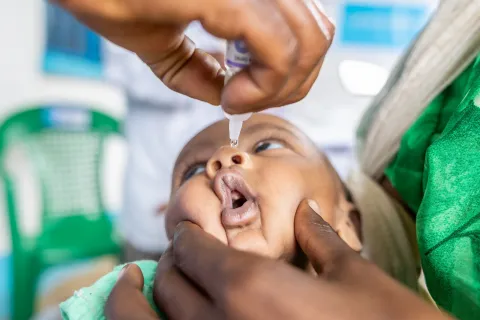
To address the crisis, Ethiopia's mass deworming programme has been expanded to include children aged 12-23 months, reaching over 3.2 million with UNICEF's support. This initiative, which also includes vitamin A supplementation, growth monitoring, and immunization, is part of a broader effort to improve young children's health and nutrition.
This move marked a significant turning point for the community. “The rate of worms infections and malnutrition has dropped significantly,” says Abebech. “Right now, I don’t have a single child that needs treatment for severe acute malnutrition with complications.”
Now, Meseret ensures that Tariku receives his deworming tablets every six months. “Ever since he started the deworming tablets, he hasn’t been sick. He’s gained weight and is very happy,” she says, gently pinching his cheeks.


Tariku’s newfound health and energy are evident in his love for dancing. “Our favourite thing to do together is dance! We have solar power at home, so we turn on our small radio and dance to the music,” Meseret shares with a laugh.
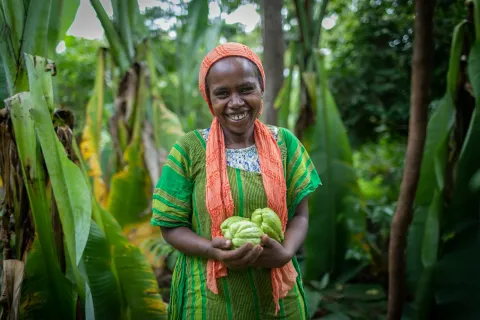
Having experienced the effects of worm infections firsthand, Meseret now educates other mothers about the risks, symptoms, and the importance of deworming and good nutrition. She attributes her knowledge to community health workers. “They teach us about proper feeding practices and available services. We trust them because they’re part of our community, and we know they’re here to help our children.”
By expanding mass deworming for young children aged 12-23 months, integrating it with nutrition and health programmes, and improving water and sanitation infrastructure, Ethiopia can ensure its children have the best possible start in life.
With generous funding from the Eleanor Crook Foundation, The End Fund, The Power of Nutrition, and Rotary International, UNICEF supports the Federal Ministry of Health in rolling out the mass deworming campaign, which is integrated into the nutrition programme.