Amina Goes to School
How accelerated learning programmes give access to education in pastoralist communities
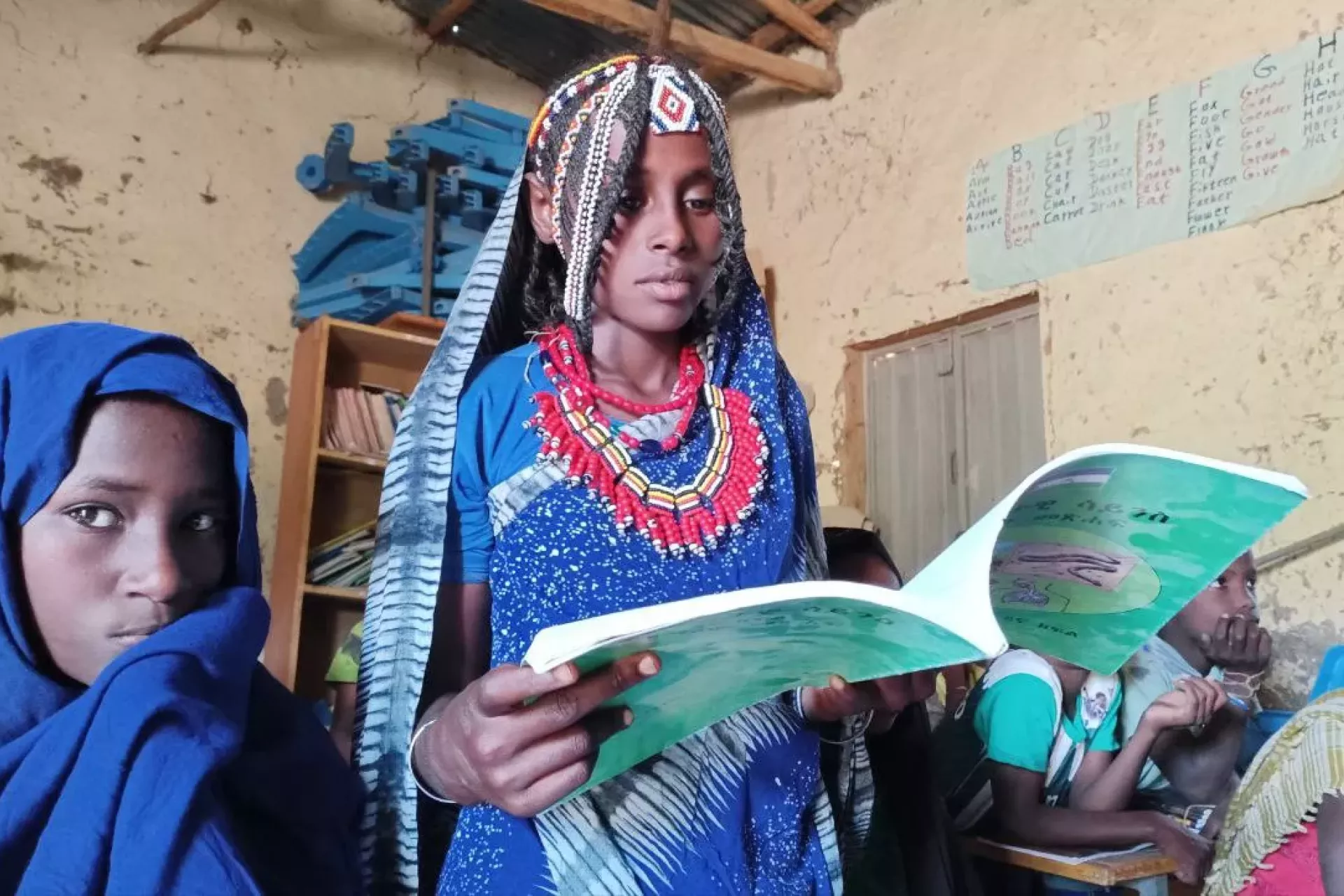
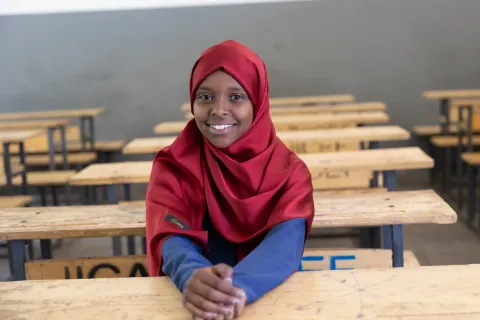
Amina Dawud Ali is a 14-year-old girl attending accelerated learning programme in Geriro Kebele (sub-district) of Chifra woreda (district), in the Afar regional state. She was born in Geriro Kebele and lives with her parents and her 8 brothers.
Amina has always longed to attend school, but her family's circumstances have prevented her from doing so. Despite her pleas, her parents have consistently refused to send her, citing her responsibilities at home. Remembering the past, Amina sadly said ‘I have two girl cousins in my neighbourhood. When they go to school, I am always crying.’ As the sole female child in the household, Amina is burdened with a range of domestic chores. ‘I have to fetch water; I had to keep goats; I have to support my family with cooking; I have to wash clothes; I have to shoulder all household chores.”
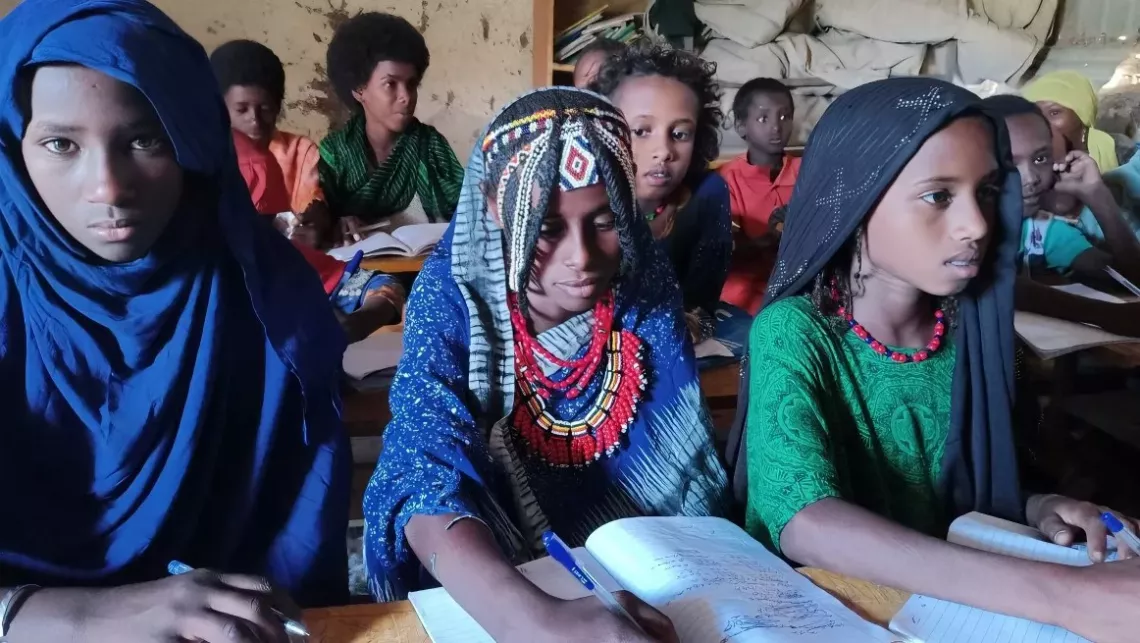
Thanks to the Accelerated Learning Programme (ALP), Amina is currently attending her level-2 education at Geriro ALP centre. ALP deployed trained facilitators who do house-to-house visit and register children who are not attending school. ‘When the facilitator came to our home, I asked him to convince my parents to send me to school.’ said Amina. After a series of discussions, the facilitator convinced her parents and registered Amina in the programme. Amina is now an active student and has learned to read and write well. ‘Learning is not difficult. If you follow attentively without any interruption, it is a joy,’ said Amina. Determined to pursue her education, Amina plans to enroll in school next year. Amina is a determined young girl who hopes to participate in extracurricular activities and eventually become a teacher in her community.
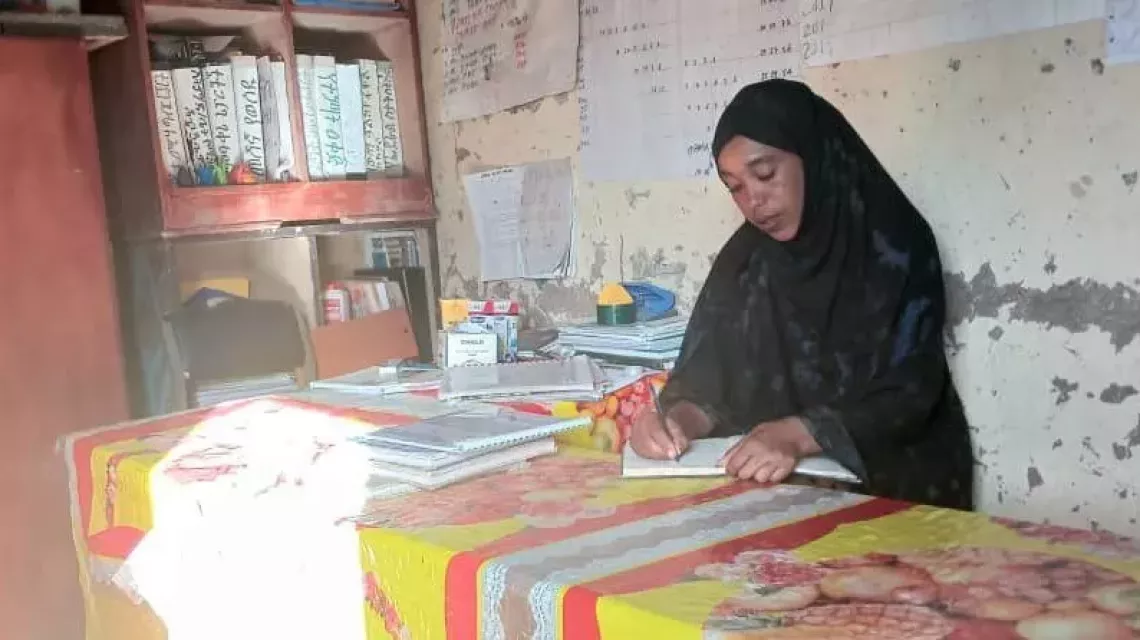
Seada Addisu is the school director of Geriro Primary School. She has been serving in the school for the last 5 years where she closely monitors the performance of the ALP. “Previously, I tried my best to convince parents of Amina to send her to school," said Seada. "Unfortunately, I couldn’t succeed. They told me that since she is their only daughter she should support her mother in domestic chores” said Seada.
Many other students were also unable to attend their education due to different social and economic problems. Since they were out of school, children especially girls were vulnerable for child marriage and other harmful practices. The ALP is helping many children to access education. Training programmes, the Parent-Teacher-Student Association, and the Harmful Traditional Practice Prevention Committee equipped Seada and her colleagues with the skills to engage the community and raise awareness. These efforts, combined with training on parental skills and student support, led to tangible results: parents, including Amina's, were persuaded to send their children to school.
Geriro ALP site supports 74 students (26 girls) with levels 1 and 2 programmes through site construction, material provision, capacity building, community engagement, and psychosocial support. After completing the ALP programme, students are expected to enroll in formal education, and Seada confirmed her school's readiness to accept ALP students.
Recognizing the strong need by the community and the burden it imposed on the public in general and on women and children in particular, UNICEF, through funding from the European Union (EU), is working with the Afar government, implementing partners, and community members to support ALP and strengthen formal education which helps to prevent child marriage, female genital mutilations, gender-based violence and other harmful practices that hamper women and children from actualizing their vision. Additionally, UNICEF is providing technical support for the Woreda Education and Women and Social Affairs offices, schools, and the implementing partner with coordination, community engagement, and other technical issues.