Fostering a Safe and Dignified Childhood
Cash transfers help refugee children from Ukraine meet their most urgent needs

“Getting financial aid in cash works for me. I save this money to buy clothes, books and food,” fifteen-year-old Alissa says.
Alissa loves living in Kragujevac, the Serbian city that “adopted” her since arriving from Ukraine in March last year. She fled war in her native city of Kharkiv with her mother Julia and grandmother Natalia.

“I thought it would all be over quickly. I would love to return to Ukraine and go to the seaside like we used to. I also have friends in Kharkiv. I’m still in touch with them,”
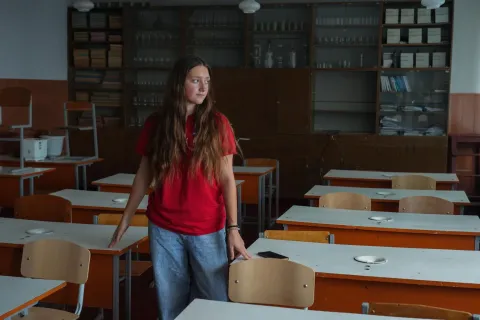
Alissa likes to study and read. She finds physics and biology harder to learn, but she is among the best in class when it comes to foreign languages. This year, she graduated from high school with flying colours.
Back in Ukraine, Alissa’s mother Julia worked several jobs to sustain her family. She ran a children’s playroom, rented sunbeds on the beach, sold barbecue and mulled wine at the New Year’s fair. In Kragujevac, Julia found work as a driver.

“We left Ukraine because I was worried for my life and that of my children. I didn’t want us to listen to the sounds of gunfire,” Julia says.
Before arriving in Serbia, Alissa’s grandmother Natalia had never left her hometown of Kharkiv. She settled well in Kragujevac, but she misses her home back in Ukraine.
“We led a peaceful life In Ukraine. The northern part of Kharkiv was hit by shelling that broke the windows in our kitchen and balcony. I kept going to the shelter all the time because I was very scared. That is why we left.”
“We led a peaceful life In Ukraine. The northern part of Kharkiv was hit by shelling that broke the windows in our kitchen and balcony. I kept going to the shelter all the time because I was very scared. That is why we left,” Natalia recalls.
In Kragujevac, the three women are staying at a family friend’s house.

“People are kind and friendly. We are managing to get the help we need,”
The cash transfer program from which Alissa benefited is part of the many ways in which UNICEF, in cooperation with the Danish Refugee Council, the Commissariat for Refugees and Migration of the Republic of Serbia, government institutions, and implementing partners work to protect and improve the lives of refugee children and young people.
Cash transfers aim at increasing the resilience and coping abilities of refugee households in Serbia, and access education, social protection and health services.

In May, Julia and Natalia participated in an information session on gender-based violence and women’s rights organized by the Danish Refugee Council. Julia says that this session helped her feel safer.
“It’s important to be aware of gender-based violence and to use available psychological support. It’s also important to know that as refugees, we have the same rights to protection as local people. I feel more free and more relaxed here. And I feel safer thanks to the organizations helping us,” Julia concludes.