Combating gender-based violence across Europe and Central Asia
Stories from the region marking the 16 days of activism against gender-based violence

Gender based violence can involve physical, psychological, sexual, and economic harm inflicted particularly on women and girls. The consequences of this violence are both visible and hidden and can result in long-lasting physical and emotional impacts. Gender-based violence is a pervasive public health issue, and is both a consequence of and contributor to gender inequality, as well as one of the most widespread form of human rights.
Across the Europe and Central Asia region, UNICEF and partners work on a range of programmes aimed at preventing and responding to gender-based violence (GBV).
In Moldova, Child Helpline Ambassadors engage with and educate children and adolescents on violence and girls’ rights. Türkiye expands their programmes dedicated to protection and GBV prevention. In Bosnia and Herzegovina, girl-led movements are advocating for change.
Moldova
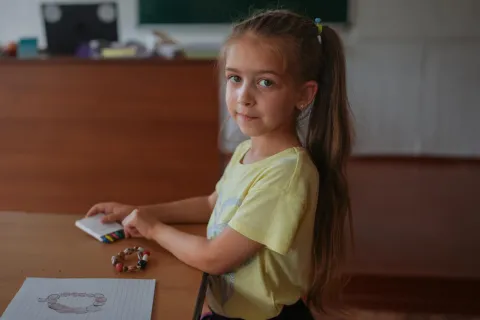
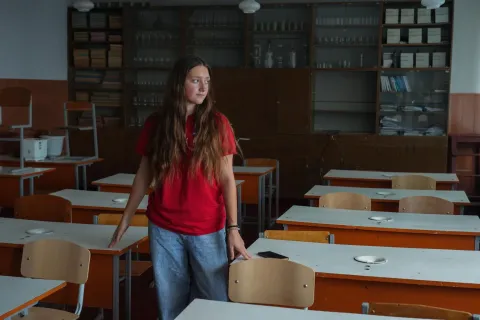
In Ungheni, Moldova, three girls have become champions of non-violence at school while advocating for girls' rights.
Earlier this year, UNICEF supported Ionela and Bianca to conduct information sessions on violence against children and combating gender stereotypes for teenagers from their secondary school. Ionela is the head of the Bullying and Violence Prevention Department at her school, where she recently organized a violence prevention day.
For Ionela, the role of Child Helpline Ambassador has offered her new opportunities and motivated her to become more responsible towards her peers and friends.
Bianca, another Child Helpline Ambassador, echoes these feelings. By taking up a position at this level, she aims to contribute to positive change in the country through advocating for the respect for child rights and the protection for survivors of violence, especially women and girls.
At the other end of town, a 10th grader named Victoria is leading the campaign on non-violence in her school, where she is one of four Child Helpline Ambassadors. She runs education sessions for her fellow students. After organizing three activities with the same class, Victoria has noticed attitude changes amongst her fellow students. They have discovered better coping mechanisms, built stronger friendships, and support and protect each other.
In both high schools in Ungheni, young people can anonymously report cases of violence by leaving a message in the post box on an information board that is symbolically in the shape of a heart. There, children can also find essential information about the Child Helpline service.
Türkiye
In 2023, the European Union supported UNICEF with EUR 4 million to expand services helping to protect children and adolescents in Türkiye. This funding enabled UNICEF to expand programmes dedicated to prevention, risk mitigation and response of GBV reaching 65,000 children and adolescents.
Türkiye remains home to the largest refugee population in the world and refugees are amongst some of the most marginalized communities in the country. Alongside refugees, these programmes also aim to reach many vulnerable and hard-to-reach girls including those living in rural areas, survivors of GBV, seasonal agricultural workers, children living on the streets, victims of child labour, and unaccompanied and separated children.
The programmes include empowering boys and girls with critical life skills, strengthening attitudes against violence, promoting equality and creating safe environments for children. UNICEF is also working to strengthen the quality of, and access to child protection and GBV services through supporting national systems.
Bosnia and Herzegovina
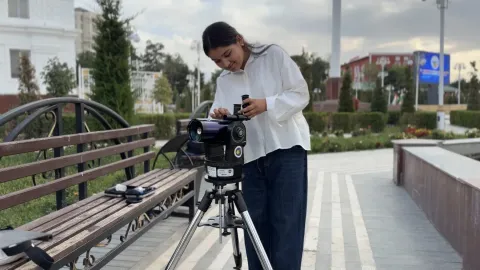
In Bosnia and Herzegovina, girls are boldly raising their voices against inequality. Around the world, girl-led movements are advocating for their fundamental rights including ending child marriage and female genital mutilation, demanding action on climate change, and trail-blazing in the fields of science, technology, engineering and maths (STEM). They are asserting their power as global change-makers.
For adolescent girls, UNICEF invests in skills building to further their economic empowerment – as entrepreneurs, innovators and leaders. Supporting girls’ pathway from education to employment requires more than just learning opportunities. It requires the protection of all girls from all forms of violence, everywhere.
In Bosnia and Herzegovina, UNICEF invests in providing learning environments that suit girls’ individual circumstances. Targeted initiatives provide safe spaces for women and children, and support psychosocial needs. Investments in innovative models aim to reach the hardest-to-reach girls, including through virtual safe spaces and apps that allow them to report violence and connect to local resources for support.