Bridging the green skills gender gap
This World Youth Skills Day, we are shining a light on rural and remote communities, and on the importance of ensuring women and girls in these areas are supported with skills, resources and opportunities for a just green economy transition
The green transition promises cleaner industries, resilient economies and sustainable societies. But across Europe and Central Asia, that promise will only be realised if it reaches everyone: especially women and girls living beyond the big cities, in rural and industrial areas with unique challenges and limited opportunities.
This World Youth Skills Day, we are shining a light on rural and remote communities, and on the importance of ensuring women and girls in these areas are supported with skills, resources and opportunities for a just green economy transition.
Climate change is already reshaping the region, from the drought-hit Western Balkans to the melting glaciers of Central Asia. As brown industries like coal, heavy manufacturing and carbon-intensive agriculture decline, green sectors and occupations are emerging as key to sustainable development. But so far, this shift is unfolding unevenly. Both across the globe and in the Europe and Central Asia region, the representation of women and girls in the green economy is low.
A joint UNDP-OECD regional study across six countries – Albania, Georgia, Kyrgyzstan, Montenegro, Serbia, and Türkiye – finds that women working in declining, polluting industries face up to twice the risk of being left behind in the green transition compared to men. In Serbia, Montenegro and Türkiye, about 44–46 per cent of women in brown occupations risk being excluded from green jobs because of skill gaps. In Georgia, Albania and Kyrgyzstan, that figure exceeds 58 per cent, reaching 66 per cent in in Kyrgyzstan. For men, the risk is consistently lower, at 27 per cent to 36 per cent.
Geography compounds the issue. Green job creation and trainings tend to cluster in cities like Belgrade, Istanbul or Tbilisi, where emerging green sectors and services are strongest. Meanwhile, rural and industrial areas – often still dependent on brown industries – offer fewer skills building, training and accessible pathways to green jobs, especially for women and girls.
A recent gender mapping by UNICEF of the green economy transition found wide disparities in how much gender equality principles are integrated into each country's policies and commitments. Gender biases and stereotypes, lack of women role models and mentors, limited professional networks, and unsupportive workplaces, lack of enabling environment at household level further hinder the participation of women and girls in green sectors.
The effective inclusion of women and girls in the green economy requires building their capacities and investing in job creation, particularly in rural areas and climate-vulnerable sectors. Across the region, UNDP and UNICEF are tackling these barriers through green skills development, mentorship, and training initiatives. Countries must also invest in and mainstream gender in climate and green economy related legislation, budgeting and commitments – taking into consideration the unique needs of women and girls who also face other types of marginalization, such as poverty or disability.
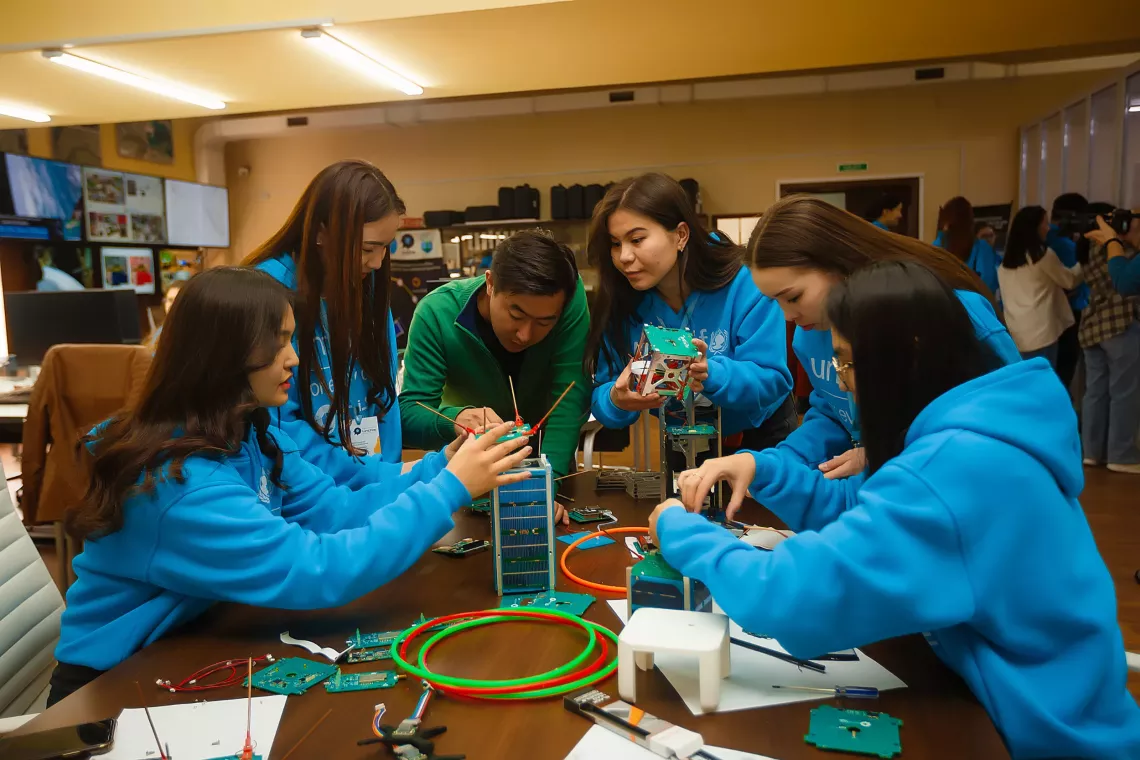
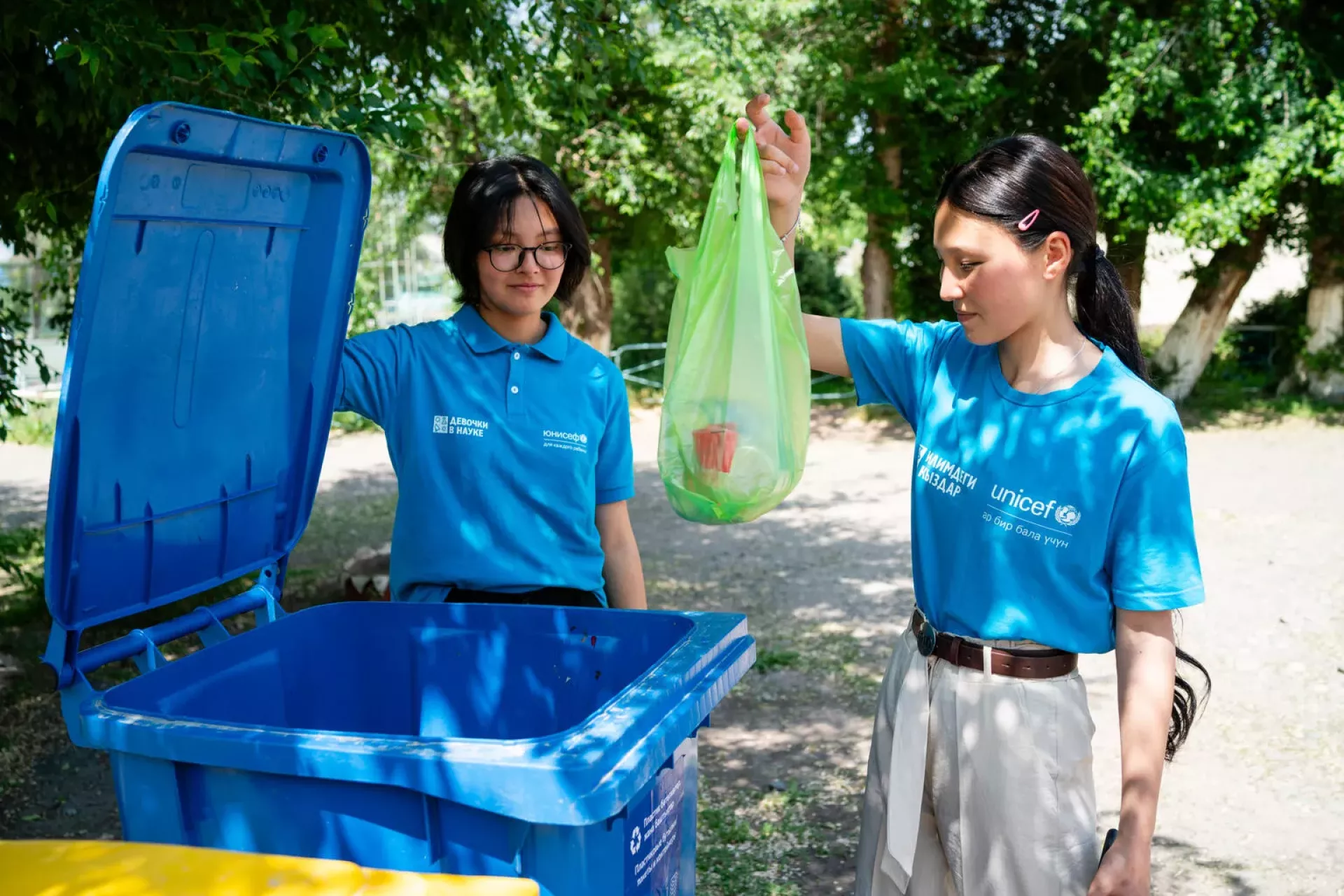
UNICEF is contributing to reducing the gender gaps in the green economy by preparing girls for the green jobs of the future with STEM education, leadership training and fostering their active participation and engagement. Programmes like UPSHIFT and UniSat+ engage girls in STEM and climate-related projects. UPSHIFT, implemented in Kazakhstan and Tajikistan, integrates green skills and 21st-century capabilities into school curricula, while UniSat+, in Kazakhstan, Kyrgyzstan and Uzbekistan, helps girls understand climate risks and develop green skills through air quality data collection and analysis. Meanwhile, initiatives like STEM4Girls in Kyrgyzstan engage girls in climate action and entrepreneurship, promoting confidence, project management skills, and STEM participation.
However, these programmes must be scaled up through systems at the national level and made more accessible, particularly in rural areas. In this regard, UNICEF Greece has developed a digital green skills tool aimed at building climate action skills among adolescent girls in rural and remote communities. Similarly, UNICEF Kosovo1 is training adolescents and youth – including those with disabilities, and from rural and minority communities – to tackle air pollution through designing creative solutions.
UNDP Uzbekistan recently launched an initiative aimed at training 1.3 million young people, with a focus on increasing girls’ participation in STEM and climate leadership. In rural areas, 4,000 youth will receive vocational training in renewable energy and climate-smart agriculture, supported by job fairs and internships. UNDP’s Generation Nexus youth network unites young leaders from across Europe and Central Asia to amplify their voices in shaping inclusive, cohesive policy. At a recent Youth Forum in Montenegro—joined by the COP29 Youth Climate Champion—participants advanced youth inclusion in global processes, have been involved in COP29 negotiations in Baku and the NDC 3.0 process at national, regional, and global levels.
These examples demonstrate the impact of aligning investment, policy and community action. They also point to the need for inclusive and targeted efforts that match green transition strategies to local realities and meeting the specific skills sets, engagement and needs of women and girls. Rural communities are home to deep reserves of knowledge, creativity and resilience. To unlock this potential, school curricula, training and job creation programmes must be accessible, inclusive, flexible and tailored to the sectors most relevant to these areas – from sustainable agriculture and small-scale renewables to eco-tourism and land restoration.
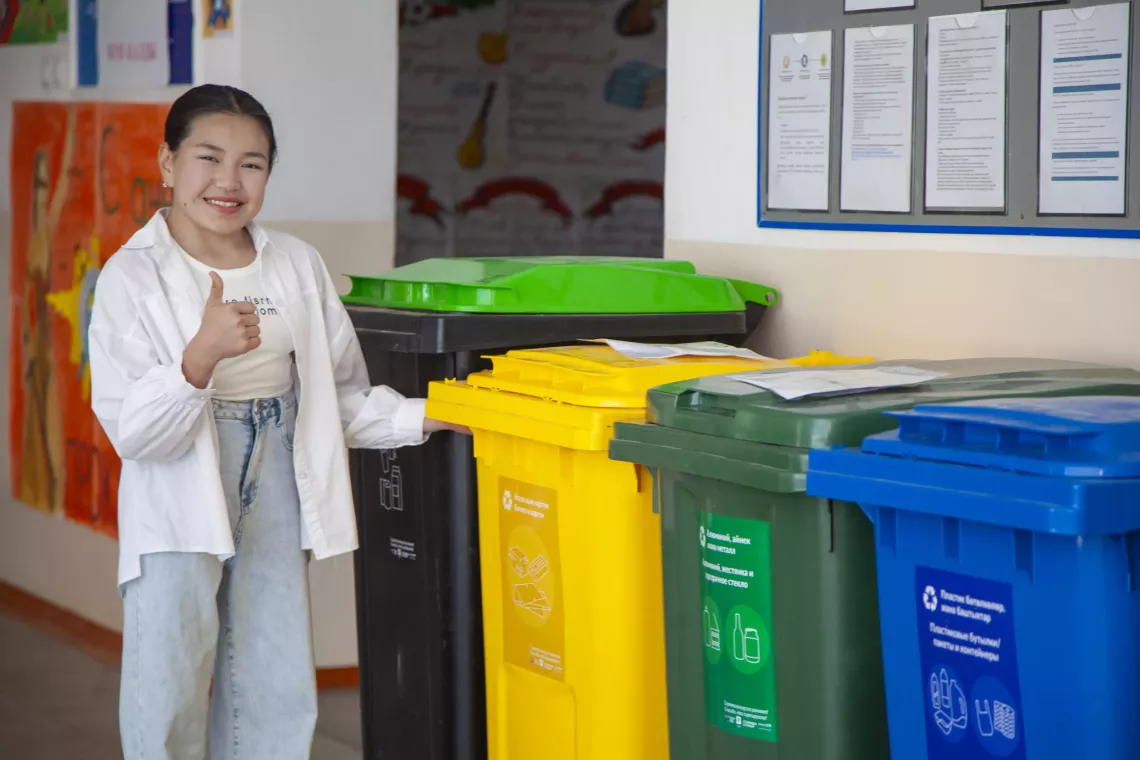
Platforms like STEM4ALL, co-led by UNDP and UNICEF, offer powerful tools to close the gap. By connecting women and girls, including those in remote regions, with mentors, networks, and learning opportunities, STEM4ALL helps bridge geographical and gender divides. Scaling up such initiatives, and embedding them in national green transition strategies, can ensure that no one is left behind.
Businesses also have a vital role to play. Many are investing in greener practices; the next step is extending this to rural and industrial areas by offering inclusive, future-ready training and job opportunities that bridge the gender gap. Governments and donors can encourage this through incentives that promote inclusive green growth and beyond cities. UNICEF is also advocating for gender-inclusive and family-friendly policies – such as parental leave, affordable childcare and flexible work – to encourage women's participation and retention in green economy sectors.
Long-term change requires reshaping education systems and curriculum, challenging gender stereotypes, and reforming policies to create safer, inclusive and enabling environments where girls, especially the most marginalized, can access and excel in green economy and careers. Raising community awareness of the importance of green skills and career pathways for women and girls is essential.
The green transition is a historic opportunity – not just for a low-carbon economy, but for a fairer and sustainable one. To succeed, it must be inclusive, investing in gender responsive and local solutions, that would benefit rural areas and people, especially women and girls, who have the most to gain and so much to offer. Women and girls make up half the world's talent. Ensuring they have relevant skills for green jobs maximizes human capital across the region and accelerates progress towards a sustainable future.
This World Youth Skills Day, let us bridge the green economy gender gap. Let's turn policies into inclusive action, commit resources and investments for this sustainable future, and ensure that the women and girls of rural Europe and Central Asia are not just participants in the green economy – but empowered and skilled leaders of it.
1. Kosovo should be understood in the context of Security Council resolution 1244 (1999).