Keeping families together in Europe
No child should ever be placed in alternative care because of poverty, disability or challenging behaviour, or because their family lacks access to services they need to care for their own child at home

The goal: By 2030, zero children in institutional care in Europe.
Every child has the right to grow up in a nurturing family environment. Yet around 337,287 children aged 0-17 years across 36 countries in Europe1 are growing up in residential care facilities – including large scale institutions, despite the well-known and devastating impact of family separation and child institutionalization. This figure may well be the ‘tip of the iceberg’, given current limitations in data availability, consistency and coverage.2
The rate of children in residential care can reflect the strength of a country’s child protection system, with a higher rate signaling a system that is failing to address the needs of children and their caregivers and keep families together. In Europe today, an estimated 277 children for every 100,000 children, on average, live in residential care, almost three times the global average of 102 per 100,000.3 While facilities in this region tend to be small and integrated into communities, there remains an over-reliance on residential care instead of family-based care for too many children across the whole region.4
The impact of family separation and institutionalization on children can be lifelong. When children are separated from their parents it is often under tragic circumstances, triggered by distressing and traumatic events. Family separation can leave children – and their parents – feeling worthless, and imprint lasting scars on their mental health and psychological well-being. Children who are housed in large-scale institutions face emotional neglect, abuse and exploitation that compound their distress and trauma, with an impact that often extends into adulthood. Child institutionalization has serious consequences for children, families and for society by perpetuating stigma and social isolation, and feeding an intergenerational cycle of disadvantage.
Those who are already vulnerable as a result of poverty, lack of family support or services for children with disabilities are the most likely to grow up in an institution. Children with disabilities, for example, are up to 30 times more likely to live in residential care facilities in some countries in the region than other children. And marginalized families are more likely to miss out on the basic services that help families stay together, including family support, health care and education. Child protection services and specialized family support and social services often lack the resources – financial and human – to prevent family separation.
UNICEF’s position is clear: no child should ever be placed in alternative care because of poverty, disability or challenging behaviour, or because their family lacks access to services they need to care for their own child at home. On the rare occasions when alternative care is in the child’s best interests, it should always be family-based – never institutional. Keeping families together is key to ending the region’s long history of institutionalizing children, and the expansion of social services that meet the needs of all vulnerable children and their families.

Country | Number of children living |
|---|---|
Albania | 490 |
Austria | 12,888 |
Belgium | 8,412 |
Bosnia and Herzegovina | 1,857 |
Bulgaria | 2,235 |
Croatia | 1,355 |
Cyprus | 398 |
Czechia | 7,146 |
Denmark | 3,698 |
Estonia | 735 |
Finland | 5,690 |
France | 51,524 |
Georgia | 388 |
Germany | 77,984 |
Greece | 1,680 |
Hungary | 5,956 |
Ireland | 525 |
Italy | 12,892 |
Latvia | 1,301 |
Lithuania | 1,347 |
Luxembourg | 731 |
Malta | 197 |
Moldova | 677 |
Montenegro | 107 |
Netherlands | 14,035 |
North Macedonia | 114 |
Poland | 15,245 |
Portugal | 5,630 |
Romania | 9,741 |
Serbia | 575 |
Slovakia | 4,928 |
Slovenia | 433 |
Spain | 16,177 |
Sweden | 4,249 |
Türkyie | 14,141 |
Ukraine | 51,806 |
Total (36 countries) | 337,287 |
The lifetime impact of family separation and institutionalization
Children placed in institutions are deprived of the social, emotional and intellectual stimulation that is critical for the healthy development of their brains. The younger the child when they are removed from their family, the greater the potential damage, yet child institutionalization often signals a lack of support for parents during a child’s earliest months of life.
Shut away from mainstream society, children in institutions are vulnerable to violence, neglect and abuse. In later life, children who have grown up in institutional care are more likely to face continued exclusion from society, more likely to struggle with alcohol and drug abuse, and more likely to experience violence, arrest and imprisonment. The long-term impact is so damaging that it is harder to place children who have been institutionalized for prolonged periods of time in family-based alternatives or reunite them with relatives.9
There is a continuing reliance on institutional care for children who have been separated from their families in parts of Europe. In Azerbaijan, for example, most children in care are still living in residential institutions: 70 per cent compared to 30 per cent for children in family-based care. These percentages are reversed in countries like Belarus, where 30 per cent are in residential institutions and 70 per cent are in family-based care. In Serbia and the Russian Federation, more than 90 per cent of children in care are in family-based care, compared to less than 10 per cent in residential care10 – but this may well mask considerable numbers of children who are being cared for through informal family arrangements that are not monitored or captured in the data as they fall outside the main child care system. Indeed, all data should be treated with caution, given current limitations, as they do not include all children in alternative care or reflect the precise proportions of children in institutions, formal family-based care, or informal care arrangements.
Key reasons for child institutionalization
- Institutionalization is fuelled by deep-rooted social norms, particularly for children with disabilities. A combination of persistent stigma, negative social attitudes and limited community-based services around disability hampers both the return of children to their families and efforts to recruit suitable foster parents.
- Social norms also support a ‘medical model’ of disability across the region that focuses on children’s conditions, rather than their potential. This feeds into the view that institutions – rather than families – are the best option for children with disabilities, a view reinforced by a lack of community-based services that can support them and their families.
- The placement of children in institutions is also linked to economic and social inequality, as well as a lack of social protection that can help families stay together, such as child benefits, community-based family support services, adequate housing, and inclusive education and health care.
- The institutionalization of children – as well as the over-use of alternative care – has a disproportionate impact on particular groups, such as children with disabilities, children affected by migration, and those living in poverty, all of whom are more likely than other children to be placed in alternative care.11
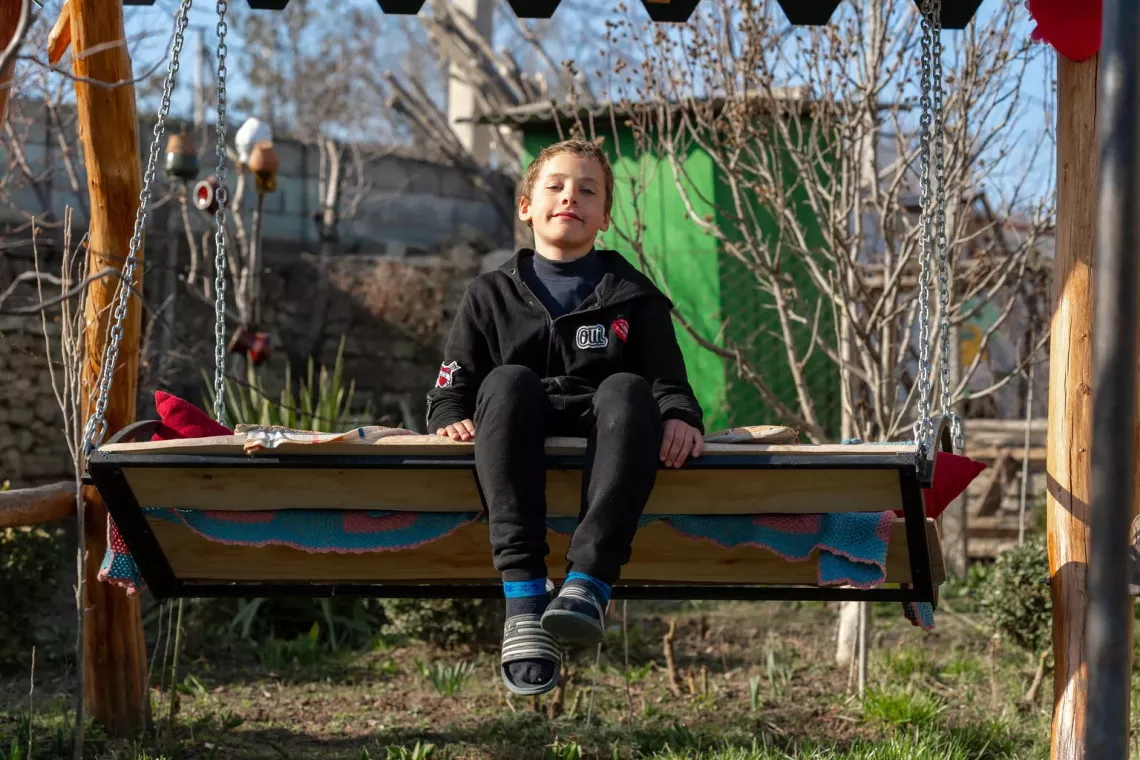
Recent reductions in the institutionalization of children in Europe are a positive shift. However, many children are still being separated from their families.
Furthermore, while family-based care is preferable, it does not always indicate improved quality of care. In Hungary, for example, where 84 per cent of children in formal care are in family-based care, concerns were raised in a 2019 study that found only six per cent of foster carers were professionally recruited, trained, and supported to provide a high standard of care for children.12
While family-based arrangements – formal or informal – may be preferable to child institutionalization, they are no substitute for enabling a child to stay with their immediate family if at all possible.13
Support to keep families together
UNICEF is working with governments and partners across Europe to support the development of robust family support services, the closure of large-scale residential facilities for children, and the transition from institutional care to family-based alternatives.
Keeping families together in Croatia
More than 1,350 children remain in residential care. UNICEF and the Government are making strenuous efforts to change this, and Croatia is one of the European countries leading the way in prioritising to keep families together.
This begins with providing more support to families at risk. In 2022, Croatia invested in improving the quality of family protection measures. This included investment in professional help and support that provides care for children to prevent family separation; and investment in new family associate services that provide practical support such as parenting skills to families at risk. The service is provided by paraprofessionals with additional specialized training within the psychosocial support service that can be granted by the social welfare system. As of May 2024, 51 family assistants are supporting 120 families, reaching 293 children in total. Additional training and mentorship are being provided to family protection workers in the communities with input from UNICEF, with modules including how to motivate changes in parents’ behaviour, understanding and resolving family conflicts, and how parental mental health can affect children.
In addition to strengthening the capacities of social workers to keep families at risk of separation together, the Government, in cooperation with UNICEF, has found continued success with its initiatives for reaching parents directly. The programme Growing up Together (GuT) began in 2008, offering workshops for parents of young children. In 2012/2013, additional specialized programmes were provided for parents of children with disabilities, and in 2017, “Growing up Together – Count Us In” was launched for the parents of at-risk preschool children. Another branch of the programme, “Growing up Together Goes on”, was developed to offer information and support to fathers who live separately from their children. Building on positive evidence, within the testing phase of Child Guarantee in Croatia, a new model of parenting and caregiver support for Roma families was developed and tested. By 2016, around 4,500 parents across the country had received at least one cycle of a GuT workshop. An external evaluation found that the GuT programmes had many of their desired effects, in particular by increasing parent efficacy and decreasing inappropriate parent behaviours. In particular, they work because they help parents to become active partners in the workshops, rather than passive receivers of education (an “empowerment model”). The programme has since been implemented, with similar effectiveness, in countries including Bosnia Herzegovina, Bulgaria, and Poland.

Major strides towards deinstitutionalization in Moldova – the role of gatekeeping
Deinstitutionalization reforms in Moldova have been ongoing since the early 2000s. Particularly notable has been Moldova’s commitment to rehousing children in boarding schools, which can be residential institutions by another name. In one boarding school in Moldova, for example, 46 per cent of children were not accessing the education being provided on-site.14 Other studies from Moldova found that special boarding schools were not providing adequate specialised education for children in need because of a lack of staff capacity and other resources.15
During Deinstitutionalization Strategy cycles in 2008-2012 and 2012-2015, the country closed 60 boarding schools under the control of the Ministry of Education and seven boarding schools under local public authorities. Fifty of these schools were replaced by family support, foster care and inclusive education. No boarding schools remain in the country today, while there are only two residential special schools for children with mainly sensory disabilities, which are also in the process of being closed. Where appropriate, some residential buildings have been repurposed as mainstream schools or to provide other education or social services.16 Moldova is one of the only countries in Europe to have comprehensively addressed the closure of its boarding school network as part of its deinstitutionalization strategies. To continue these efforts, the Ministry of Labor and Social Protection (MLSP) – with the support of UNICEF Moldova and others – is launching a new DI Strategy Cycle as part of the ongoing care and social reform launched by the Ministry in 2024. The reform is also aligned with the National Development Strategy
“European Moldova 2030” by drawing extensively on the EU social acquis, and as such, contributes to meeting the requirements for EU accession.
While there have been numerous interventions involved to make Moldova’s deinstitutionalization measures successful, one critical aspect has been its use of gatekeeping panels. These panels originally were designed to take decisions about entry into alternative care for children without parent care. As inclusive education reforms were implemented, entry into boarding schools and special residential schools was included in the panels’ remit. The assessments of medical-pedagogical commissions of children with special educational needs were presented to the panels at the local level and children were diverted to non-residential solutions in the local community wherever possible, with all necessary support for their families.
These strategies have resulted in a notable decrease of the number of children living in institutions and residential special schools, including boarding schools, in Moldova, from 12,000 in 2007 to 828 children at the end of 2021.17

Recommendations to governments
UNICEF calls on governments and institutions in countries across Europe to keep families together wherever possible and end the institutionalization of children by 2030. This requires strong support for families and action to address the heightened risks faced by the most vulnerable children.
A policy framework for action is already in place, based on the Convention on the Rights of the Child, the Convention on the Rights of Persons with Disabilities, the UN Guidelines for the Alternative Care of Children, and the Sustainable Development Goals.


Governments and authorities across Europe are urged to prioritize the following actions, ensuring in each case that children have a voice in the decisions that affect them.
Design and implement effective child care reforms, based on international commitments to keep children with their families where possible, plan for the closure of institutions, and scale-up inclusive social welfare, inclusive education in mainstream schools and family-based care services that reach the most vulnerable children and their families. This means increasing the number of qualified social workers, expanding services such as day care, training foster parents and setting up a full range of appropriate alternative care.
Invest in the development of statutory family support services, including a strong social service workforce, for the early identification of
(and intervention for) children at risk to prevent the unnecessary family separation of children from their families and keep children out of the alternative care system. Authorities across Europe need to increase the number of trained, community based social workers who work with children and families at risk of separation.
Ensure that alternative care is family-based. This includes strengthening support for extended family members who care for children, ensuring they have the resources and guidance they need; investing in the development of professional foster care services; and implementing strategies to keep siblings together where possible, recognizing the importance of family bonds for child development.
Ensure that the best interests of every child are met by improving the protection of children who are already in alternative care to protect them against violence, neglect and abuse. This includes robust safeguarding policies and practices (such as safe channels for the reporting of sexual exploitation and abuse), returning children to their families wherever possible, or finding other appropriate, safe permanent family-based solutions.
Close all large-scale residential facilities for children by 2030. This means reallocating resources from today’s residential facilities for children towards family support services, such as inclusive education, and high-quality family- and community-based care.
Invest in more and better data on children who are at risk of family separation, in alternative care or have left care. Countries are encouraged to increase investment in the availability, quality and international comparability of data on family support and alternative care by strengthening administrative data collection and management systems and integrating them with other information management systems related to children’s well-being. Importantly, children in alternative care and care leavers should be incorporated into national surveys and censuses.
Raise public awareness of the benefits of keeping families together and the urgent need to prioritize family-based care, using robust data and other evidence, including examples of best practice, and sharing family- and child-friendly information on the services and support that is available.
- European countries are defined, for the purpose of this brief, as all EU and EU-accession countries. Sources of data used to calculate the total number: TransMonEE Database Explorer | UNICEF TransMonEE; First version of the joint monitoring framework for the European Child Guarantee, prepared by the Social Protection Committee's Indicators – Sub-Group and the European Commission, Table 1, pp. 18-20, framework downloadable from: Monitoring and benchmarking frameworks - Employment, Social Affairs & Inclusion - European Commission (europa.eu); United-Kingdom.pdf (eurochild.org); https://www.statistik.at/fileadmin/user_upload/Kinder-und-Jugendhilfestatistik-2023.pdf; and https://www.casadata.ch/statistiken/sozialhilfe.html.
- UNICEF Regional Office for Europe and Central Asia, TransMonEE Analytical series: Pathways to Better Protection – Taking stock of the situation of children in alternative care in Europe and Central Asia, UNICEF, Geneva, 2024.
- World estimates based on 131 countries with 76 per cent of the world's population aged 0-17 years; East Asia and Pacific based on 13 countries with 91 per cent of the regional population aged 0-17 years; Europe and Central Asia based on 36 countries with 77 per cent of the relevant population of children; Latin America and Caribbean – 36 countries / 100 per cent; Middle East and North Africa – 9 countries / 65 per cent; North America – 1 country / 91 per cent; South Asia – 7 countries / 84 per cent; Eastern and Southern Africa – 14 countries / 61 per cent
- UNICEF Regional Office for Europe and Central Asia, TransMonEE Analytical series: Pathways to Better Protection – Taking stock of the situation of children in alternative care in Europe and Central Asia, UNICEF, Geneva, 2024.
- UNICEF Regional Office for Europe and Central Asia, TransMonEE analytical series: Pathways to Better Protection - Taking stock of the situation of children in alternative care in Europe and Central Asia, UNICEF, Geneva, 2024.
- Data source: TransMonEE Database Explorer | UNICEF TransMonEE.
- Data source: TransMonEE Database Explorer | UNICEF TransMonEE.
- Data source: TransMonEE Database Explorer | UNICEF TransMonEE.
- Ibid.
- Data source: TransMonEE Database Explorer | UNICEF TransMonEE.
- See for example, Cantwell, N. et al., Chapter 5 of
‘Moving Forward: Implementing the Guidelines on Alternative Care for Children’, Centre for Excellence for Looked After Children in Scotland, 2012. - Lerch, V., Nordenmark Severinsson, A. 2019. “Target Group Discussion Paper on Children in Alternative Care”, Feasibility Study for a Child Guarantee (FSCG), Brussels: European Commission, page 34.
- UNICEF, Pathways to better protection: Taking stock of the situation of children in alternative care in Europe and Central Asia, UNICEF Regional Office for Europe and Central Asia, Geneva, Switzerland, 2023 (https://www.unicef.org/eca/reports/pathways-better-protection).
- Lumos, ‘Learning Curves: A global thematic review’, Working Paper, London, 2023.
- Partnerships for Every Child, Report on the assessment of children placed in boarding schools for deaf and/or hard of hearing children, Chisinau, 2015.
- UNICEF Moldova.
- UNICEF, TransMonEE Analytical Series: Pathways to Better Protection.
Highlights
The goal: By 2030, zero children in institutional care in Europe.
Every child has the right to grow up in a nurturing family environment. Yet around 337,287 children aged 0-17 years across 36 countries in Europe are growing up in residential care facilities – including large scale institutions, despite the well-known and devastating impact of family separation and child institutionalization. This figure may well be the ‘tip of the iceberg’, given current limitations in data availability, consistency and coverage.