Immunization in Europe and Central Asia
Sustaining progress and saving lives: An opportunity for the private and public sectors

Highlights
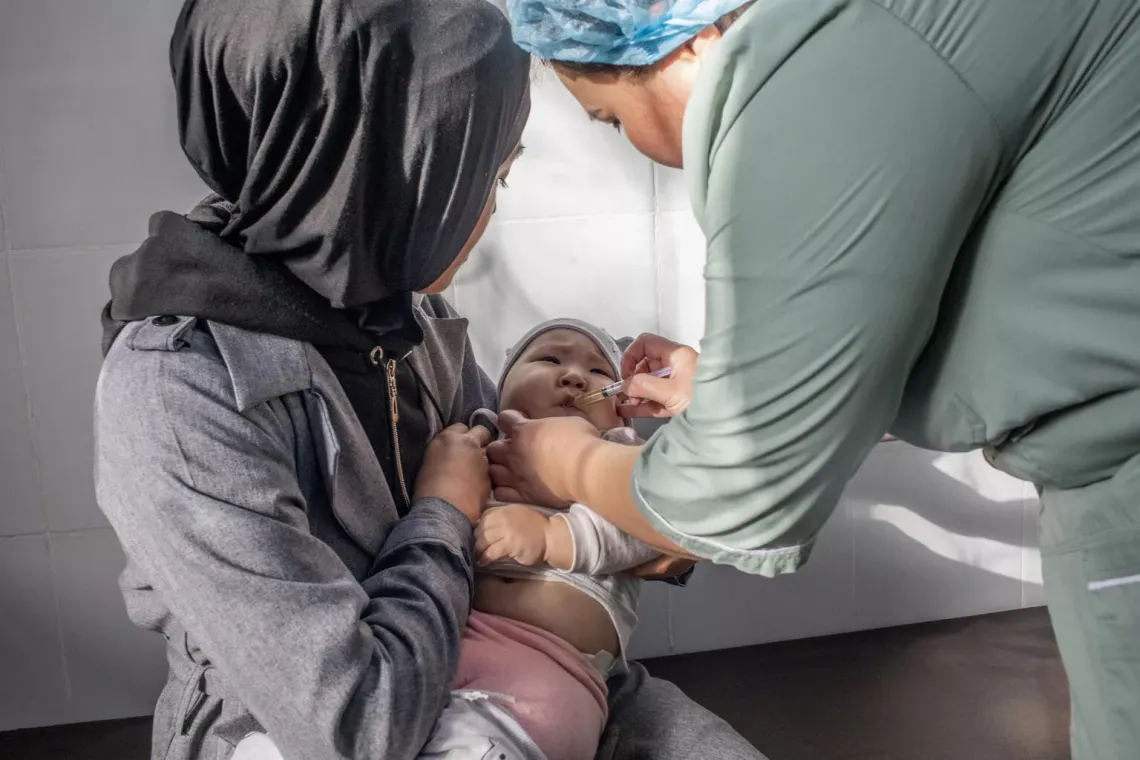
Immunization is one of the world’s most cost-effective public health interventions. It saves lives, protects against disability, and strengthens societies and economies.
Files available for download

In Europe and Central Asia, the progress made in reaching children with lifesaving vaccines is under threat.
Currently, countries are still recovering from backsliding in childhood vaccination rates caused by the COVID-19 pandemic. Escalating economic uncertainty, political polarisation, and decreasing trust, risk undermining decades of work to strengthen public health systems and services.
At the same time, donor investment in immunization is falling in some countries that still require critical support.
Ongoing governance reforms are affecting both the structure and financing of immunization programmes. Some countries, challenged by competing priorities at home, and inaccessibly priced vaccines on the global market, experienced several vaccine shortages, sometimes causing critical disruptions to services. These issues are particularly acute in middle-income countries, many of which self-procure vaccines and continue to face significant challenges in achieving financial sustainability of their immunization programmes.
In addition, challenges often assumed to be resolved in the European region persist. Data gaps and weak immunization information systems limit the ability to track coverage and respond to outbreaks. Only a few countries have fully digitized immunization registries. Sustainable, long-term funding for community engagement and demand generation efforts remains inconsistent, making it difficult to maintain high coverage and build trust over time.
Vaccine confidence in Europe and Central Asia remains comparatively low3. A 20224 report highlights significant declines in vaccine confidence, particularly in Baltic countries. Evidence from UNICEF-supported behavioural research shows that parents who perceive vaccines as safe, trust their child’s doctor, and value health worker recommendations are more likely to vaccinate their children on time. These insights underline the urgent need to invest in social and behavioural strategies that build public trust and equip health workers with the support and skills to effectively promote vaccination.
Building vaccine confidence is only one part of the solution. A coordinated effort across all levels of society is needed to ensure no child is left behind. Immunization is a shared responsibility of governments, legislators, health care providers, parents, caregivers, the pharmaceutical industry and other stakeholders. Everyone has a role to play in vaccinating and protecting all children. Conversely, successfully reaching populations offers profound benefits: enhanced health equity, reduced disease burden, and a stronger, more resilient public health infrastructure for all.
UNICEF has a long history of bringing stakeholders together to safeguard and promote immunization, both globally and in the Europe and Central Asia Region. We work with partners to strengthen routine immunization systems and step in whenever necessary to bolster immunization. We are committed to ensuring fully sustainable, well-resourced and managed immunization systems that guarantee vaccinations for each and every child – with no exceptions.
Did you know?
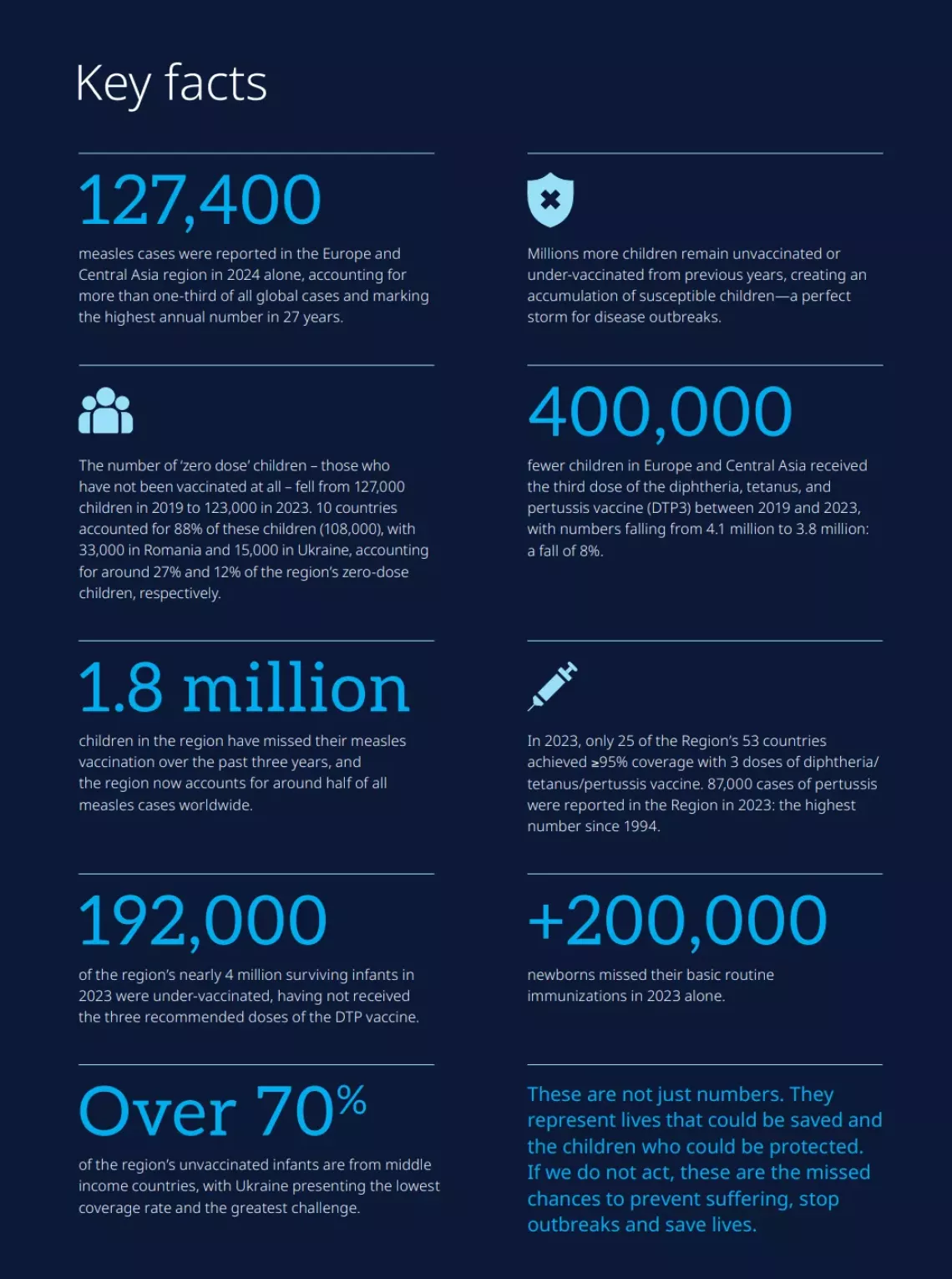
The total cost of 127,000 measles cases in Europe and Central Asia in 2024 was 178 million USD. Every measles case costs the system over 1,200 USD–1,400 USD — while it only costs 30 USD–40 USD to fully immunize a child and prevent the case entirely.2
Key messages
To do this we need:
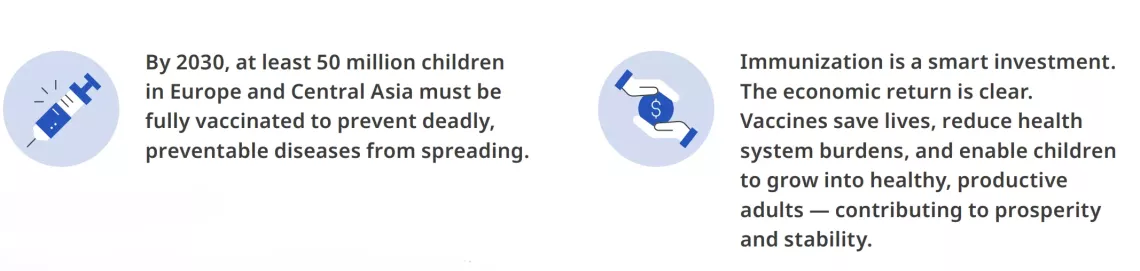
- Investment in resilient health systems including through adequate support for health workers, innovation and local manufacturing of vaccines.
- Immunization approaches that reflect community, social and economic realities to build demand for and confidence in vaccines.
- Health systems that identify and reach all children with immunizations, particularly those who are marginalised.
- Integration of social and behaviour change methods into programme design, development, and implementation across the region.
When it comes to immunization, UNICEF is the partner of choice; with a deep operational presence, a global system of procuring vaccines and trusted relationships with governments UNICEF’s technical and strategic support is integral to resilient, inclusive immunization systems in the European region.
This work is made possible through strong collaboration with key partners and donors, including WHO, Gavi, the European Union, DG Sante, the Republic of Korea, and UNICEF Ireland with support from CRH, whose investments help drive progress and equity in vaccination efforts.
How much does it cost to fully vaccinate a child?
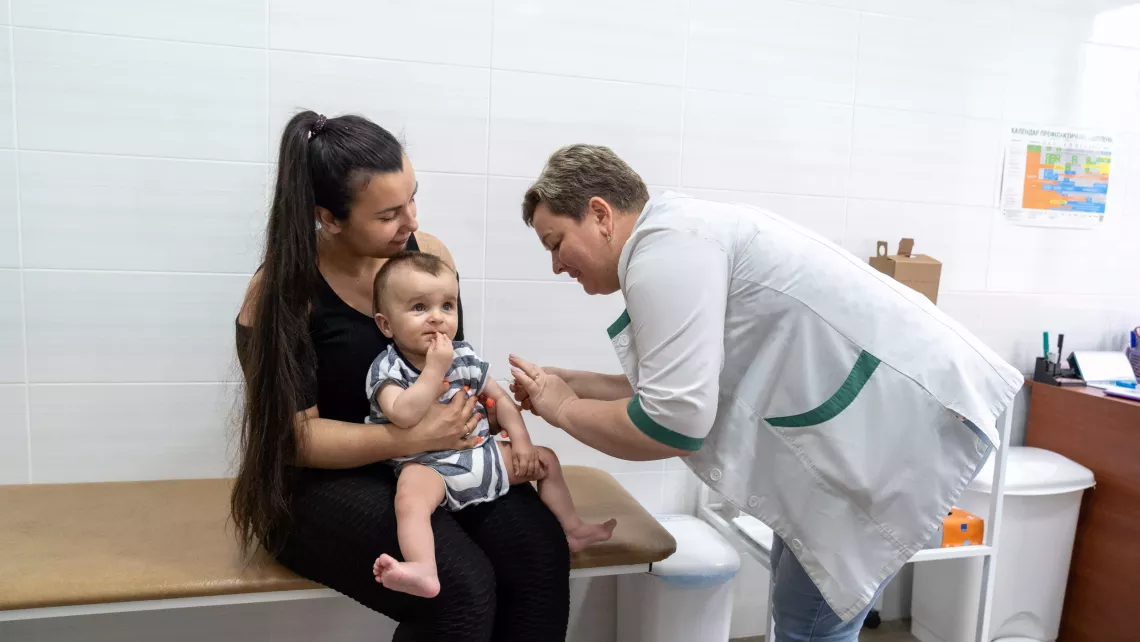
The average cost to fully vaccinate a child under 24 months in low- and middle-income countries (LMICs) is US$73, with a range between US$46 and US$130. This estimate includes vaccine procurement, cold chain, logistics, and service delivery costs.
For ECAR middle-income countries, contextualized estimates range between US$40–60, due to self-procurement, variable cold chain infrastructure, and delivery modalities.5
UNICEF’s Programme in Action
UNICEF is seeking investments in four core pillars to reach every child with life-saving vaccines:
- Identifying and targeting zero-dose and under-immunized children through investment in outreach, equity mapping and campaigns to reach children in fragile settings, rural and marginalised communities.
- Strengthening vaccine management systems including through ensuring sustainable cold chain, vaccine supply and delivery.
- Building confidence in vaccines and demand for immunization services through evidence-based strategies and community driven solutions that empower families, build trust and support informed decision-making.
- Sustaining strong health systems with adequate investment in primary healthcare, ongoing support for health workers and capacity to introduce new vaccines.
Childhood immunization programmes require continued investments, but their benefits to children and society vastly outweigh their cost. Investments in immunization and health systems make economic sense. UNICEF know how to get the right vaccines to the right children at the right time.
When you invest in vaccines, you invest in stronger societies, resilient economies, and the health of future generations. Public-private sector partnerships can close critical gaps, reach zero-dose children, and strengthen health systems across the region.
Endnotes
- Sim, S. Y., Watts, E., Constenla, D., Brenzel, L., & Patenaude, B. N. (2020). Return On Investment From Immunization Against 10 Pathogens In 94 Low- And Middle-Income Countries, 2011–30. Health Affairs, 39(6), 112-120. doi:10.1377/hlthaff.2020.00103
- Pike, J., Melnick, A., Gastañaduy, P. A., Kay, M., Harbison, J., Leidner, A. J., Rice, S., Asato, K., Schwartz, L., & DeBolt, C. (2021). Societal Costs of a Measles Outbreak. Pediatrics, 147(4), e2020027037. doi:10.1542/peds.2020-027037
- Mapping global trends in vaccine confidence and investigating barriers to vaccine uptake: a large-scale retrospective temporal modelling study de Figueiredo, Alexandre et al. The Lancet, Volume 396, Issue 10255, 898 - 908
- State of Vaccine Confidence in EU, 2022. Available at: State of Vaccine Confidence in EU, 2022 – The Vaccine Confidence Project
- UNICEF Costs of Fully Vaccinating a Child Countries Eligible for Gavi Vaccine Prices, August 2024 https://www.unicef.org/media/161751/file/Standard %20costs%20of%20fully%20vaccinating%20a%20child_ UNICEF_2024.pdf.pdf