In Focus: Protecting children affected by migration and forced displacement
Ensuring safety and support for every child in Europe and Central Asia

Highlights
Migration and displacement are urgent global issues, fuelled by challenges that include political instability, conflict, climate change, natural disasters, and the need to find better economic opportunities.
Millions of people, including many children, leave or are forcibly displaced from their homes to seek safety and a new life, either within or beyond their borders.
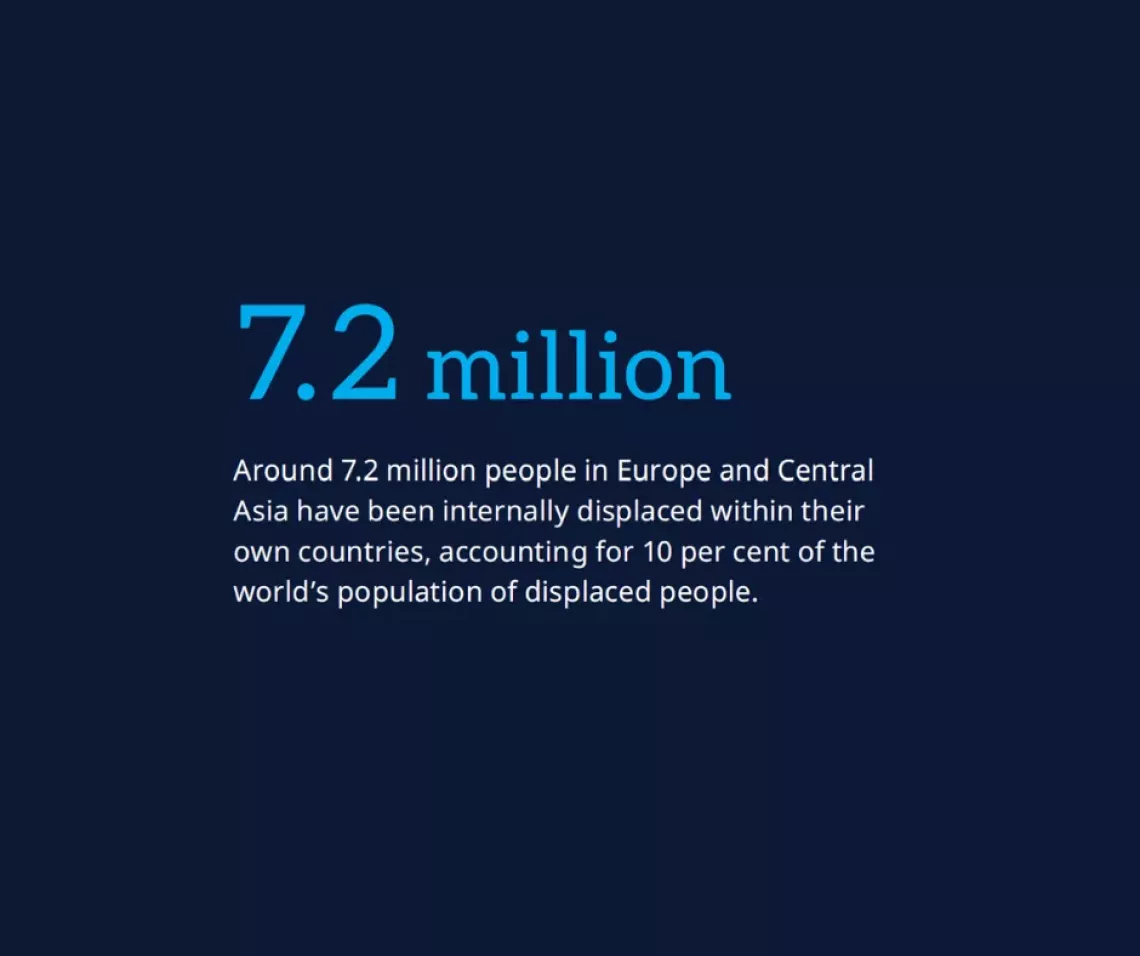
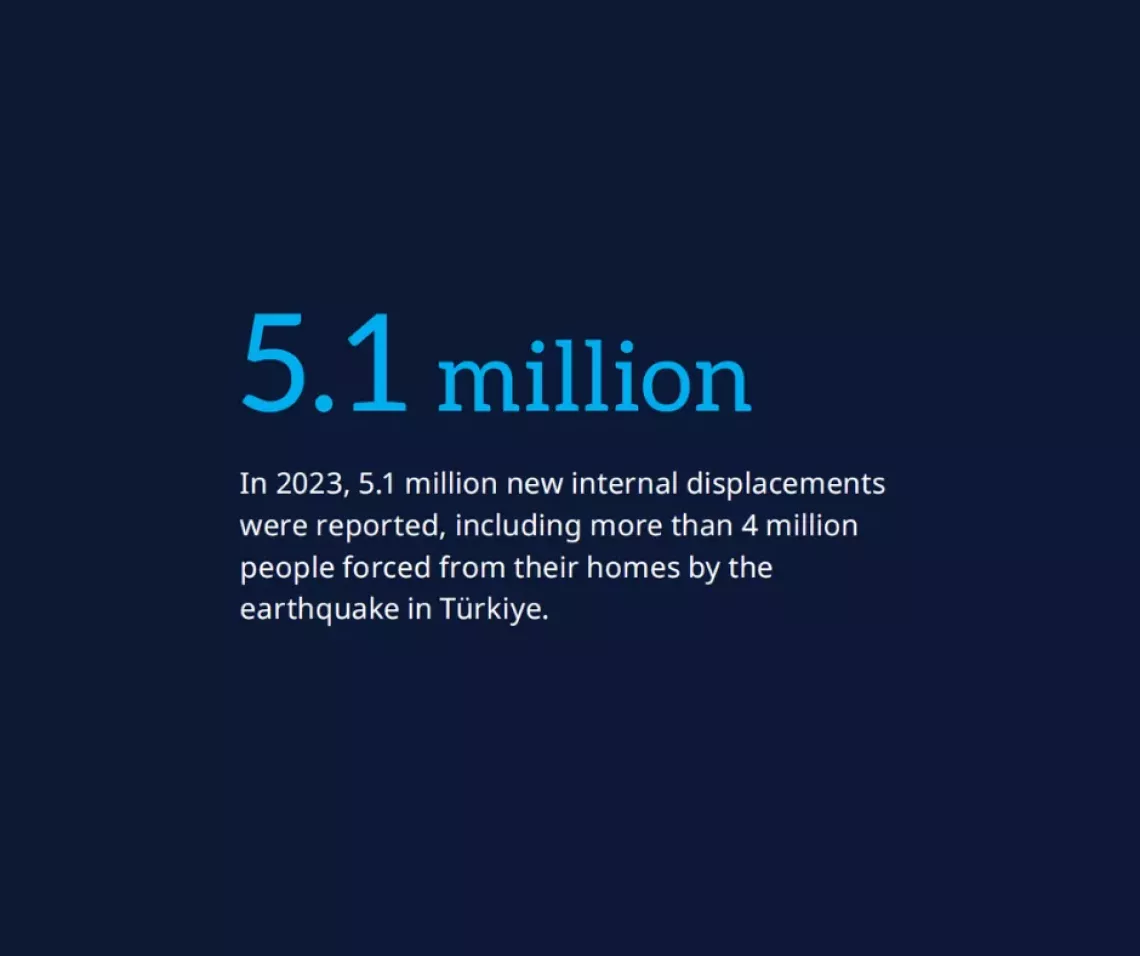
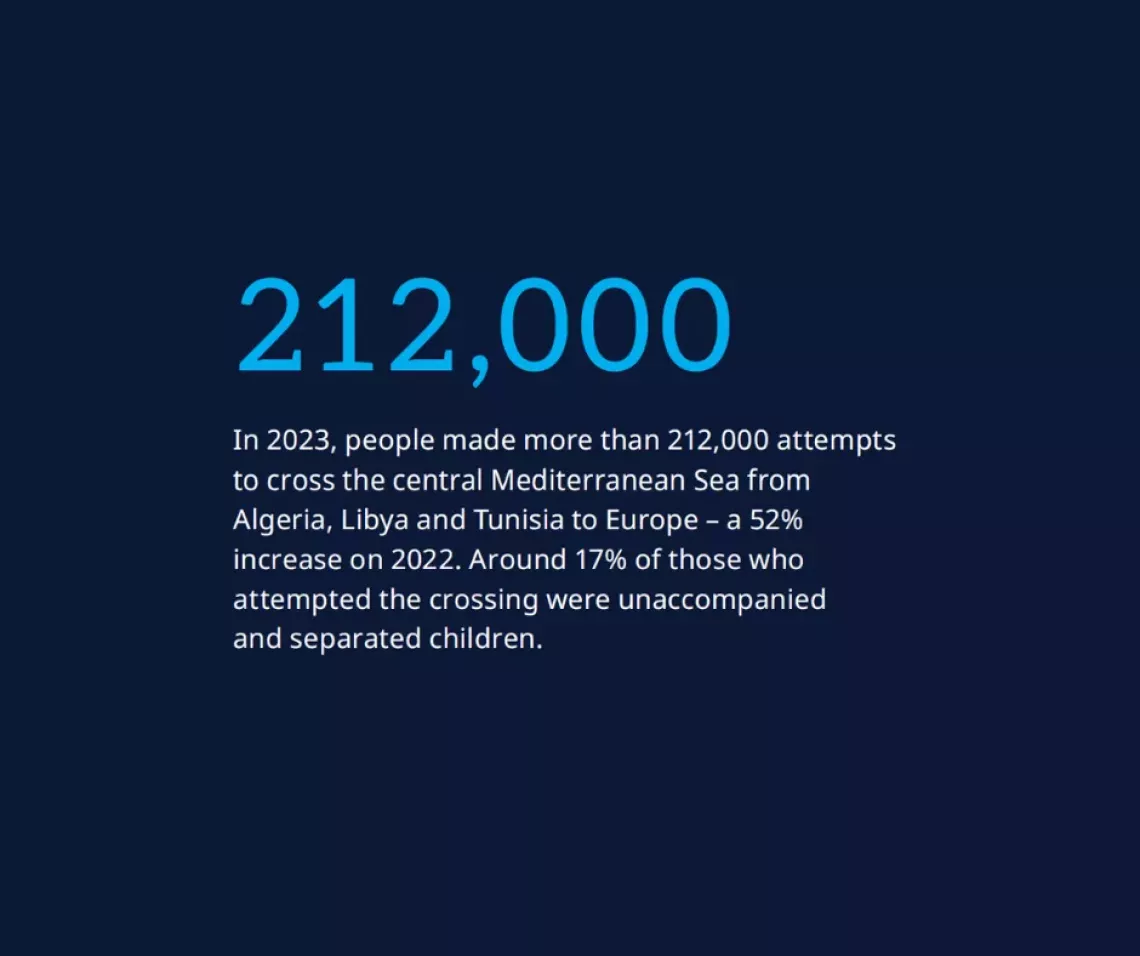
Displacement and migration affect children in Europe and Central Asia in different ways. There are the children who have been internally displaced within their own countries, such as Türkiye and Ukraine, with the region now accounting for 10 per cent of internally displaced people worldwide. There are also the children who have crossed the borders between Ukraine and its neighbouring countries. And there are the many children who make perilous journeys to Europe across the Mediterranean Sea and Western Balkan routes, risking their lives in their quest for safety, peace and a better life.
Children who arrive in Europe from other parts of the world are often met with overcrowded and inadequate reception facilities, long and bureaucratic procedures, and a lack of basic services, including health and education. Many fall into the hands of people smugglers and traffickers, while others remain in communities where they may face discrimination and live in constant fear of being returned.
Those who are sent back to their countries of origin may struggle to reintegrate into their home communities. Children affected by migration and displacement are also vulnerable to statelessness, which undermines their fundamental human, civil, political, economic, social and cultural rights.
Addressing the risks faced by displaced children and those who have migrated, whether they have crossed international borders or remain within their own country, is a top priority for UNICEF in Europe and Central Asia. We recognize that they are often highly vulnerable and are entitled to specific protection under international treaties, as well as national laws.
Guided by the Convention on the Rights of the Child, we work with countries to strengthen national child protection, social protection and migration and asylum systems to ease the risks children face as they move. We provide life-saving services, from shelter to healthcare, along migratory routes. And above all, we take a holistic approach, with our support based on the needs and rights of each individual child, regardless of their origins or migration status.
Files available for download
Fast facts






Key policy frameworks
Convention on the Rights of the Child (1989)
All rights in this convention apply to all children without exception, including those affected by migration and displacement.
Convention on the Reduction of Statelessness (1961)
This convention aims to prevent and reduce statelessness.
Joint General Comment No. 4 (2017) of the Committee on the Protection of the Rights of All Migrant Workers and Members of Their Families and the Joint General Comment No. 23 (2017) of the Committee on the Rights of the Child
These set out State obligations on the human rights of children in the context of international migration in countries of origin, transit, destination and return.
The 2018 Global Migration Compact and Global Compact on Refugees
These include strong commitments from States to children affected by migration and displacement.
Convention relating to the Status of Stateless Persons (1954)
This convention aims to ensure that stateless people enjoy a minimum set of human rights.
Convention Relating to the Status of Refugees (1951)
This convention defines who a refugee is and sets out the rights of individuals who are granted asylum, and the responsibilities of countries that grant asylum.
The EU Pact on Migration and Asylum
This pact, adopted by the Council of Europe in May 2024, demands safeguards for the most vulnerable, in particular families with children, as the rights and best interests of children must always be prioritized.
Challenges
The forces that drive children from their homes are as varied as they are for adults, and include conflict, climate change and the pressing need to escape grinding poverty. Why children migrate, how they migrate and where they end up are all shaped by these and other factors, including their gender, inequalities and more. But in every case, displacement increases their vulnerability to discrimination, abuse, violence and exploitation.
A lack of safe and legal migration pathways leads many to take dangerous routes to get to their destinations, increasing their vulnerability and exploitation at the hands of people smugglers and traffickers. While on the move, children may face harsh environmental conditions, and a lack of adequate shelter, food, water and sanitation and healthcare, as well as the ever-present threat of violence and death.
Boys and girls who are displaced from their homes face heightened vulnerabilities to exploitation, violence and abuse whilst in transit and at their intended destination. Some are more vulnerable than others, including those travelling alone and those undertaking the longest journeys. Migration routes can be particularly dangerous for adolescent girls, particularly those travelling alone. Many are already fleeing violence, including child marriage, in their home country, or may be being trafficked, and they face severe risks of gender-based violence (GBV) before, during and after migration.
A high percentage of adolescent girls who have taken the central Mediterranean route have survived sexual violence, and boys are also reported to be subjected to high levels of such violence during their journeys.
Children arriving in Europe are regularly housed in overcrowded and inadequate reception facilities often with adults, and with little privacy. Some children, including those who are unaccompanied, are detained as part of immigration control, either on arrival, or before being returned to the country where they first entered Europe or their country of origin. Such returns are often carried out with no guarantee that this is in the child’s best interests. Those from countries of origin that are considered to be ‘safe’ are unlikely to receive asylum in Europe and face deportation if they cannot regularize their stay. Children who may have spent years in Europe – or who were even born there – may struggle to resettle in countries of origin that do not offer them any specific, additional support.
Identifying children at high risk
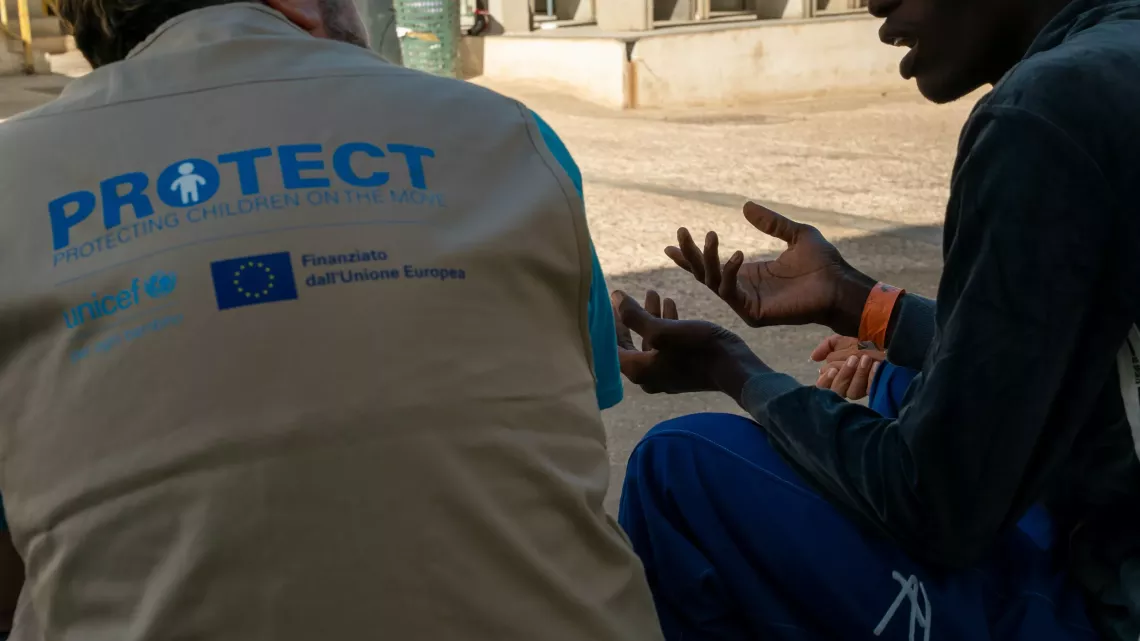
Nine-year-old Saidou* from Guinea is travelling with a friend of his father. He says his parents were not allowed to board the same boat, so they entrusted him to this person, hoping to be reunited with him soon. Saidou cries when the man is transferred to another centre to start his journey in Italy.
Children like Saidou who are travelling alone need immediate and intensive support to protect them from traffickers, connect them to services, and safeguard their physical and emotional health and well-being. UNICEF works with national authorities to identify them, ensure their transfer to adequate reception facilities and support their specialized care, guided by their answers to three key questions:
“How old are you?”
“Are you travelling alone?”
“Is the adult with you a relative or not?”
UNICEF has also developed specific guidance to help frontline staff identify unaccompanied girls. Unlike an unaccompanied boy, who is likely to travel in a group with other boys, an unaccompanied girl may embed herself in what appears to a family. The 10 signs that a girl is unaccompanied include a girl who does not speak the same language as the adults with whom she is travelling, or who looks ill at ease in their company. The guidance enables border officials, security, police, reception staff and others to learn the signs, improve identification and connect girls to the support they need.
*name changed to protect privacy
Children’s vulnerability is heightened by a lack of effective mechanisms to identify and refer them, manage their cases or determine their best interests. There are not enough options for the care or legal guardianship of children who are unaccompanied and separated, or to address GBV.
Limited access to services, including education, has a serious impact on children’s well-being and their prospects for inclusion in their new societies. Education systems in Europe, for example, often struggle to absorb these children and give them the extra support they need. Some parents may even be reluctant to enrol their children in schools before they reach their desired destination.
Despite these acute risks and a range of EU initiatives, including the EU Child Guarantee, to spotlight support for children affected by migration and displacement, there has been a general ‘hardening’ of national legislation and of public attitudes. This makes it even more difficult for children to access the protection to which they are entitled and to regularize their presence in Europe. While many local communities and authorities have been welcoming and supportive, many children who have left their own countries still endure resentment, discrimination and xenophobia.
Support for people displaced by the 2023 earthquake in Türkiye
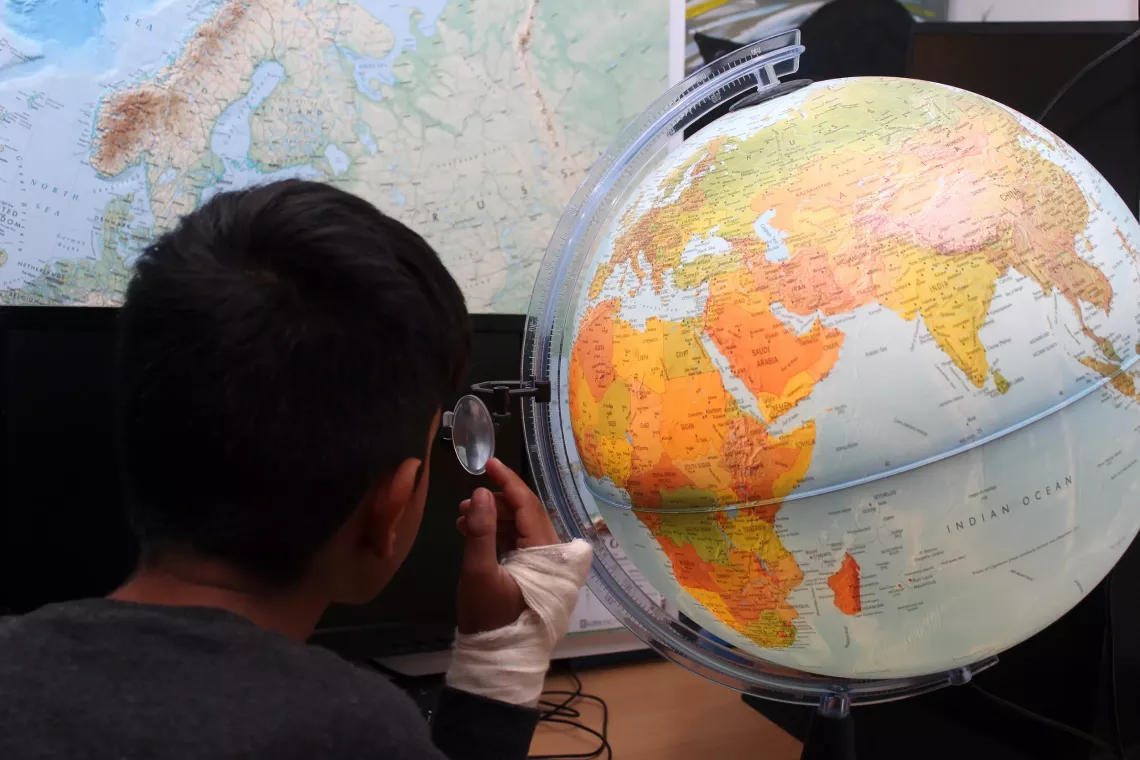
”Everything will get better, we will see better days and we will build a new life together. We’re going to have a new house, we’re going to come back,” says five-year old Elanur, who lost her home in the 2023 earthquake in Türkiye. She and her family have had support from the UNICEF-supported child-friendly space in Kahramanmaraş where Elanur and other children can get the help they need to regain some sense of normalcy and hope. “These experiences remind us that we do not own anything in this world,” says Elanur’s mother, “that all of us and everything are temporary. It doesn’t matter if we’re rich or poor, everyone’s house is gone. Look at the irony of life, we couldn’t go out during the pandemic, now the pandemic is over, but we can’t go home.”
UNICEF’s work for children
UNICEF works with governments and other partners to strengthen national systems for child protection, social protection and migration and asylum. Our aim is to reduce the risks faced by children affected by all forms of migration and displacement in Europe and in Central Asia and ensure their long-term support. Meanwhile, we work to meet their immediate humanitarian needs for protection, education, health, nutrition and participation.
We work with countries to ensure the protection of children from violence, abuse and exploitation, calling for safe and legal channels for migration, and supporting governments and service providers on case management and child-friendly reception services. We work with civil society organizations to serve hundreds of thousands of children in Bulgaria, Croatia, Germany, Greece, Italy, North Macedonia, Serbia and Slovenia with psychosocial and other community-based child protection support through one-stop shops, such as Child and Family Support Hubs. Mobile child and mother-friendly safe spaces supported by UNICEF teams also help to provide vital protection and safeguarding.
UNICEF recognizes that no child should ever be detained for immigration purposes. We call for policies to end child immigration detention, drawing on national data and other evidence to make the case, while helping national authorities to build or strengthen alternatives to detention. In Italy, where most children who arrive are unaccompanied, UNICEF has worked with the authorities to improve protection standards and monitoring mechanisms in centres for unaccompanied children. Italy has also led the way, with UNICEF support, in building a network of legal guardians for these children – a process that is now being replicated in Greece. We also call for timely relocation, family reunification and other durable solutions for children.
Developing a guardianship scheme for unaccompanied and separated children in Greece
UNICEF is working with the Greek Ministry of Migration and Asylum to finalize the monitoring framework for the country’s new guardianship scheme for unaccompanied children. This comprehensive framework includes reporting tools, feedback mechanisms and complaint forms that are designed to be accessible for all unaccompanied children. The scheme, which started in 2024 with continued technical support from UNICEF to the Ministry, emphasizes the need to assess the best interests of each individual child in order to address their vulnerabilities, with a priority focus on unaccompanied girls. The guidelines for the scheme underscore the commitment to assign guardians to vulnerable girls, while the monitoring and evaluation framework includes specific indicators to ensure that girls have a say in the decisions that affect them, and are active participants in the Greek education system.
UNICEF has reinforced the capacities of social workers and other frontline service providers in Greece, Italy, and across south-eastern Europe on child protection and GBV prevention and response by rolling out its guidelines on the best interests’ principle and the protection of unaccompanied and separated children. In Central Asia – in Kazakhstan and Kyrgyzstan, in particular – we have worked with authorities to document and improve the way in which the children of migrant workers are identified and supported.
We also work with governments to ensure that children have access to public schools and healthcare, ultimately paving the way towards their social inclusion. This includes working with governments to integrate displaced and migrant children into formal education.
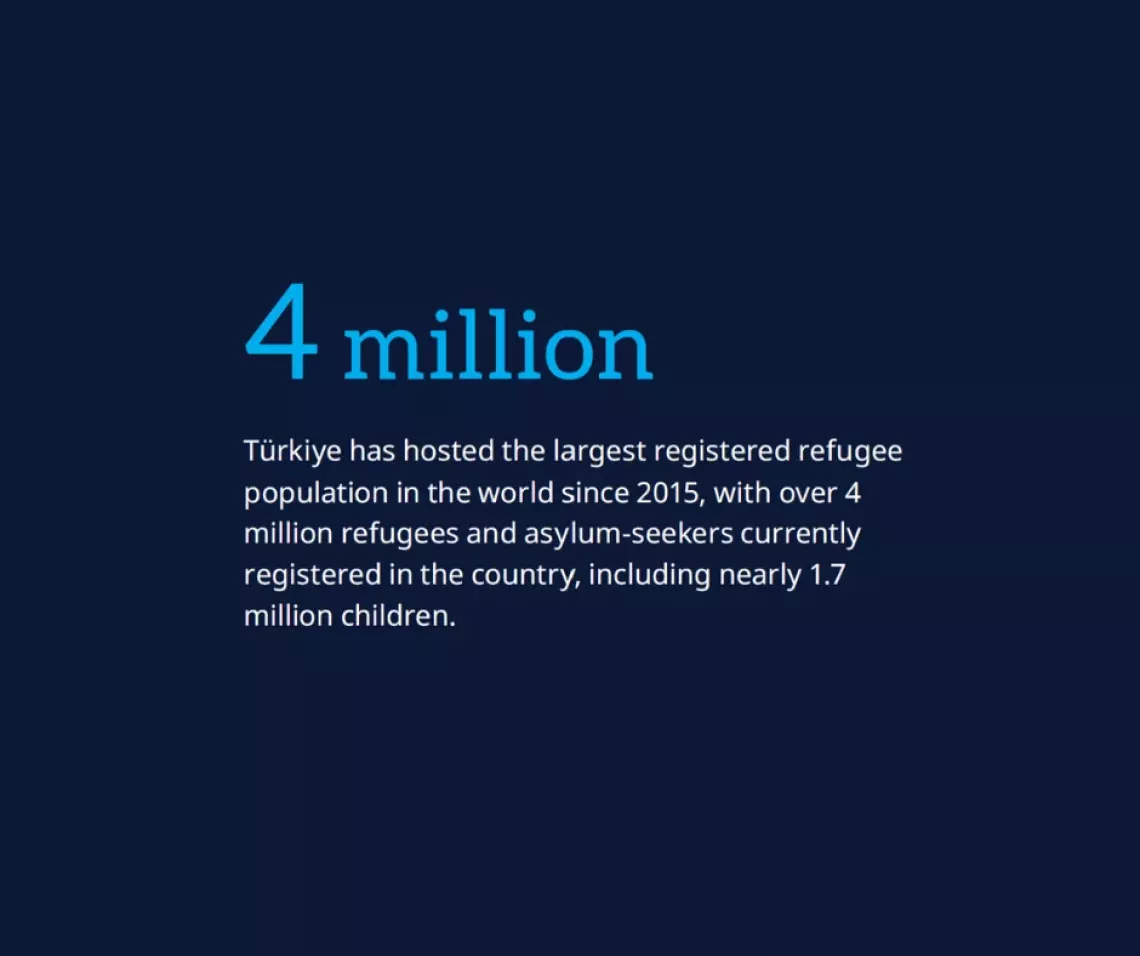
We have prioritized their integration into mainstream schools in Türkiye, for example, where most refugee children from Syria are now in school.
We track progress, trends and changes, aiming to increase the availability of data on refugee and migrant children to inform advocacy, programming and reporting, upholding our accountability towards the children we serve and our donors.
Finally, we aim to amplify the voices of children affected by migration. In Italy, for example, we have worked with the U-Report social messaging tool to ensure their active participation in the issues that concern them.
Support for children who have fled Ukraine
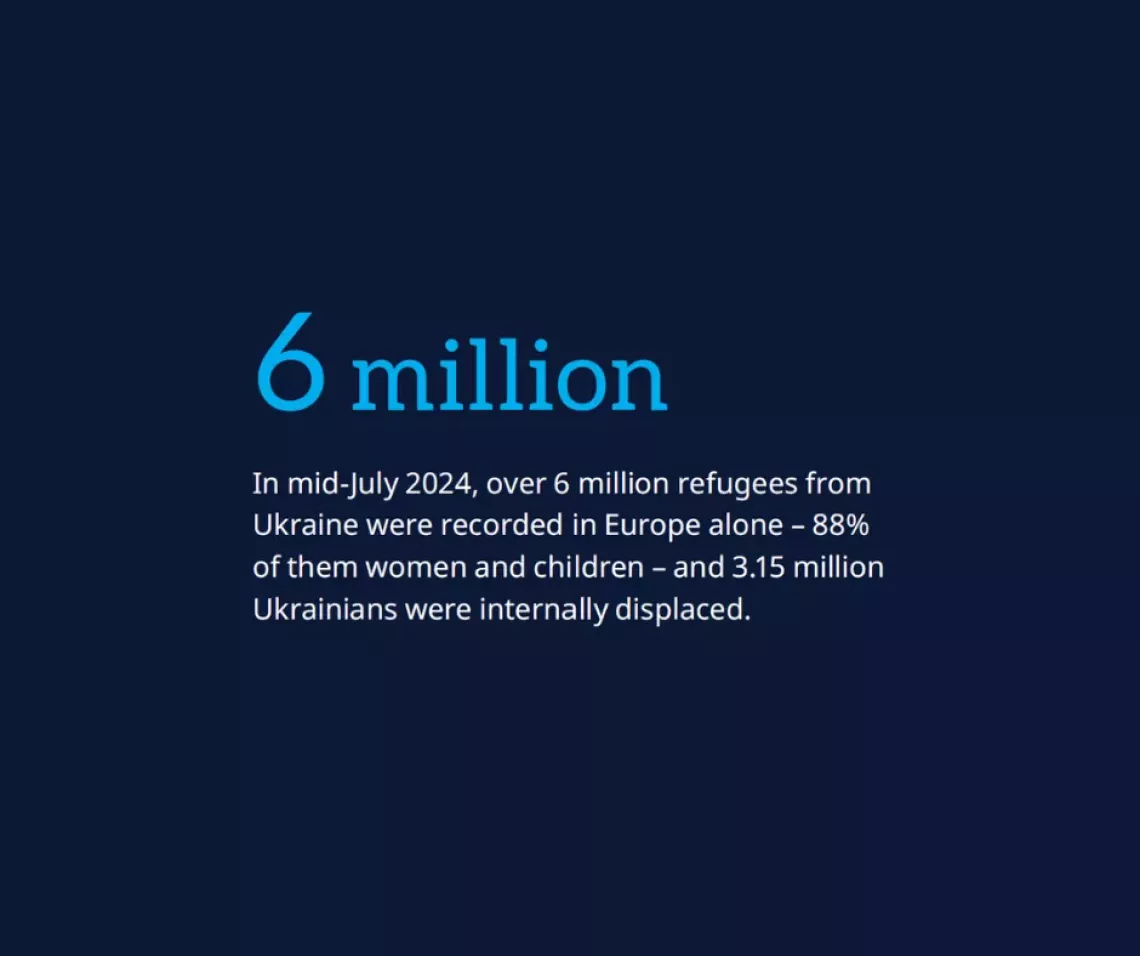
UNICEF and its partners were already working in Eastern Ukraine to support children affected by the ongoing war when it escalated in 2022, sparking the biggest population movement seen in Europe since World War 2. As millions of people fled westward within Ukraine, or crossed the borders into neighbouring countries, UNICEF raced to meet their critical and escalating needs for safe water, health care, education and protection.
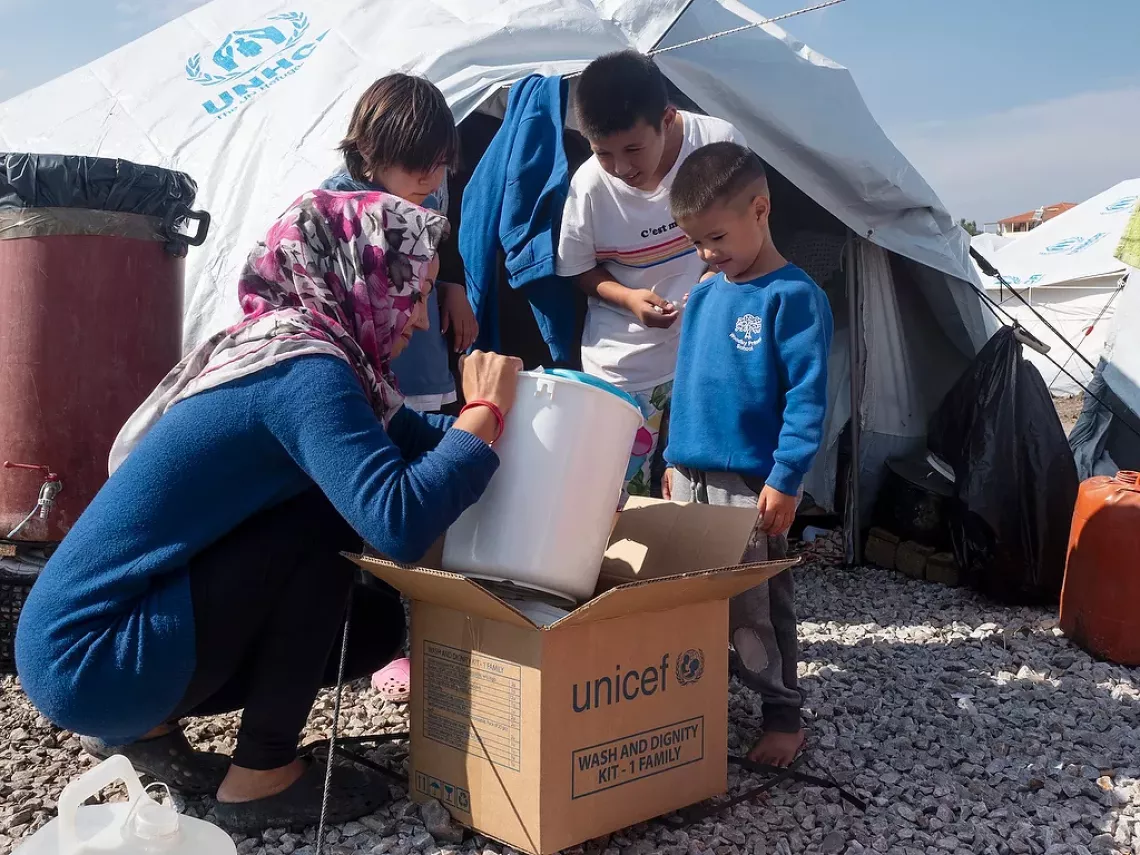
Our immediate emergency response included the delivery of family hygiene kits, baby diapers, maternal health kits, hygiene kits, disinfectants and bottled water to health and social institutions. We worked with partners to provide safe drinking water supplies through water trucking and the delivery of bottled water.
From the outset, we have focused on the need of every child to have some sense of normalcy, providing recreation kits, school-in-a-box kits and early childhood development kits to areas with large concentrations of displaced families. There has also been support for mobile child protection teams who provide psychosocial care, mental health support and protection services.
We have worked with the UN High Commissioner for Refugees (UNHCR) and other partners to activate Blue Dot safe spaces: hubs that bring together critical protection services, support and information for those fleeing the war. There is a strong focus on children and others at greatest risk – particularly unaccompanied and separated children, people with disabilities, those who may have been trafficked, survivors of sexual or gender-based violence and those from the LGBTQI+ community.
The UNICEF Regional Office for Europe and Central Asia has also played a key role in supporting humanitarian cash transfers to support tens of thousands of the most vulnerable families with children. We have provided guidance on how authorities and aid workers can best support those who have fled Ukraine, as well as direct information for Ukrainian children and families on their entitlements, on how and where to access services, and more.
There has also been tailored support for adolescents and young people who are building new lives in other countries, including assistance with independent living arrangements.
Our work for children fleeing Ukraine has been supported by UNICEF Refugee Response offices in Czech Republic, Hungary, Poland and Slovakia and by our Offices in Ukraine, Belarus, Bulgaria, Croatia, Greece, Georgia, Italy, Moldova, Montenegro, Romania, Serbia and Türkiye.
Call to action
UNICEF calls for six actions to protect all children affected by migration and displacement.
- Protect child refugees and migrants, particularly unaccompanied children, from exploitation and violence.
- End the detention of children seeking refugee status or migrating.
- Keep families together as the best way to protect children and give children legal status.
- Ensure that all refugee and migrant children keep learning and have access to health and other quality services.
- Press for action on the underlying causes of large-scale movements of refugees and migrants.
- Promote measures to combat xenophobia, discrimination and marginalization in countries of transit and destination.
Urgent action is needed to close the continuing gaps between government commitments to children affected by migration and displacement and their everyday reality, with many of them still denied their most fundamental rights.
Migration and asylum policy is currently high on the public and political agenda. While much of the rhetoric is negative, today’s debates are opportunities to highlight the acute risks faced by migrant and displaced children and make a strong case for their protection. This case can draw on the policy and legal frameworks that are already in place, all of which require strong commitments from countries to take specific action to protect children affected by migration and displacement from the unique risks they face.
With this robust framework in place, there is an historic opportunity to strengthen national protection, education and health systems to recognize and uphold the rights of all children, regardless of their migration status.
Guided by a child-rights approach, UNICEF will continue to speak out for children affected by migration and displacement, and engage with governments, civil society and other partners across Europe and Central Asia to promote their right to a peaceful, safe and secure childhood.