Adolescence in Europe
The complex relationship between harmful online content and children’s experiences of violence

Highlights
Violence did not begin with the internet. But never before have so many children had such easy access to imagery, video, information and contact with other people. Some of these interactions perpetuate harmful stereotypes about how girls and boys should be treated – or how they are expected to behave – and may exacerbate violence.
Files available for download
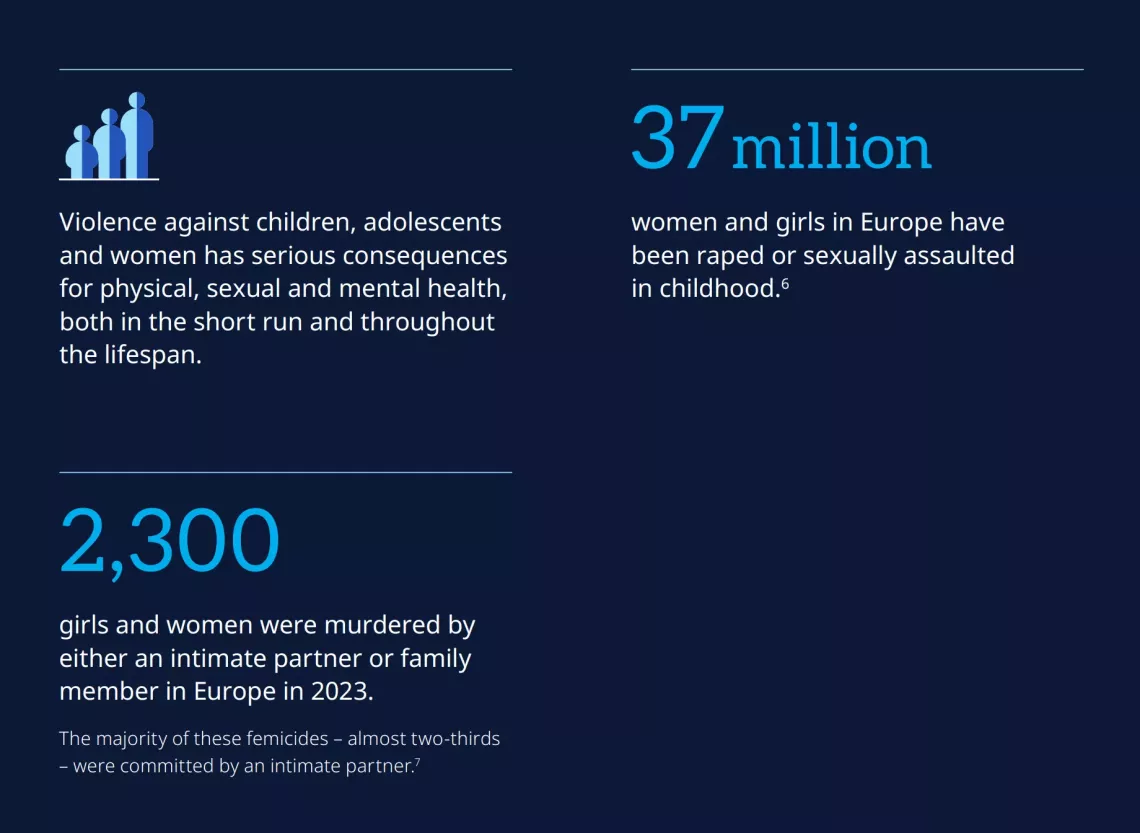
Stereotypes that devalue women and girls – and that reinforce norms, aggression, power and structural inequalities – are global challenges with dangerous consequences. They are often used to justify violence, blame victims, re-victimize survivors, diminish the importance of women’s and girls’ autonomy and bodily integrity. They also prioritize the reputations of perpetrators, families and institutions over the well-being of those who experience violence.1
Violence impacts survivors in many ways, including its negative consequences for their physical, sexual and reproductive health. It can also lead to mental health issues including depression, anxiety and posttraumatic stress disorder. Different individuals are affected differently.
An analysis of data from 44 countries globally found that norms condoning wife-beating and male control of female behaviour were among the strongest predictors of physical and sexual intimate partner violence against women and girls at the national level.2 The analysis found that violence was driven by societal norms that perpetuate harmful stereotypes around girls, boys, women and men – and were unrelated to factors like national income or GDP, with no difference between rich and poor countries.3 Research also shows that boys and men who believe that women are not equal to men, and who tolerate – or even advocate for – violence against women are more likely to perpetrate violence against women and children.4,5
As digital environments and technology become more embedded in everyday life, there are continuing questions surrounding if and how digital media shapes attitudes and behaviors amongst adolescents and for whom these effects are most significant. There is a need for more comprehensive research to fully explore and understand the impacts of harmful online content on children’s experience of and exposure to violence in the wider context of their engagement with digital spaces, recognising that children also have capacities to question and challenge such content. This is an area of research in which UNICEF continues to invest efforts. The impact of the internet and social media on adolescent behaviour and well-being has so far been mixed. A growing body of evidence, however, indicates that certain kinds of technology use – including the type of content consumed – may be linked to certain types of negative attitudes or behaviours. It may also have negative impacts on adolescents’ mental health, well-being, and, in some cases, physical safety.
We also know that the digital environment has the potential to offer children opportunities. Children use the internet to learn, connect with others and express themselves. It is an integral part of many children’s lives today. It is also essential that we continue to work to ensure that girls and boys have equal access to technology, as currently, in many settings, girls have less access to safe and empowering digital environments.
However, the internet and many digital technologies were not designed with children – or their rights and risks – in mind. While recognizing the potential positive opportunities, there are serious risks of harm that need mitigation.
The connection between online pornographic content and behaviours among children
We know that some online content can harm children. Exposure to pornographic content at a young age may lead to poor mental health, sexism, objectification, sexual violence, and other negative outcomes. Among other risks, when children view sexual content that portrays abusive and violent acts, they may come to view such behaviour as normal and acceptable.
UNICEF is alarmed by the massive quantity of pornography available online, including increasingly graphic and extreme content that is easily accessible to children of all ages. Efforts to regulate content and restrict children’s access have not kept pace with technological shifts. While many jurisdictions have effectively restricted children’s access to pornograhy in non-digital media, including by making it illegal to distribute pornography to children or knowingly expose them to it, efforts to do the same in digital environments have not been effective.
While questions remain about causal links, a number of studies have found associations between exposure to certain kinds of pornographic content and problematic sexual behaviour among adolescents, particularly boys. Paired with entrenched societal norms that legitimize dominance, objectification and control over girls and women, this raises concern that exposure to violent sexual content online may reinforce or exacerbate harmful beliefs and behaviours.
For example:
- One study of more than 1,600 15- and 16-year-old boys found that those who were exposed to violent pornography were up to three times more likely to perpetrate sexual violence or be victims of violence themselves.9
- Another study of more than 4,500 teenagers aged 14-17 in Europe found that boys were much more likely than girls to watch online pornography, and boys who did so regularly were more likely to have perpetrated sexual coercion and abuse, sent sexual images or messages, and to hold negative gender attitudes.10
- A 2023 meta-analysis of 16,200 children and adolescents, with an average age of 14 years, found that children exposed to violent sexual content were 2.5 times more likely to engage in problematic sexual behaviours. Boys were found to be especially likely to engage in problematic sexual behaviours, as well as to view online sexual content.11
- A 2017 review of 43 studies came to a similar conclusion, finding that when adolescents viewed more sexually explicit or sexually violent media, they were more likely to engage in domestic and sexual violence. This impact was stronger for boys than for girls.12
Where there does seem to be a relationship between children’s consumption of sexually violent content online and their offline behaviour, the relationship is likely to be two-way. Teenagers who are more sexually aggressive and abusive, or who hold negative gender attitudes may be more likely to seek out violent sexual content.13
Technology-facilitated sexual violence
As more and more children gain access to the internet, especially through smartphones, their risk of being sexually harmed online is increasing. While data in this area are limited in Europe, an online survey of 18-year-olds in four European countries (France, Germany, the Netherlands and Poland) by WeProtect found that:14
- More than one in two 18-year-olds had received sexually explicit content from either an adult they knew, or someone they did not know, before the age of 18. More than one in 10 experienced this before their ninth birthday.
- Nearly one in three had an adult they knew, or someone they did not know, ask them to keep some part of their sexually explicit interactions online a secret.
- One in three had someone share sexually explicit images or video of them without their permission.
- More than one in two were asked to do something sexually explicit online that they did not want to do or felt uncomfortable with.
Almost seven in 10 respondents (68 per cent) had experienced at least one of the above before the age of 18.8
Nearly 80 per cent of girls reported experiencing at least one of these sexual harms in childhood compared to 57 per cent of boys. A quarter of girls who received sexually explicit content from a stranger were under the age of 12.
Similarly, most studies indicate that adolescent girls experience higher rates of sexual violence than adolescent boys. Evidence has also suggested that girls are significantly more likely than boys to experience non-consensual image-sharing, victimization and online sexual solicitation by adults during childhood.15,16
The same WeProtect report from Europe also found that online sexual interactions between peers were very common – and made many children, particularly girls, uncomfortable and scared. Sexual content created by adolescents themselves in the context of consensual peer relationships, often known as ‘sexting’ can be harmful, including when the content is shared non-consensually.

The data show that:17
- In the four European countries studied, one in six 18-year-olds experienced peers sharing sexually explicit images or video of them without their consent.
- Nearly one in three respondents experienced a peer either sharing sexually explicit content with them or trying to talk to them about sexual topics online.
- While these interactions made less than one in three boys affected feel uncomfortable, it made seven in 10 girls feel uncomfortable and one in three girls feel scared.
- The different experiences of girls and boys are also clear in terms of how ‘sexting’ can affect adolescents’ reputations. In general, it often earns boys more respect and status among their peers, but gets girls more criticism and shaming.
Mobile phones are the most common device for exposure to sexual harm – and the age at which children first start to regularly access the internet matters
On average, children experience their first exposure to sexually explicit content online just two years after gaining regular internet access.18 Several reports now have found that first exposures to online sexually explicit content are most often accidental.19
In WeProtect’s survey of 18-year-olds in four European countries, the average age of regular internet access (i.e., getting a smartphone) was 11.9 years old; the average age for first exposure to sexually explicit online content was 13.8 years. Of all respondents who received sexually explicit content, 79 per cent received it on their mobile phone.20
Children and adolescents face significant barriers to seeking help
These barriers may be even greater in cases of online harm, particularly when a child has created or shared sexually explicit content of themselves. Reports show that adolescents often do not feel comfortable telling the adults around them when they face a problem online – and they do not get the education and support they need to deal with these problems appropriately.
In general, teenagers have limited access to age-appropriate education that teaches consent, healthy and safe sex and relationships, digital literacy and how to deal with sexual material online. When there are gaps in knowledge, it can be especially easy to fall back on societal norms and modelled behaviours, which are often negative.
All children need access to this type of education that is adapted to their age and the different experiences of boys and girls. As boys are more likely to see sexually explicit content online,21 they need support to understand and address its influence, including to promote understandings of consent and healthy relationships. And girls need education and support that recognizes and addresses the disproportionate risks they face. In addition to not receiving enough education, many children lack the protection they need from a responsible adult in their lives.
As an example, fewer than 6 in 10 18-year-olds in all four countries surveyed agreed with the statement “When I was under the age of 18, a responsible adult had a good awareness of what I was doing online.” Fewer than 2 in 3 18-year-olds in all four countries surveyed agreed with the statement “Before I turned 18, a responsible adult talked to me about online safety related to sex (e.g., how to deal with people making contact to discuss or share/request sexually explicit information or images)”.22
It is unsurprising, therefore, that in a different global report, WeProtect has found that relatively few children responded by reporting the problem online, speaking to a trusted adult, or changing their privacy settings.23
After receiving explicit content from an adult or a stranger:

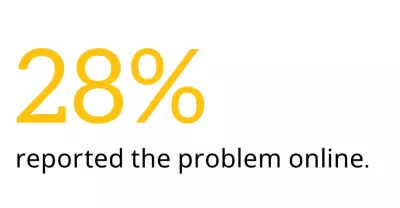
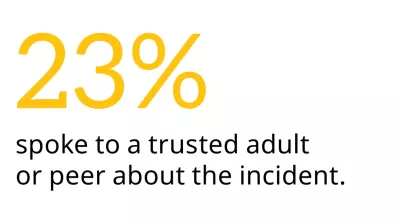
More children tried to deal with the perpetrator directly, with 59 per cent deleting or blocking the individual and 32 per cent asking the person to stop contacting them or to leave them alone.24
Taking any of these actions was far less likely when the child was from a racial or ethnic minority than when they were not.25
Other forms of harm and violence online
Many children are exposed to hate messages and violent or gory images or videos from a young age.26 In some countries, the number of children exposed to such content is especially high. In Poland, for example, more than half of children aged 12 to 16 have been exposed to hate messages, or to gory or violent images.27
There is also evidence showing that exposure to different types of harmful content is mutually correlated. In other words, if a child sees one type of risky content, they are more likely to see other types of risky content, resulting in accumulating risks for some children.28
The link between children consuming violent online content and acting aggressively is still being determined, and not all studies have found an association.29 There also are considerable methodological challenges with measuring how exposure to online content influences attitudes and behaviours.
There is, however, for some children, exposure to this type of content may have long-term effects. One study of nearly 900 adolescents, for example, found that those who consumed more music, video games, television, online content, or even cartoons that depicted “physical fighting, hurting, shooting, or killing” at age 10-15 were more than twice as likely to behave violently 5 and 10 years later.30
UNICEF’s response
UNICEF works to make the internet a safe place for children to learn, socialize and express themselves. We partner with governments to advocate for necessary regulation, and with tech companies to promote the implementation of child rights due diligence. We also support ministries of education to teach children digital-literacy and online-safety skills.
We gather evidence on children’s digital rights, opportunities and risks to better understand how use of digital technology contributes to their lives – and when it amplifies their risk of harm. We support countries to ensure equitable digital opportunities for girls where they are left behind.
UNICEF prevents and responds to the online sexual exploitation of children at the country and global level. We support coordinated national responses to online child sexual exploitation in all regions - using the WeProtect Model National Response framework - and strengthen the capacity of on-the-ground responders to provide services to survivors. We work closely with governments to guide investments in evidence-based preventive programmes and awareness-raising. And we collaborate with tech companies to make digital products safer for children, including by providing industry guidelines and recommendations on embedding child rights into digital business activities.
UNICEF also works to promote safe, inclusive digital spaces that are co-designed with and for girls and women. These include Laaha, the first ever platform to provide multilanguage content on digital literacy and online safety, and more. As well as supporting such spaces to provide accessible support, information and a sense of community, we continue to evaluate their impact.
Recommendations
Policymakers and other stakeholders must take immediate action to eliminate harmful social and cultural norms that reinforce gender stereotypes, power imbalances and inequalities - factors that contribute to violence online and offline.
Specifically, UNICEF is setting out a nine-point Call to Action for governments and stakeholders to tackle the complex relationship between harmful online content and children’s experiences of violence.
Call to action
UNICEF calls on all governments and stakeholders to:
- Review, update, and enforce legislative and regulatory frameworks to protect children from technology-facilitated violence and exploitation, ensuring alignment with international human rights standards and emerging digital threats, with safeguards that ensure children aren’t unnecessarily drawn into the criminal justice system. This includes minimizing the impact of online social media through a range of tools, including age assurance where appropriate.
- Invest in comprehensive prevention strategies that include education and skills-building and that are co-designed with children and adolescents. This should include integrating education that teaches consent and digital literacy and helps to break down the root causes of gender inequality. In addition, schools should be supported to build the capacity of teachers and school staff through training, ensuring they are confident and competent to address sensitive issues, challenge harmful stereotypes, and support children in accessing relevant services.
- Promote positive parenting and caregiver support programmes during early childhood through to adolescence, which include digital literacy. The quality of parent-child relationships is a key protective factor, which can address the root causes of gender-based violence and challenge harmful stereotypes while promoting caring, equitable relationships and non-violent interactions for the whole family.31
- Invest in the social work force, legal professionals, law enforcement, specialized cybercrime units, and other survivors’ services to ensure child-sensitive responses for boys and girls. This includes equipping frontline responders with the tools and expertise to address online violence effectively, identify at-risk children, and provide trauma-informed support to survivors.
- Provide specialized support for children who show harmful behaviours, including tailored psychosocial interventions and restorative justice approaches, focusing on understanding and addressing underlying causes of harmful behaviours. All children, including those exhibiting harmful sexual behaviours, should have access to age-appropriate, trauma-informed, therapeutic interventions and support.
- Take appropriate steps to prevent, monitor, investigate and punish child rights abuses by businesses in relation to the digital environment. This includes ensuring companies implement robust safety measures, reporting mechanisms, and child rights-by-design, including safety- and privacy-by-design.
- Invest in research to determine the most effective ways to teach digital literacy to children, in collaboration with children, adolescents, parents and caregivers, to understand how children can protect themselves from risks online. This also means closing the gap in digital literacy among parents and children, and ensuring active adult support for children’s digital experiences.
- Continue to explore ways to foster inclusive, child-sensitive and safe digital spaces that are co-designed with and for children and adolescents.
- Invest in research and data collection to build a stronger evidence base on what works to prevent and respond to technology-facilitated violence. This should include survivorinformed research and multi-stakeholder collaboration to monitor trends and enhance responses. It should also include children’s active participation, and be informed by children’s views and lived realities.
Endnotes
1. Guedes, Ana, et al., ‘Bridging the Gaps: A Global Review of Intersections of Violence Against Women and Violence Against Children’, Global Health Action, vol. 9, no. 1, 2016, article 31516, (https://doi.org/10.3402/gha.v9.31516).
2. Heise, Lori L., and Andreas Kotsadam, ‘Crossnational and multilevel correlates of partner violence: An analysis of data from populationbased surveys’, The Lancet Global Health, 3(6), e332–e340, 2015, (https://doi.org/10.1016/S2214- 109X(15)00013-3).
3. Ibid.
4. McCarthy, Katharine J., Rajib N. Mehta and Nicole A. Haberland, ‘Gender, Power, and Violence: A Systematic Review of Measures and Their Association with Male Perpetration of IPV’, PLoS ONE, vol. 13, no. 11, 2018, pp. 1–27.
5. Fleming, Paul J., et al., ‘Risk Factors for Men’s Lifetime Perpetration of Physical Violence Against Intimate Partners: Results from the International Men and Gender Equality Survey (IMAGES) in Eight Countries’, PLoS ONE, vol. 10, no. 3, 2015, article e0118639.
6. United Nations Children’s Fund, When Numbers Demand Action: Confronting the Global Scale of Sexual Violence Against Children, UNICEF, New York, 2024.
7. United Nations Children’s Fund, The State of Children in the European Union 2024, UNICEF EU Representation Office, Brussels, 2024, (www.unicef.org/eu/ media/2521/file/The%20State%20of%20Children%20 in%20the%20European%20Union%20.pdf).
8. Economist Impact, Estimates of Childhood Exposure to Online Sexual Harms and Their Risk Factors: A Study of Childhood Experiences of 18-Year-Olds in Four European Countries, WeProtect Global Alliance, London, 2023, (www.weprotect.org/wp-content/ uploads/WeProtect-Global-Alliance_EconomistImpact_English-full-report.pdf).
9. Rostad, Whitney L., et al., ‘The Association Between Exposure to Violent Pornography and Teen Dating Violence in Grade 10 High School Students’, Archives of Sexual Behavior, vol. 48, no. 8, 2019, pp. 2137–2147, (https://doi.org/10.1007/s10508-019-1435-4).
10. Stanley, Nicky, et al., ‘Pornography, Sexual Coercion and Abuse and Sexting in Young People’s Intimate Relationships: A European Study’, Journal of Interpersonal Violence, vol. 33, no. 19, 2018, pp. 2919–2944, (https://doi. org/10.1177/0886260516633204).
11. Mori, Chuka, et al., ‘Exposure to Sexual Content and Problematic Sexual Behaviours in Children and Adolescents: A Systematic Review and Meta-Analysis’, Child Abuse & Neglect, vol. 143, 2023, article 106255, (https://doi.org/10.1016/j. chiabu.2023.106255).
12. Madigan, Sheri, et al., ‘A Meta-Analysis of the Prevalence of Child Sexual Abuse Disclosure’, Child Abuse & Neglect, vol. 93, 2019, pp. 196–208, (https://pubmed.ncbi.nlm.nih.gov/29333966/).
13. Ibid.
14. Economist Impact, Estimates of Childhood Exposure to Online Sexual Harms and Their Risk Factors: A Study of Childhood Experiences of 18-Year-Olds in Four European Countries.
15. Sumner, Steven A., et al., ‘Prevalence of Sexual Violence Against Children and Use of Social Services—Seven Countries, 2007–2013’, MMWR Morbidity and Mortality Weekly Report, vol. 64, no. 21, 2015, pp. 565–569.
16. Walsh, Kerryann, et al. ‘Prevalence and Characteristics of Online Child Sexual Victimization: Findings from the Australian Child Maltreatment Study’, Child Abuse & Neglect, vol. 160, 2025, article 107186.
17. Economist Impact, Estimates of Childhood Exposure to Online Sexual Harms and Their Risk Factors: A Study of Childhood Experiences of 18-Year-Olds in Four European Countries.
18. Ibid.
19. Mori, Chuka, et al., ‘Exposure to Sexual Content and Problematic Sexual Behaviours in Children and Adolescents: A Systematic Review and Meta-Analysis’.
20. Economist Impact, Estimates of Childhood Exposure to Online Sexual Harms and Their Risk Factors: A Study of Childhood Experiences of 18-Year-Olds in Four European Countries.
21. Livingstone, Sonia, and Mariya Stoilova, Initial Response to Technology-Initiated Sexual Risks (IRTIS): Final Report, London School of Economics and Political Science, London, 2025, (https://eprints.lse. ac.uk/127158/1/EUKO_IRTIS_report_2025_final-1.pdf).
22. Economist Impact, Estimates of Childhood Exposure to Online Sexual Harms and Their Risk Factors: A Study of Childhood Experiences of 18-Year-Olds in Four European Countries.
23. Economist Impact, Estimates of Childhood Exposure to Online Sexual Harms and Their Risk Factors: A Global Study of Childhood Experiences of 18 to 20 Year Olds, WeProtect Global Alliance, London, 2024, (www.weprotect.org/economist-impact-globalsurvey/#report).
24. Ibid.
25. Ibid.
26. Kardefelt Winther, Daniel, et al. Children’s Exposure to Hate Messages and Violent Images Online, UNICEF Innocenti – Global Office of Research and Foresight, Florence, July 2023.
27. Ibid.
28. Ibid.
29. Przybylski, Andrew K., and Netta Weinstein, ‘Violent video game engagement is not associated with adolescents’ aggressive behaviour: evidence from a registered report,’ Royal Society Open Science, vol. 6, no. 2, 2019, (https://doi.org/10.1098/rsos.171474).
30. Ybarra, Michele L., Kimberly Mitchell and Jay Koby Oppenheim, ‘Violent Media in Childhood and Seriously Violent Behavior in Adolescence and Young Adulthood,’ Journal of Adolescent Health, vol. 81, no. 3, 2022, (https://pubmed.ncbi.nlm.nih. gov/35550330/).
31. Innocenti Global Office of Research and Foresight, Parenting Programmes to Reduce Violence Against Children and Women, UNICEF, Florence, 2023, (www.unicef.org/innocenti/global-office-researchand-foresight).