More than a third of Ukraine’s children remain displaced four years into war – UNICEF
UNICEF warns that for children displaced inside Ukraine, the war has followed them, as attacks hit major cities across the country and devastate the services children rely on
- English
- русский
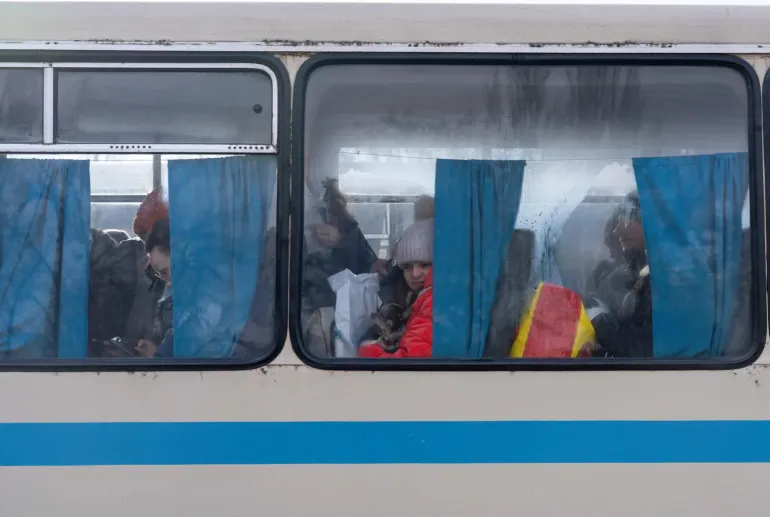
GENEVA/KYIV, 17 February 2026 – More than a third of Ukraine’s children – 2,589,900 – remain displaced as the war in Ukraine enters its fifth year. This includes more than 791,000 children inside Ukraine and nearly 1,798,900 children living as refugees outside the country.
“Millions of children and families have fled their homes in search of safety, with 1 in 3 children remaining displaced four years into this relentless war. For children in Ukraine, safety is increasingly hard to come by as attacks on civilian areas continue across the country. In many ways, the war is following these children,” said UNICEF Regional Director for Europe and Central Asia Regina De Dominicis.
Many children have been forced to flee their homes multiple times. A recent survey conducted by UNICEF found that of those displaced, 1 in 3 adolescents aged 15-19 years reported moving at least twice. Safety was cited as the most common reason for fleeing.
Bombardments, including intensified long-range strikes, have killed or injured more than 3,200 children since 24 February 2022. Last year saw a 10 per cent increase in child casualties compared to 2024, the third consecutive year in a row that UN-verified child casualties have increased.
The services children rely on have been decimated over the past four years and are under increased strain. More than 1,700 schools and other education facilities have been damaged or destroyed, resulting in 1 in 3 children unable to attend in-person schooling full-time.
Recent strikes on energy infrastructure have left millions of children and families struggling to survive in extreme sub-zero temperatures as they are forced to endure days without heating, electricity and water at home. Babies and young children are at the highest risk of respiratory illnesses and hyperthermia in these conditions, while medical facilities struggle to operate under attacks and reduced energy, with nearly 200 medical facilities verified as damaged or destroyed in 2025 alone.
Aside from the physical dangers, children’s mental health is increasingly under strain. Constant fear of attacks, endless sheltering in basements, and isolation at home with limited social connections have left adolescents struggling. A recent survey found that one in four 15–19-year-olds is losing hope of a future in Ukraine, pointing to an urgent need for safety and stability, and investment in the critical services and opportunities that children and young people need.
UNICEF has been working across Ukraine and in neighboring host countries to support children affected by displacement and ongoing violence, delivering life-saving assistance and essential services. UNICEF provides access to safe water, health care, nutrition, education, child protection and mental health and psychosocial support, while also helping repair and rehabilitate critical infrastructure such as schools, health facilities and water systems damaged by attacks.
In 2025, delivering through local authorities and partners, UNICEF reached 7 million people, including 2.5 million children with humanitarian support. UNICEF’s recovery programming, working with national and local authorities, strengthened social services for some 9.8 million people across the country.
“Obligations under international humanitarian law must be upheld and every possible measure to protect children and the civilian infrastructure they rely on must be taken. Every child has the right to grow up in safety and without exception that right must be respected,” said De Dominicis.
Media contacts
About UNICEF
UNICEF promotes the rights and wellbeing of every child, in everything we do. Together with our partners, we work in 190 countries and territories to translate that commitment into practical action, focusing special effort on reaching the most vulnerable and excluded children, to the benefit of all children, everywhere.
For more information about UNICEF and its work for children, visit https://www.unicef.org/eca/.