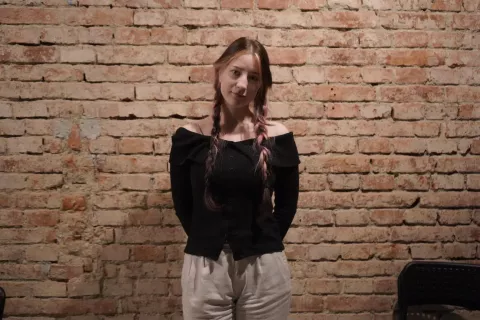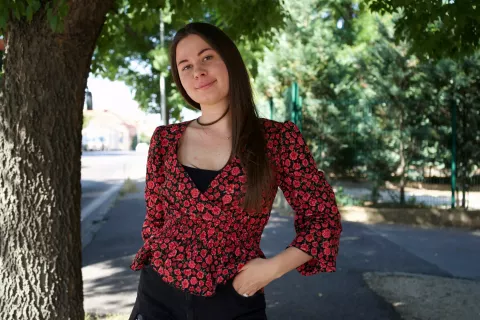
Veronika was just 16 years old when she fled Ukraine for Slovakia. "There was shelling in my region, and the war was coming closer and closer," she says. "We decided to leave."
In Ukraine, she had been studying medicine. Her favourite subject was anatomy. While her studies didn't leave much time for hobbies, she says, she worked part-time as a barista.
Continuing to train in medicine in Slovakia proved difficult. "I didn't know the language very well," she says. "I couldn't start studying straight away because of this barrier." Even more difficult, she says, was making friends.

Then she found out about free Slovak language courses being offered through Pathways, a regional, UNICEF-led initiative that helps young people who have left Ukraine to navigate their new lives abroad. She also signed up for a barista course, which will allow her to earn money while she continues to work towards her dream of becoming a doctor.
"I feel better and more confident about my future," she says now.
Veronika is one of more than 30,000 Ukrainian adolescents in Slovakia who have benefited from Pathways – designed to help young refugees complete secondary education, gain essential skills, and transition into the workforce or higher education. Pathways offers a wide range of support services, including school enrolment assistance, dropout prevention, mental health and psychosocial support, case management, and career counselling. Importantly, these services have also been extended to Slovak youth, fostering inclusion and solidarity.
Since its 2024 launch in Slovakia, 30,000 young people have visited the programme's "digital one-stop shop", 1,000 have developed their skills through training programmes and nearly 2,000 have received mental health support.
The initiative was implemented in the Municipality of Kosice in Slovakia in cooperation with National Institute for Education and Youth (NIVAM), Technical University of Košice and civil society organisations Mareena and Mental Health League.
UNICEF’s PATHWAYS initiative in Slovakia has been supported through the generous contribution from the US Government's Bureau of Population, Refugees, and Migration.