Registering births at maternity wards
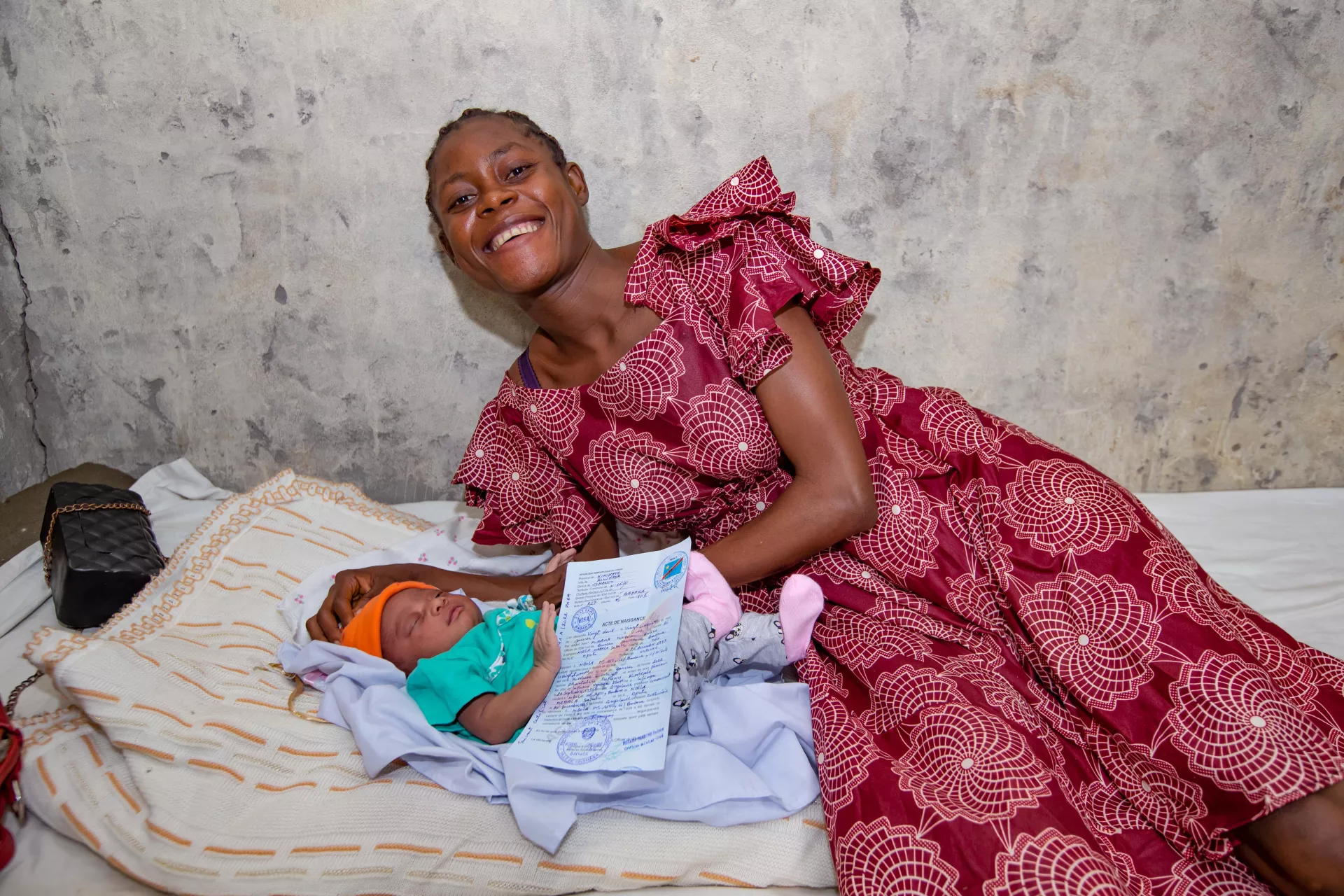
A few hours after her birth, Chancelvie received her birth certificate thanks to the digitalization of the civil registration services.
- Français
- English
With a big smile on her lips, Noëlla gets ready to leave the maternity ward after giving birth to her first baby, a little girl named Chancelvie. “Chancelvie was born on January 26, 2022 at midnight and she weighs 3.5 kg,” explains Noëlla who gave birth in a maternity hospital in the N’Sele health zone in Kinshasa.
If one can see pride on Noëlle’s face, it’s because she waited for years to start her family, but also because she gave her daughter a passport for life: her birth certificate.

A few hours after giving birth, Noëlla was able to register her daughter’s birth without having to travel. Thanks to software installed on a laptop computer in the maternity ward, nurse Annette Ugonda encoded the information relating to Chancelvie’s birth. “After each birth, we send the information to the civil status office (…) and we receive the birth certificate in less than 24 hours”, explains the nurse.

The information encoded by the nurse in the maternity ward is sent directly to the neighbouring civil registry office. A civil registrar then takes care of issuing the birth certificate which will be deposited directly at the maternity ward. Birth registration is the first step in recognizing the legal existence of children, protecting their rights and ensuring that any violation of these rights doesn’t go unnoticed.

“Her birth is recognized by the Congolese state with all that this implies in terms of benefits for her schooling and her health care”, explains Noëlla. With the support of the French Government, UNICEF has set up a pilot project to digitalize civil registration services in the N’Sele health zone where Chancelvie was born.
UNICEF has equipped the various services with computer equipment and a solar energy source while training civil registration and health personnel. The digitalization of services combined with a manual paper-based power of attorney system has significantly accelerated birth registration. By connecting 11 civil registration offices and 61 maternity services, more than 22,500 births were registered last year in N’Sele.