Five days of engagement for children
Djibouti hosted Etleva Kadilli, the UNICEF Regional Director, and Alison Parker, the Deputy Regional Director for East and Southern Africa.
- Français
- English
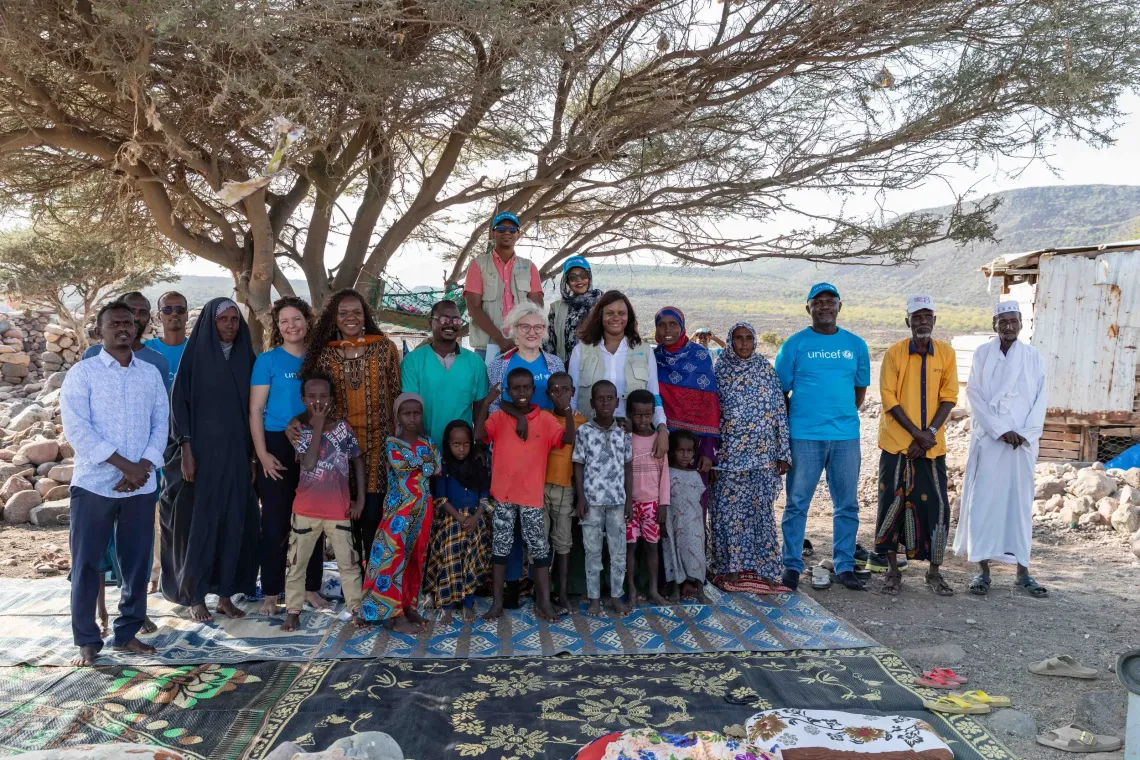
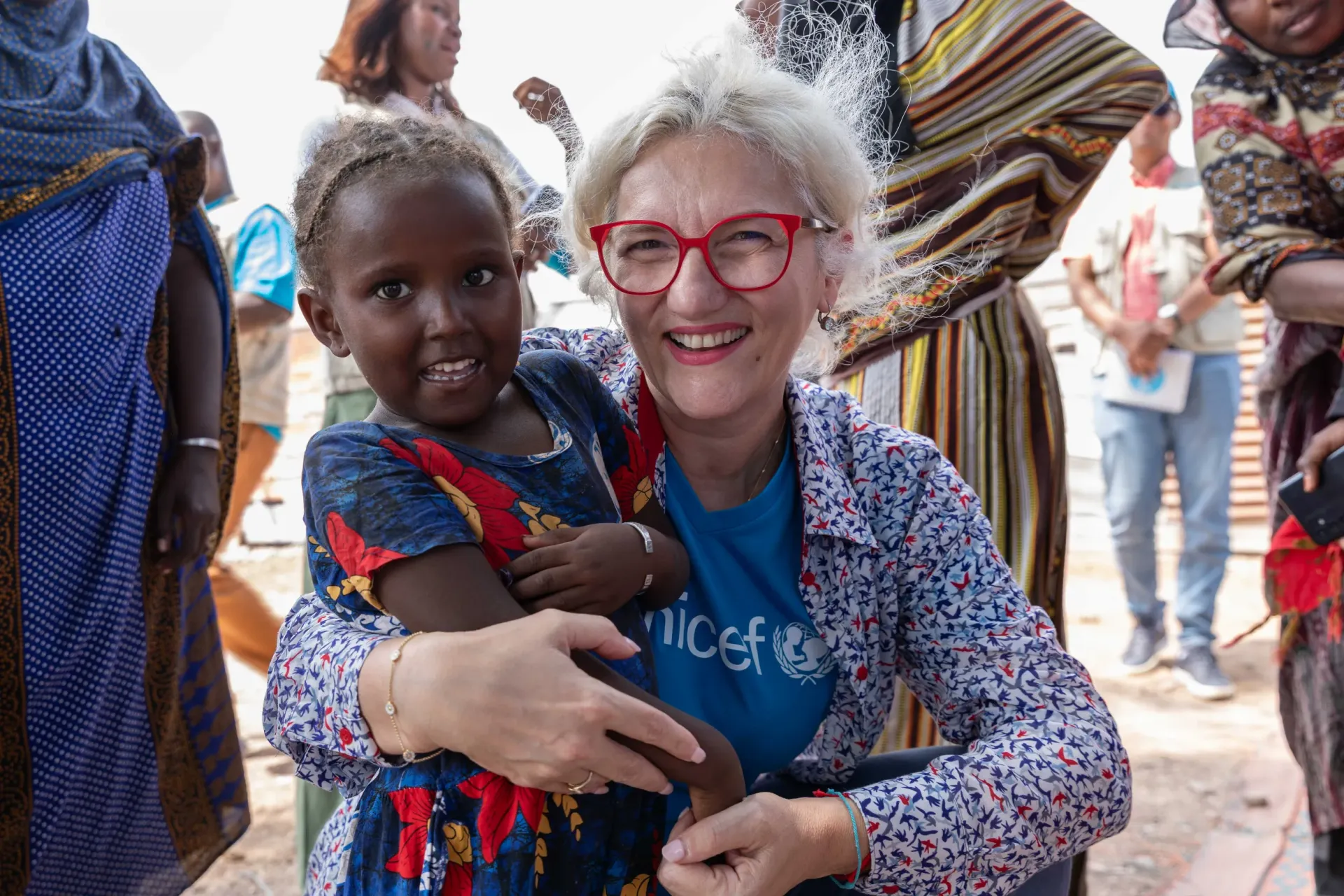
From 1 to 5 March 2026, Djibouti hosted Etleva Kadilli, the UNICEF Regional Director, and Alison Parker, the Deputy Regional Director for East and Southern Africa. During their visit, they engaged with children, families, and key institutional partners, alongside the UNICEF Djibouti country office team, reinforcing a shared commitment to the rights and well-being of every child.
This visit marked a historic moment: the UNICEF country office in Djibouti officially transitioned from the MENA region to the ESA region. This strategic shift was carefully planned to enhance programme coherence and maximise the impact of field interventions while ensuring that every child in Djibouti remained at the centre of UNICEF’s work.
Regional transition: an opportunity and a renewed commitment
The transition to the ESA region involves more than just administrative reorganisation. It opens new opportunities for collaboration with East African countries, promoting the sharing of experiences and best practices. Teams worked together to ensure the continuity of programmes and maintain the progress already achieved.
Child well-being was at the heart of the discussions
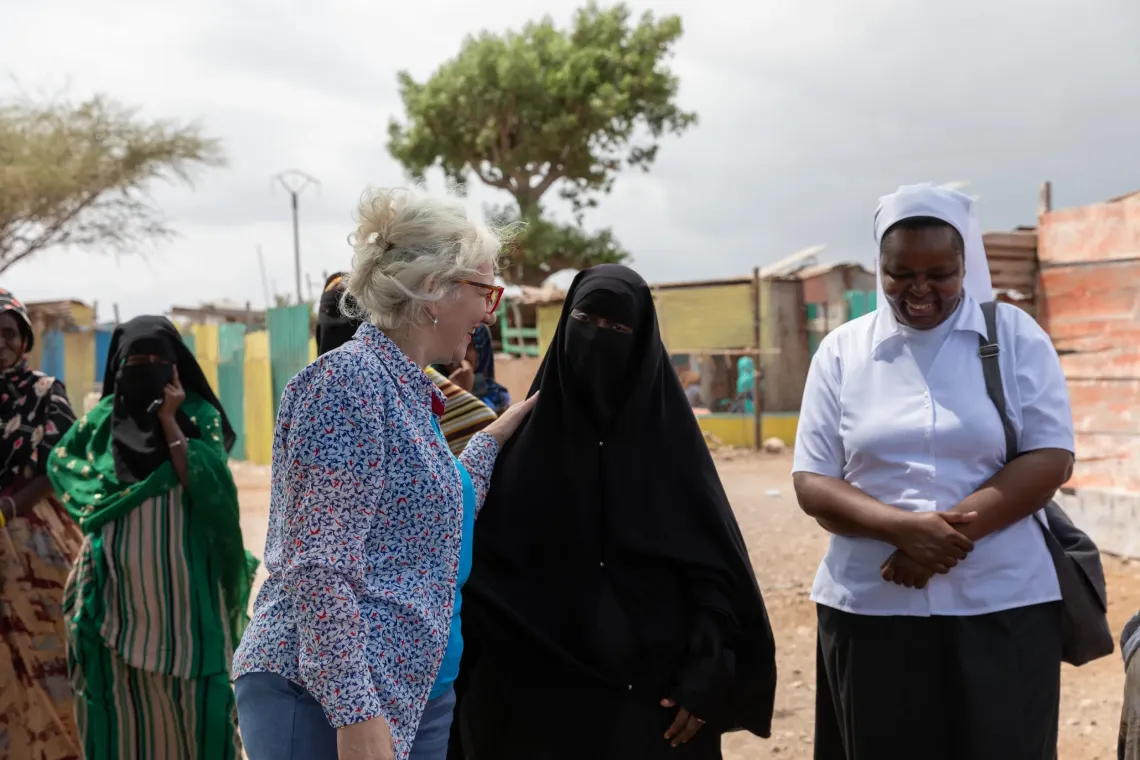
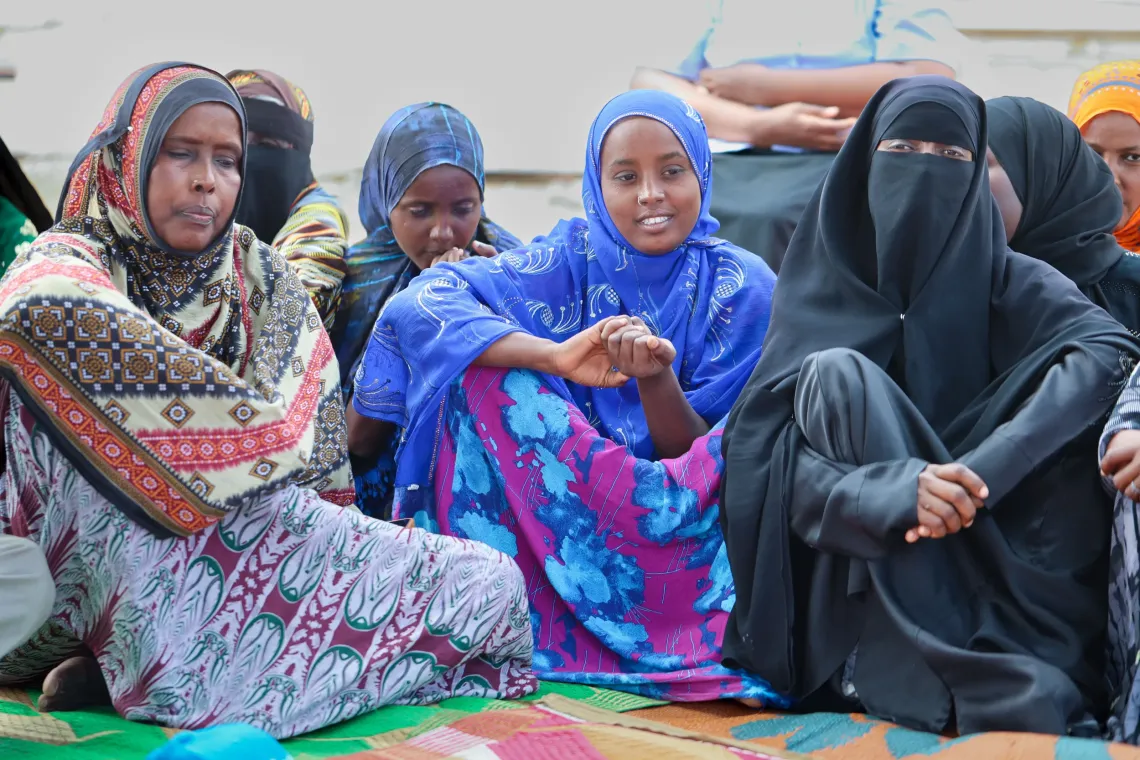
The delegation visited FantaHero, a small coastal village near Obock, about 250 km north of Djibouti City. Women and girls shared their experiences, aspirations, and community priorities, highlighting local solutions to improve the well-being of children and women. They spoke with young women and teachers involved in the Lire Écrire Compter LEC center, a reading, writing and numbering a programme supported by UNICEF in partnership with the Ministry of National Education and Vocational Training, the Diocese of Djibouti, and the French Development Agency (AFD), which promotes education and learning.
Assawka, a young woman, went from top student to entrepreneur, selling women’s pyjamas as her best-seller. She said: “I hope to keep improving, diversifying my creations, and increasing my income.”
Halima had to leave school in Year 7 but is now part of a programme placing 40 young people in internships. Her goal: “My dream is to become a medical assistant.”
Sister Léa, Director of the LEC center in Obock, explained: “When we meet a young girl, we want to help her imagine her future and guide her towards independence, so she can build her own life.”
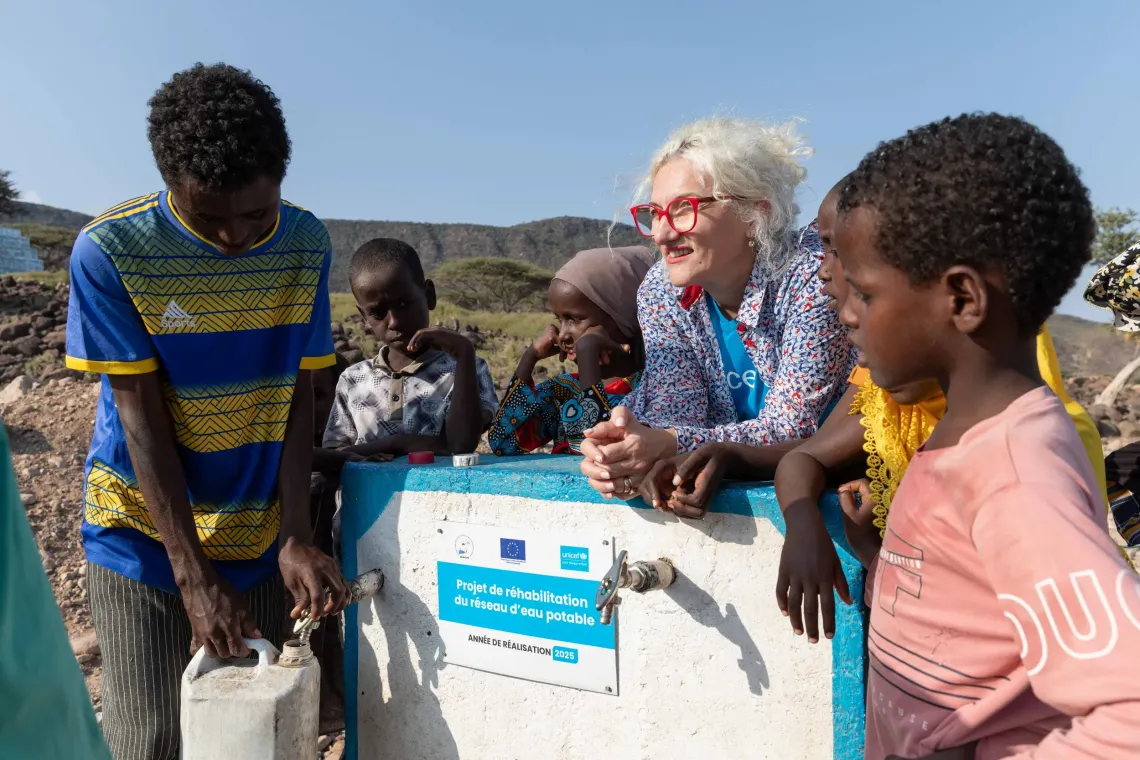
In Dalay-Af, around 30 minutes inland from Obock, the delegation observed the rehabilitation of the village's water system, which was carried out with the active involvement of the local community. With support from the European Union, this project benefits 400 families, including 300 children, by providing them with access to clean drinking water. "Before, I had to walk far to collect water, which I carried on my back. It took me four hours there and back, and the water was salty. Our children had many health problems. Now I am relieved of this burden because we have clean, fresh water from the tap in our village," explained Hasna.
In Tadjourah, 115 km northwest of Djibouti City, discussions focused on preventing female genital mutilation (FGM), which affects 86% of girls in the region, emphasising the need for coordinated action to protect children and promote social change.
"These meetings confirmed a fundamental conviction: I had the opportunity to engage with courageous girls, determined mothers and communities that are deeply committed to change. Their resilience and hope are an inspiration. UNICEF is proud to stand alongside them. I am pleased to welcome the UNICEF office in Djibouti to the ESA region. Together, we will continue to guarantee the rights and future of every child in Djibouti.”
— Etleva Kadilli, UNICEF Regional Director for the East and Southern Africa region.
Strong partnerships for child rights
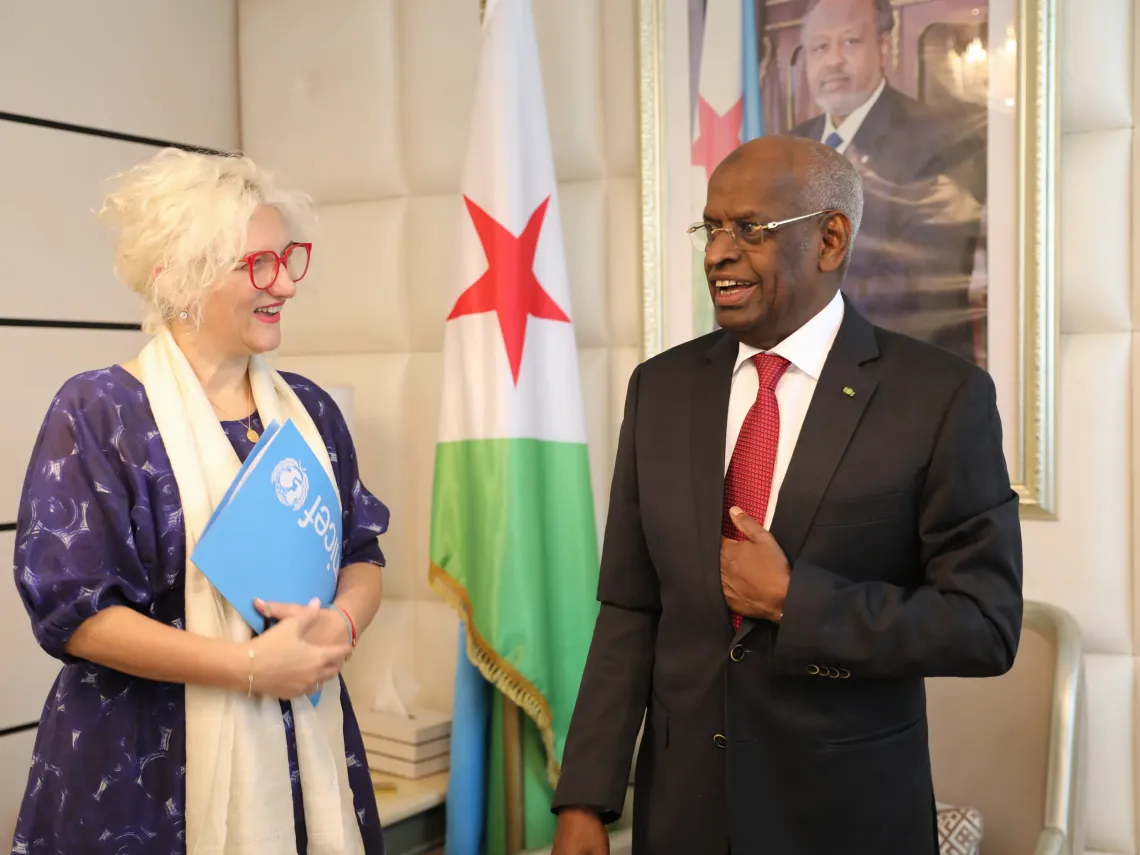
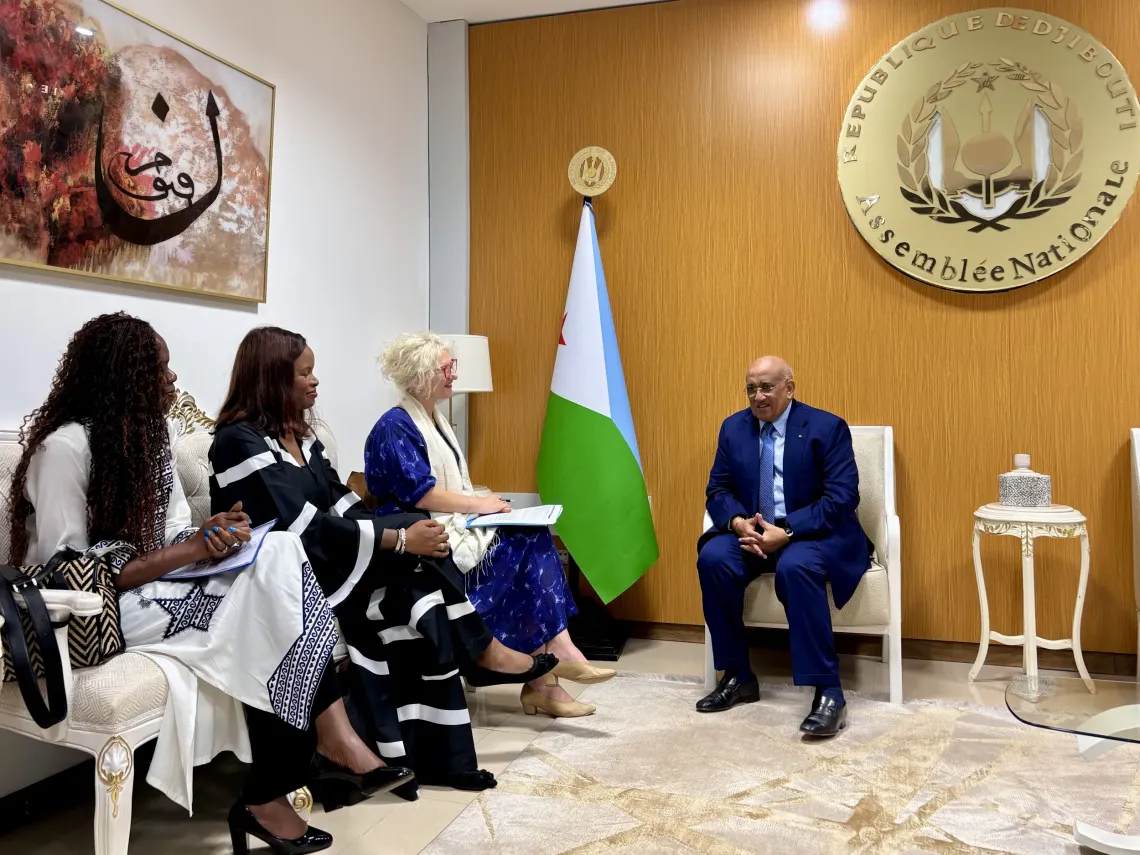
The mission also included high-level meetings with the ministers of health, education, women and families, and social affairs, reaffirming the strength of the partnership between the Government of Djibouti and UNICEF. Discussions focused on four key priorities: access to safe drinking water; strengthening resilience to climate shocks; quality education for all children; and the protection of the most vulnerable children and adolescents, including refugees and children on the move.
The regional directors also met with the UN Country Team to highlight the importance of a coordinated and integrated approach across agencies to maximise collective impact for children.
A team united by a shared vision
In Djibouti, UNICEF draws on recognised expertise and strong partnerships to contribute to the sustainable development of the country's human capital. The goal is clear: to ensure that every child, wherever they live, can grow up healthy, safe and protected, with all the opportunities needed to fulfil their potential.
"Djibouti remains at the heart of UNICEF’s priorities. We are moving forward with determination and solidarity, convinced that every step we take, every initiative we undertake, and every partnership we form contributes to building a future in which all children can realize their potential. Together with the government, communities, and our partners, we will continue to turn commitment into concrete, sustainable action for every child in Djibouti."
— Ramatou Touré, UNICEF Representative in Djibouti.