Drinking water and healthcare: a right for every child
The Republic of Korea and UNICEF strengthen healthcare services in Djibouti
- Français
- English
The partnership between the Republic of Korea and UNICEF is helping to improve the quality of and access to healthcare services for children and their families in Djibouti. With this support, UNICEF is working with the Ministry of Health to modernise health infrastructure, strengthen the skills of health professionals and improve access to essential care and basic water, hygiene and sanitation services in health centres.
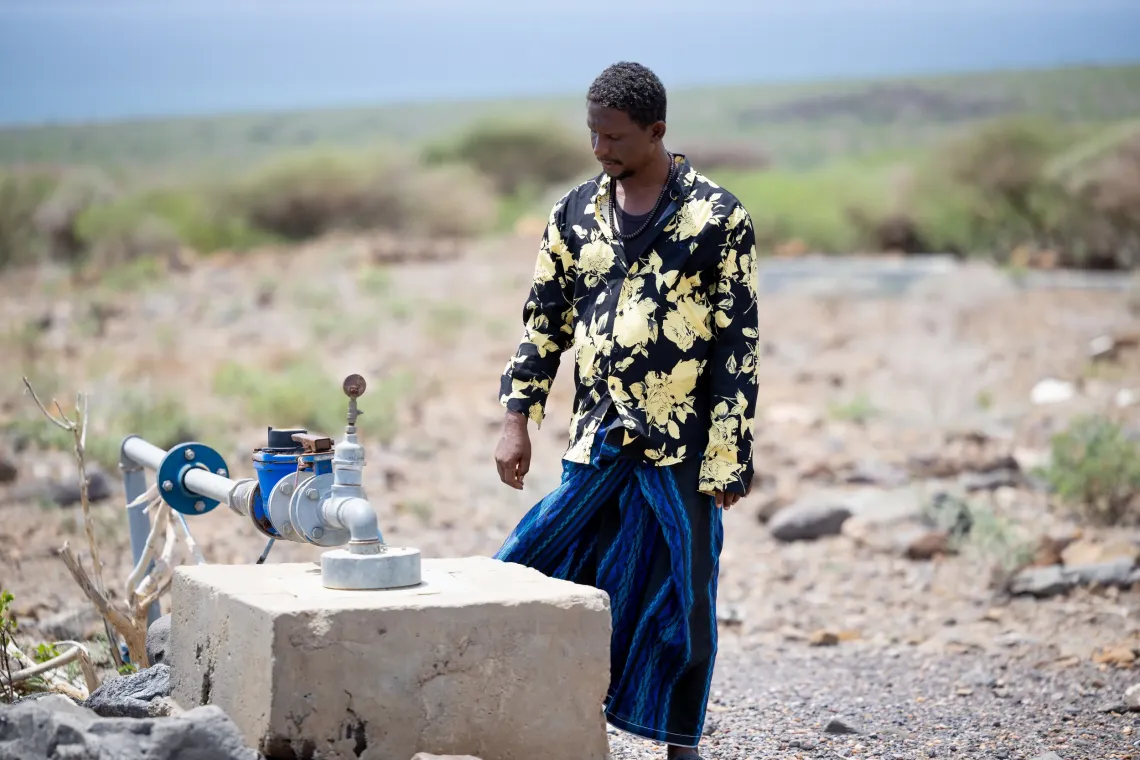
Abdallah Mohamed, well keeper in the village of Sagalou, in the Tadjourah region, explains: "In October 2024, we faced cases of acute diarrhoea. At that time, the village had only a few traditional unprotected wells, providing poor-quality water that was insufficient to meet the needs of the inhabitants. Our drinking water distribution system was broken." To address these challenges, interventions were put in place to modernise infrastructure and strengthen the village's health resilience. The drinking water supply network was rehabilitated, now ensuring a reliable supply for residents and visitors, as the village of Sagalou is located on an active migration route.
The sanitation facilities of two health structures were modernised and local committees were set up to manage water supply systems, monitor and promote good hygiene practices within health structures, and ensure water quality control, as part of the WASH-FIT* approach. Thousands of hygiene kits for families and fifty-three hygiene kits for health centres were distributed to health facilities in rural areas and to communities affected by the water crisis.
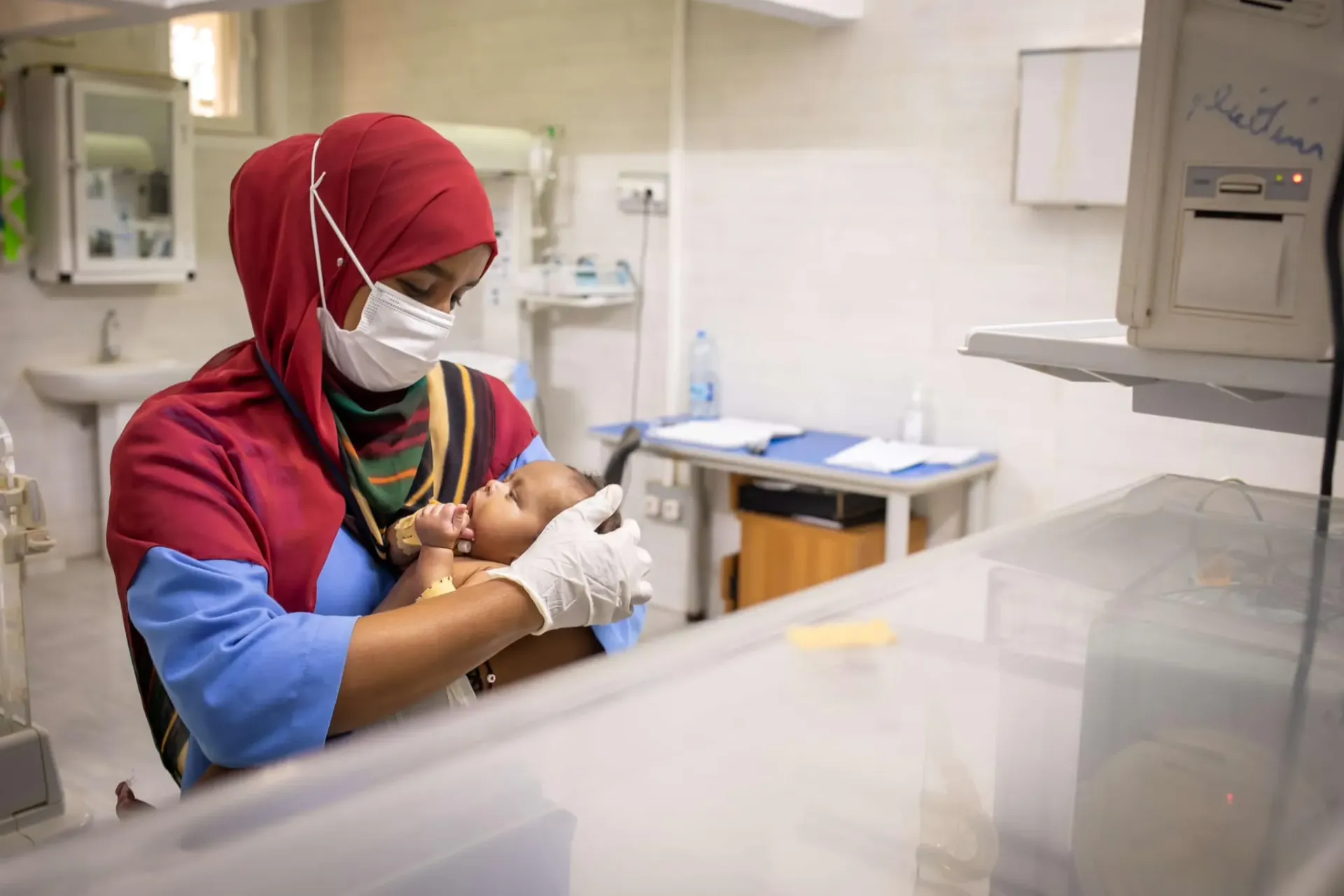
Maternity units in community health centres and clinics were equipped with ten neonatal resuscitation tables, enabling effective care for newborns with respiratory distress. Three maternity units in Djibouti City now have medical oxygen supply systems, ensuring continuous availability for emergency neonatal care.
Training healthcare professionals was a key focus of these interventions. Forty-two providers, including midwives, emergency nurses, matrons and nurse anaesthetists, were trained in paediatric oxygen therapy. In addition, one hundred and thirty Ministry of Health staff were trained in the WASH-FIT* approach throughout the country and supported in conducting WASH-FIT assessments in sixty-three health posts.
Moktar Abdillahi Mohamed, nurse anaesthetist and head of neonatal resuscitation at Cheiko Hospital, says: “This training has been very beneficial for me and my colleagues. Oxygen therapy is essential for patients with respiratory disorders. It improves their quality of life and can save lives. An oximeter measures blood oxygen saturation, and oxygen therapy devices deliver a precise percentage of oxygen. These skills are crucial for the newborns we care for every day.”
Fozia, a matron at the same hospital, adds: “After more than thirty-four years working at Cheiko Hospital, I am delighted to see the significant improvements in our healthcare system. The impact of the new oxygen therapy devices on the quality of care is clear, and it is rewarding to see these changes making a real difference to patients’ lives.”

These actions are part of the South Korean government's commitment to the global Access to COVID-19 Tools Accelerator (ACT-A) initiative, created after the pandemic to strengthen access to essential health tools and improve the resilience of national health systems.
Thanks to these interventions, funded to the tune of USD 400,000 by the Government of the Republic of Korea, health facilities are providing safer care, the risk of infection has been reduced and the capacity of facilities to manage emergencies has been strengthened. Children, mothers and their families are directly benefiting from better-equipped health services and higher-quality care.
*WASH-FIT: a tool for improving the quality of care. Developed by UNICEF and the WHO, WASH-FIT (Water, Sanitation, Hygiene Facility Improvement Tool) enables local teams to assess and improve the quality of water, sanitation, hygiene and waste management in healthcare facilities. The tool helps identify gaps, plan concrete actions, and monitor progress.