UNICEF's Accessible Digital Textbooks initiative wins the Zero Project Award 2024
The initiative has been recognized for its innovation, impact, and scalability for improving learning for children with disabilities

UNICEF's Accessible Digital Textbooks (ADT) initiative is a winner of the Zero Project Award 2024. The initiative stood out among 523 nominations from 97 countries, earning recognition from an international peer-review board for its innovation, impact, and scalability, ultimately leading to a well-deserved award.
The future of textbooks
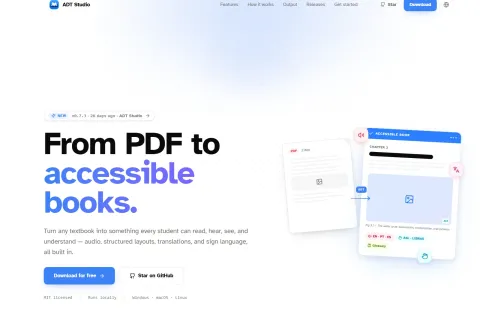
The ADT initiative, led by UNICEF in collaboration with Ministries of Education and global partners working on disability inclusion, creates and delivers accessible digital learning content that allows children with and without disabilities to learn in the same classroom.
The programme has thus far been implemented by UNICEF in 10 countries across Latin America, Europe, and Eastern and Southern Africa (Colombia, Dominican Republic, Jamaica, Kenya, Nicaragua, Paraguay, Rwanda, Tajikistan, Uganda, and Uruguay).
There are approximately 240 million children with disabilities in the world. They are often one of society's most vulnerable and marginalized groups, and sometimes left out of education altogether. When in school, children with disabilities often face unique and additional barriers to learning, including limited access to appropriate and accessible teaching and learning materials.
Even in accessible education facilities, inflexible curricula, the lack of assistive devices, and teachers who have not been equipped with the skills to support diverse learning needs, can serve as barriers to education. The lack of such components can result in learners not enrolling in school, dropping out, or remaining in school but not achieving their full academic potential.
Accessible Digital Textbooks, which follow the global Universal Design for Learning (UDL) principles, build flexibility and versatility into the design of textbooks and promote an inclusive learning environment where children with and without disabilities can engage with the same content - offering a customized teaching and learning experience for all.
In the next phase of the programme, UNICEF is working with assistive technology and AI experts to explore how we can fast-track the development of such Accessible Digital Textbooks.

The Zero Project
The Zero Project is committed to supporting the implementation of the United Nations Convention on the Rights of Persons with Disabilities (UN CRPD), by researching, identifying, communicating, and supporting innovative solutions globally and across all sectors of society. The Zero Project 2024 annual research cycle was dedicated to the theme of Inclusive Education, and Information and Communication Technologies (ICT).
The UN CRPD emphasises that persons with disabilities have the right to education and lifelong learning, without discrimination and based on equal opportunity, as stated in Article 24. The Zero Project deliberately went beyond this definition, as many innovative solutions have identified gaps in the formal education system – from early childhood to adulthood – as a major barrier for making Inclusive Education work, for instance, with respect to transition models, the training of teachers, parents and professionals, non-formal education, and ICT-driven tools.
ICT has become very important for persons with disabilities. It is therefore addressed in each annual research cycle, identifying innovative solutions across a wide spectrum, such as Orientation Systems, Artificial Intelligence, and Computer Steering Technologies.
The Innovative Solutions of Awardees 2024
From leveraging gaming and social media for education, strategies during humanitarian crises, and innovative tech solutions to enhance sign language, to inclusive practices in higher education, and high-tech products or services expanding to global markets – the Awardees 2024 provide a wide variety of innovative solutions, towards a world with zero barriers and inclusive education.
Please find the full list of Awardees on the Zero Project Database, which is a public utility and free to use: zeroproject.org.