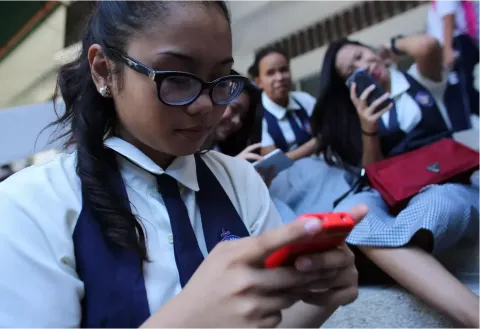
Pupils as young as 12 years old were at the forefront of shaping the future of education as they voiced their hopes and aspirations during the Architects of Digital Learning Futures workshop held on July 10-11 in Kwekwe City, Midlands Province of Zimbabwe. In a powerful display of youth leadership, students as young as 12 took center stage, sharing their dreams and ideas for the future of education at the Architects of Digital Learning Futures workshop, held on July 10-11 in Kwekwe, Midlands Province. These young learners, full of hope and ambition, voiced their aspirations for a more inclusive and innovative learning environment, marking a pivotal moment in their education journey.
The workshop, part of UNICEF’s Learning Pioneers Programme (LPP), brought together not only these inspiring young minds but also educators, policymakers, edtech partners, and government officials. Together, they explored how digital tools and innovations can address Zimbabwe’s learning crisis, ensuring that no child is left behind in the rapidly evolving educational landscape.
At the heart of the event was a shared goal: empowering learners to lead, shaping a future where technology enhances access to quality education for all.
Pupils' Voices and Digital Aspirations
“I am glad to see that our Ministry [of Primary and Secondary Education] is looking for solutions to the problems we have as pupils. I hope that we will find solutions for pupils and teachers,” said Tomuonga Gurajena, a 12-year-old Grade 6 girl pupil at Sir John Kennedy Primary School in Sanyati District Mashonaland West Province, Zimbabwe.
Prosper Kolesi, a 12-year-old Grade 7 student from Westlea Council Primary School in the Warren Park-Mabelreign District of Harare Province, highlighted the limitations of a one-size-fits-all teaching approach. “Every child learns at a different pace,” he observed, “but teachers tend to move too fast.” Despite these challenges, Prosper expressed excitement about the potential of digital tools, explaining how they open up new ways of learning. “Materials that aren’t in books can be found in videos or other online resources,” he shared. “With Artificial Intelligence (AI), we can now learn on our own, at home or during our free time, once we’ve finished our assignments.”
This enthusiasm for digital learning is shared by educators. Prosper’s teacher, Claris Kandengwa, an ICT instructor at Westlea Council Primary, agreed with his sentiments. “It’s easier for learners to grasp concepts when they’re engaged in educational games,” she noted. “While playing, they are learning, and this leads to a deeper understanding of the material.”

Challenges and Opportunities in the Education System in Zimbabwe
The workshop also addressed other major challenges facing Zimbabwe's education system, particularly in rural areas. The Permanent Secretary of the Zimbabwe Ministry of Primary and Secondary Education (MoPSE) Moses Mhike stressed the need for inclusive solutions: "Seventy percent of our schools are in rural areas where we do not have power or internet connectivity. We need to think outside the box, so we do not leave anyone behind."
Led by the Helsinki-based UNICEF Global Learning Innovation Hub which is supported by Finland, the workshop was co-organized with the MoPSE and UNICEF Zimbabwe. The workshop aimed to identify ways to leverage technology to enhance learning outcomes across Zimbabwe's diverse educational landscape. The two-day workshop was part of a global Learning Pioneers Programme that includes six pioneer countries: Egypt, Ghana, Malaysia, Rwanda, Uzbekistan, and Zimbabwe and focuses on modeling for scale innovative digital learning solutions. The programme aims to pilot and scale EdTech tools that meet the rigorous standards of UNICEF’s EdTech for Good Framework, ensuring that these tools can positively impact learning outcomes and be scalable across multiple countries while ensuring pedagogical effectiveness and bridging the digital divide.
Education officials are also optimistic about the impact of the programme. Dr. Roswitta Gatsi, Chair of the University of Zimbabwe's Department of Early Childhood and Junior Education, remarked, “We want our children to be innovative and critical thinkers.” Dr. Gatsi also referred to the Learning Pioneers Programme as a potential "game-changer," crucial for ensuring that no child is left behind in Zimbabwe’s educational transformation.
Future Directions
MoPSE Chief Director Primary, Secondary and Non-Formal Education Olicah Kaira concluded the workshop on an optimistic note, stating that, "Over the two days, we have witnessed creativity, the power of innovation, and how tech can revolutionize education... You have ignited our imagination for what is possible in our context."