Casitas Infantiles and early childhood care
UNICEF in Cuba accompanies the sensitization and preparation of the productive sectors on the role of the Casitas Infantiles (childcare facility) in early childhood education and the support of working families.

- Español
- English
“It was the middle of the special period in Cuba (acute economic crisis that began in the country in 1990) and many mothers had no one to look after their little boys and girls. The circulos infantiles (state centres for early childhood education) had no capacity for larger enrolments. There was a need to work... Then the Casita Infantil named Amiguitos de las Ciencias was established, at the University of Medical Sciences in Villa Clara (central Cuba). I have been working there for 30 years.”
This is how Leticia Díaz Paret sums up her whole life. She has spent over half her 55 years at the educational institution. A place that she helped to build and consolidate. A place that, as its head teacher, made her grow and evolve into the person she is today.

“My career at the Casita has made me more professional because it requires a lot of dedication. Some are now doctors, teachers, nurses, engineers and graduates of other professions. Nowadays, they come around the Casita and say to us: 'Seño, do you remember when I was here?' In this way, I have seen 780 boys and girls of different ages grow up. Each one has enjoyed part of my love and affection because there is no other way to treat children,” Díaz Paret said.

“When I was given the spot for enrolment in 2007, I felt immense tranquillity and inner peace because I knew of their wonderful job with the children. They not only care for them with love but also prepare them for future education,” explained Noris Moreno Camacho who has a degree in English Language and a Master's degree in Medical Education.
Moreno Camacho says that as secretary of the University of Medical Sciences’ trade union in Villa Clara, she has represented the Casita's staff with respect. She has ensured that their results are valued for all they do for early childhood.
These experiences offer a necessary service for mothers, fathers and other caregivers. This gives them the peace of mind for they know their children are not only protected, but also included in the developing processes and pedagogical activities accompanied by UNICEF Cuba throughout the country.
In her role as grandmother, Noris says: “When my granddaughter was born in 2021, I thought about enrolling her there because I know the work very well, not only from my experience as a mother but also as a godmother of the place. Both for the family and me, this centre is the most suitable place to provide upbringing and educate the little ones.”
The Casitas Infantiles are early childhood educational centres in the institutional modality. They provide services to children of mothers, fathers, tutors, caregivers or other families, who work in entities that, based on the existing economic and material conditions, can allocate funds for their opening, maintenance and guarantee of sustainability.
Leticia says that the Casitas Infantiles were previously linked to the Educa tu hijo (Educate your child) programme, but that they took over the educational programme of the circulos infantiles over time.
The Ministry of Education is the human resources guarantor, with educators and teaching assistants graduated in the Early Childhood speciality. They plan and organise the educational process in accordance with the programmes and methodological guidelines for this school stage.
“Currently, the country has taken on the task of opening Casitas Infantiles in different organisations that meet the conditions for the education of the children of working staff so that they can carry out their tasks positively. It is also a way of helping the community by taking in children from vulnerable families,” Díaz Paret emphasised.
The experience of this Casita is replicated in Villa Clara by other similar entities, such as the textile factory with Casita Motica de Algodón and Los Criollitos at the Marta Abreu Central University.

Among the imminent day-to-day challenges, there are priorities to maintaining such a place, for instance, the adequate training of educational staff or the indispensable living conditions for children.
Amiguitos de las Ciencias has remained open since its foundation on 7 March 1994 because it is a priority for the beneficiary institution. Moreover, it has evolved from more family self-managed modalities to more recent forms of management, where the University takes over the feeding of the children.
With their existing experience and a reinforced infrastructure, they could expand their services in a way that contributes to their development and favours other institutions in the health sector.

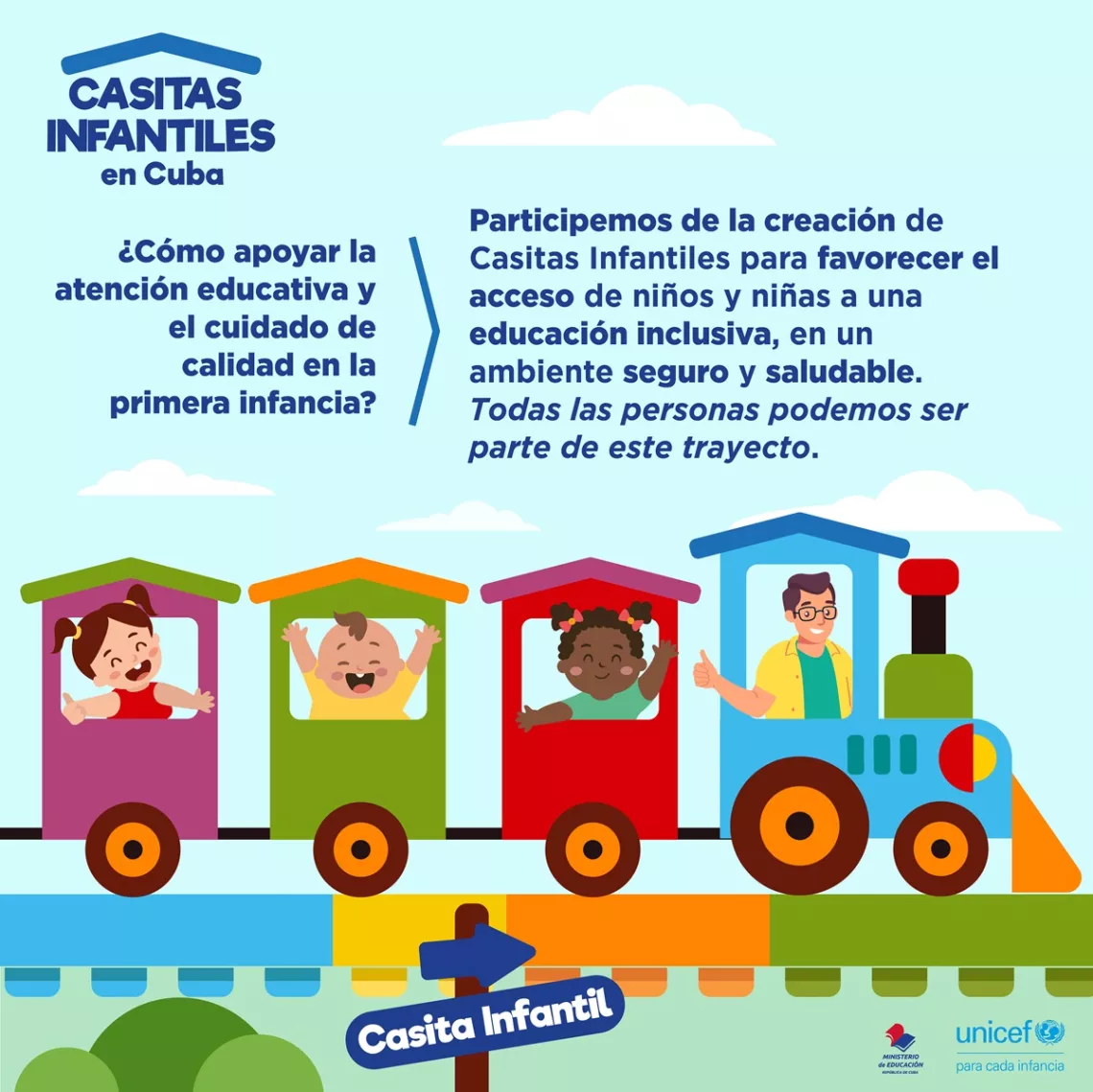
In its work to support these initiatives, UNICEF undertakes national and local advocacy to promote the importance of social responsibility for early childhood.
An example of this is the methodological tools that impact the decision making regarding the most efficient modalities of the Casitas Infantiles according to each context.