

On the road to inclusion: How sports changed Gabriel’s life
A project, implemented by UNICEF Cuba, contributes to improving the communication and social skills of children with autism spectrum disorder through sports
- Español
- English
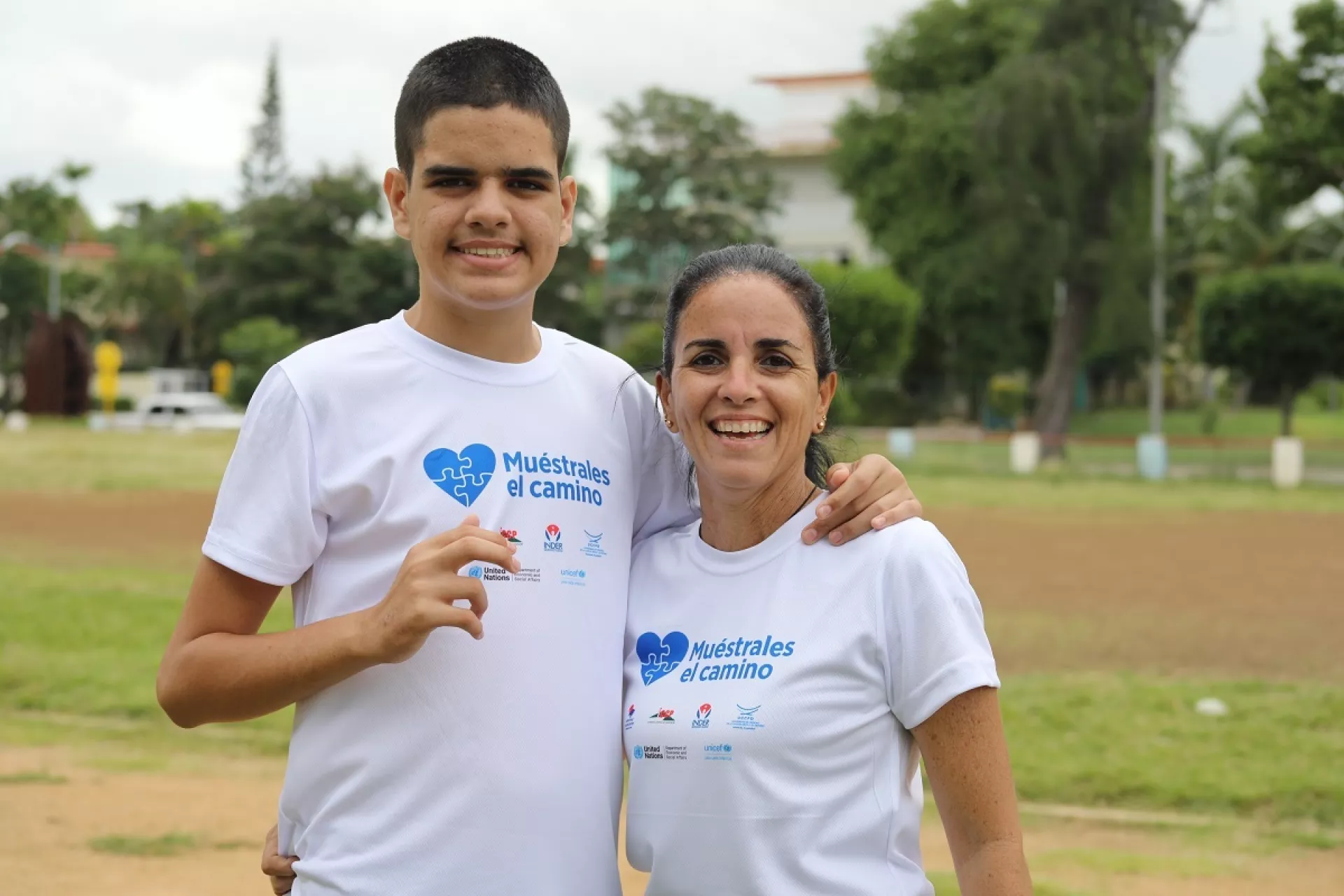
Yanaisy Martínez has devoted her life to sports. She is a swimming teacher at the Manuel Fajardo University of Physical Culture and Sports Sciences. In sports teaching, she has found not only a form of professional fulfilment, but also an opportunity to help her son, Gabriel Guerra, a 14-year-old boy who has autism spectrum disorder (ASD), improve his communication and social skills.
Along with other Cuban families and sports coaches, Yanaisy participated in the Social Inclusion project for children, adolescents and young people with autism spectrum disorder through sports, implemented by UNICEF Cuba, together with the Ministry of Education (MINED) and the National Institute of Sports, Physical Education and Recreation (INDER), with the financial support of the United Nations Department of Economic and Social Affairs (UN DESA).
Through different training workshops and sports practices, the project strengthened the preparation of families and teachers on issues that contribute to developing children and adolescents with autism spectrum disorder. In these forums, Yanaisy shared her own experience as the creator of the project ‘Dreaming in Blue’, in which she encourages the practice of sports as a mechanism to improve motor skills, attention and the resolution of behavioural problems in children with ASD.
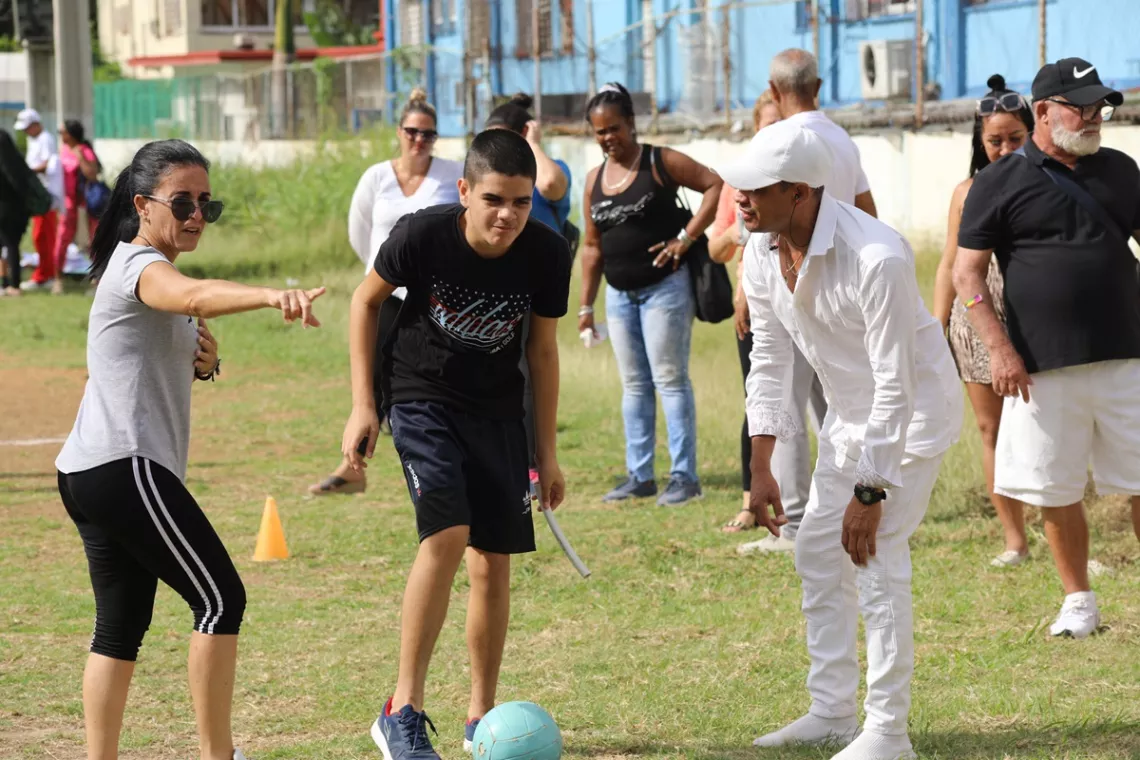
The transformative power of sports
The story begins with Yanaisy’s search for a space where her son Gabriel could feel at ease and develop fully. As a teacher, she discovered that sports could be the bridge that connects children and adolescents with ASD to a world full of possibilities.
“Sports is great because it moves crowds and, at the same time, it is something that can be worked on together. Therefore, it is a fascinating way to promote inclusion because, in sports, we are all equal,” said Yanaisy.
With the collaboration of other committed teachers and families, Yanaisy brought ‘Dreaming in Blue’ to life. This project not only provides a safe and stimulating space for children with ASD, but also seeks to change society’s perception of their abilities and potential.
“What we have done within the project has been based on the lived experience of the teachers and on the way shown by the children and their families. We have applied means and techniques that are used internationally and we have adapted them to the approach and experience of the project,” stated Yanaisy.
Their project has dealt with significant challenges – misperceptions about autism, stereotypes and lack of knowledge created resistance. Yanaisy recalls: “When people hear autism spectrum disorder, they see a child who can’t do anything, who is going to get in their way. So many people put in question why work with a child with autism. However, little by little, through ‘Dreaming in Blue’ together with this sports project promoted by UNICEF and UN DESA, we are going to change that perception,” she states with hope.
Since 2014, UNICEF has been developing a project in Cuba for the inclusive education of children with autism and intellectual disabilities.
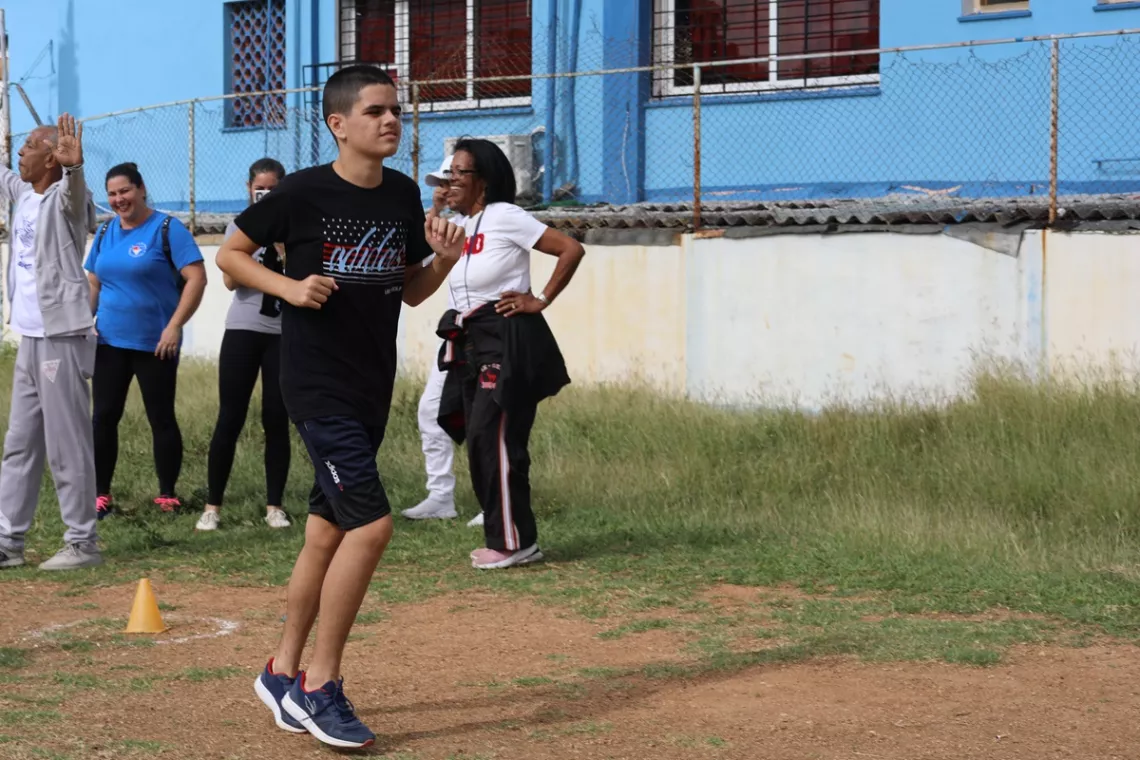
In terms of personal transformation, Yanaisy highlights the positive impact sports has had on her son, Gabriel. “Everyone has a starting point where you can see spectacular and rapid progress. Afterwards, sports helps you to keep him motivated, to consolidate that other alternative education,” she shares with a smile on her face.
Yanaisy considers the Social Inclusion project for children, adolescents and young people with ASD through sports a “beautiful and accurate” experience that helps to teach families, teachers and society in general about the inclusion of children with autism.
The project ‘Social inclusion of children, adolescents and young people with autism spectrum disorder through sports’ has helped 57 teachers and sports methodologists, 36 families and the same number of children and adolescents with autism to learn techniques for inclusive sports practices.
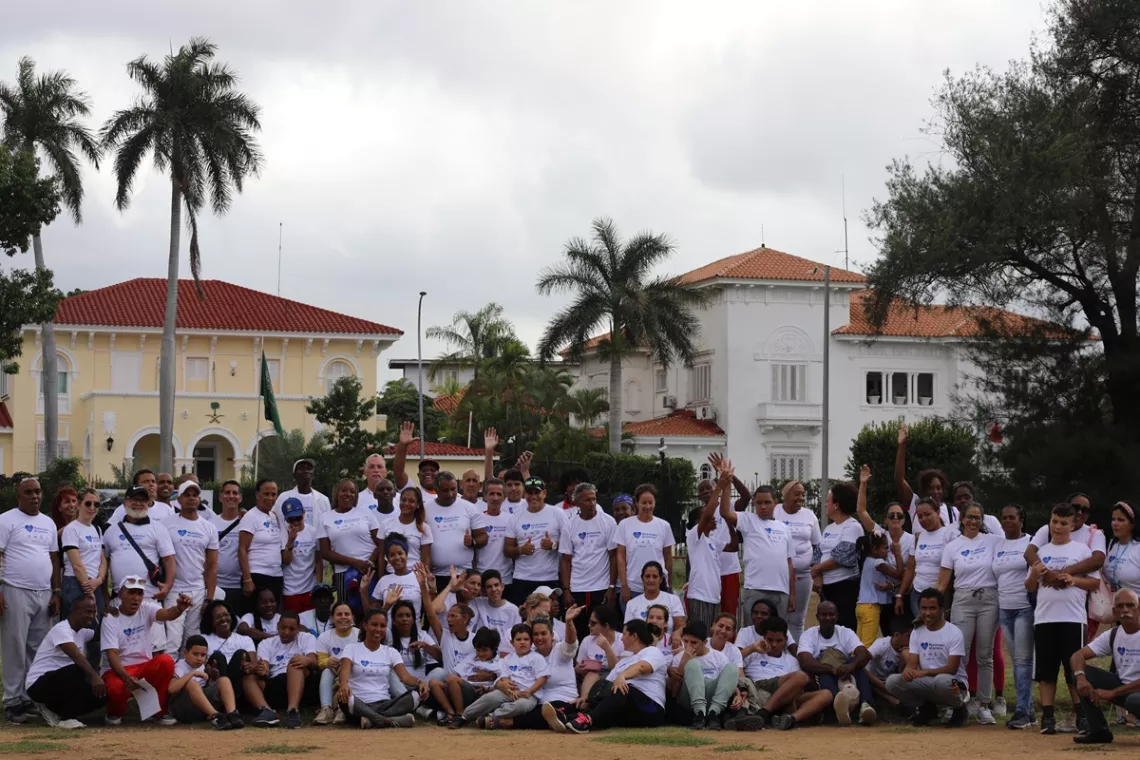
“They have to be taught what to do. Sport has helped with that. It has shown them the way, both to family members and teachers, to change their minds about working with people with ASD,” said Yanaisy with conviction.


