Children and Digital Marketing
Promoting responsible commercial practices in a hyperconnected world
Background
The internet and digital technologies offer great potential to support children’s rights. However, they also expose children to various risks, including risks related to commercialization and the datafication of their digital lives.
With the rise of digital media, advertising to children has become a multibillion-dollar industry. One estimate finds that many 14-year-olds are exposed to 1,260 ads daily on social media alone.
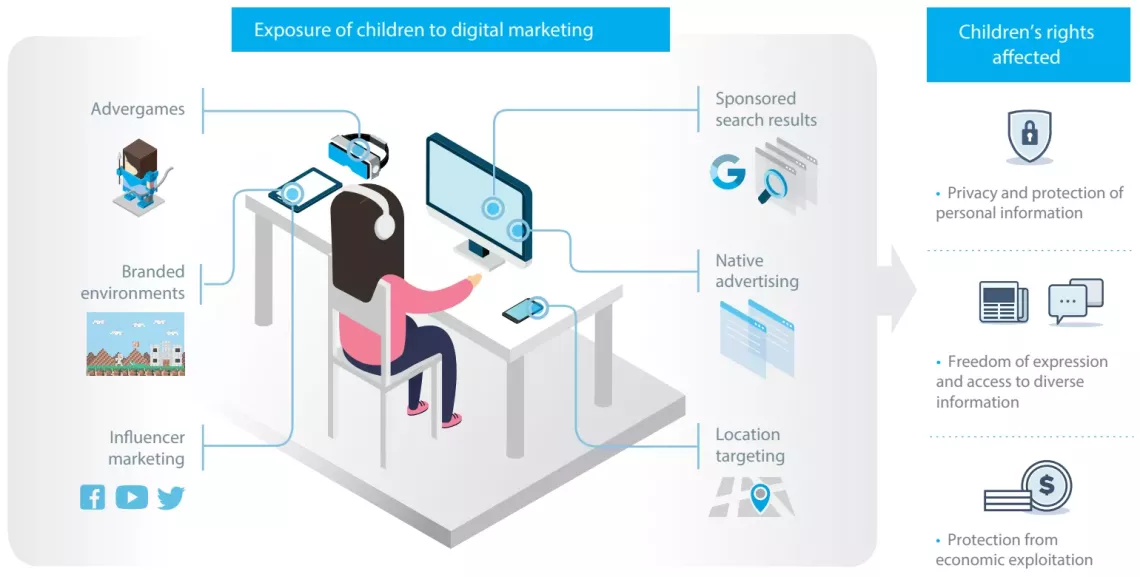
Children’s exposure to digital marketing is associated with an array of adverse impacts, including to their:
- Physical and mental health: Personalized ads and persuasive tactics can influence children's behavior, keeping them online or influencing them to make unhealthy diet choices, which affect their mental and physical health.
- Privacy: Companies track and collect data on children's online activity and preferences to show them targeted ads.
- Economic exploitation: Children can be taken advantage of due to weak labor protections in influencer culture.
- Freedom of expression and thought: Sponsored content, influencers, and ad-filled spaces can shape children’s opinions and limit their ability to express themselves freely and resist persuasive tactics used to influence them.
- Access to information: Algorithms may show what sells rather than what helps children learn and grow.
- Play and rest: Digital marketing in games and social media often turns play into a buying experience. One researcher found that 95% of popular children’s apps contain some form of marketing.
Companies across the digital marketing value chain have an important role to play in ensuring that children’s rights are both respected and considered throughout their activities and operations.
Industry Toolkit on Children’s Rights and Digital Marketing
Businesses across the digital marketing ecosystem can take action to embed respect for children’s rights throughout their activities.
UNICEF has produced an Industry Toolkit providing a three-step process for businesses to better understand, assess, and act on child rights risks.