
Child rights and a just transition
How does the green transition intersect with children’s rights?
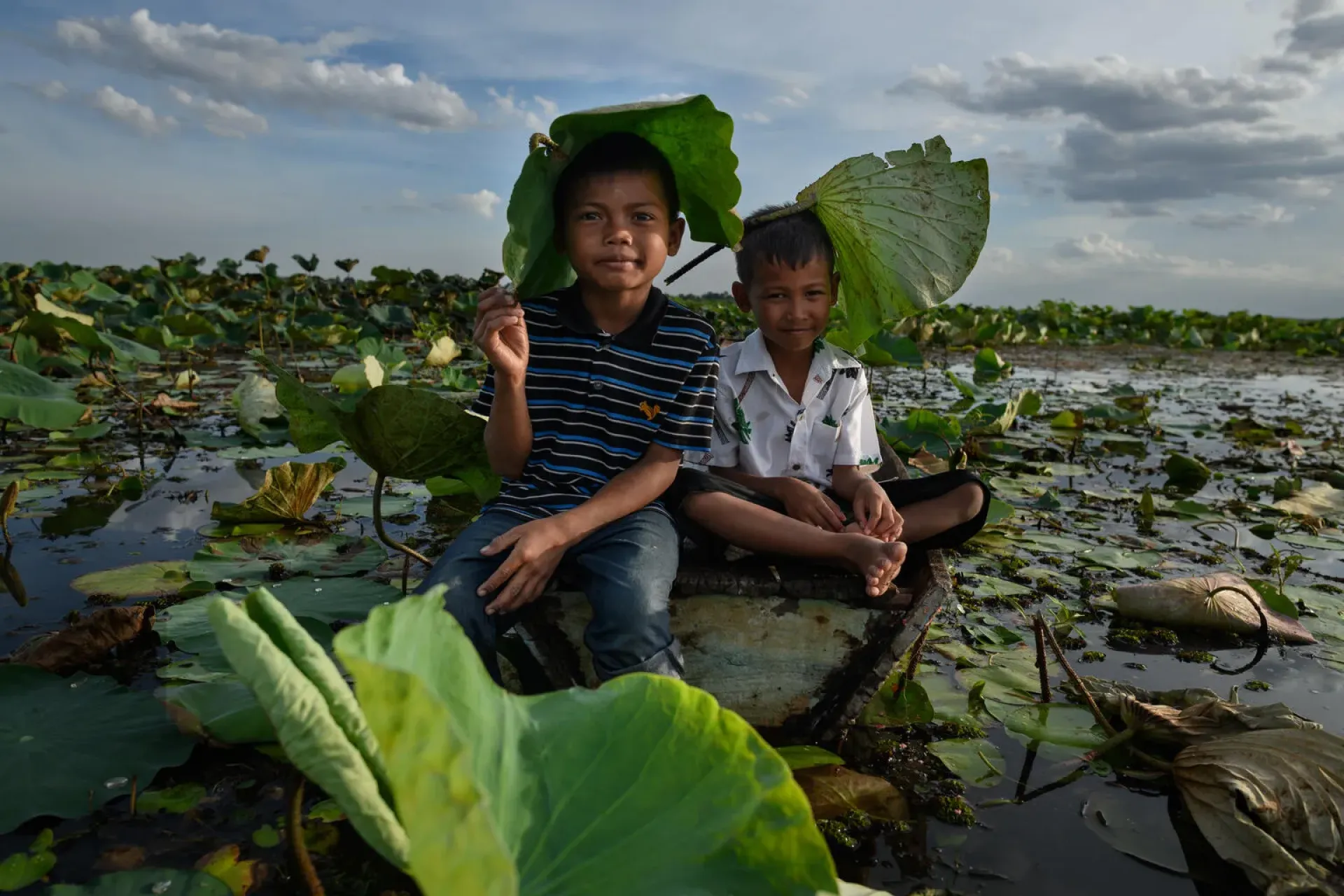
The climate crisis is, at its heart, a child rights crisis. Children make up one-third of the world’s population and half of all people living in extreme poverty.
Around the world, children are experiencing the disproportionate impacts of climate change. Storms are destroying homes. Floods are displacing families and interrupting education. Record-level heat is harming children’s health, and droughts are causing food and nutritional insecurity that stunt children’s growth.
Children are not just little adults. Children are uniquely vulnerable to pollution, deadly diseases and extreme weather, even before they take their first breath.
Every statistic tells the story:
- Two billion children are exposed to dangerous levels of air pollution.
- 739 million children face high water scarcity, and 470 million live with extreme drought risk.
- In 2024 alone, 242 million students had their schooling disrupted by extreme weather events.
These are not just numbers - they represent lives, futures, and rights under threat.
The climate crisis undermines children’s fundamental rights to health, education, protection and survival.
And yet, when we talk about climate action and the transition to green economies, children are too often invisible, even though today’s decisions on the green transition will shape the health, opportunities, and futures of all children.
UNICEF’s focus areas
Since 2024, UNICEF has been conducting research to explore how the systemic changes that businesses need to adopt to meet the Paris Agreement goals intersect with children’s rights.
The research found that these business changes - while essential to reduce emissions - carry both challenges and opportunities for children’s rights.
Reducing waste, offering more sustainable products and services, and sourcing raw materials ethically contributes to better air quality, cleaner water and overall ecosystem health. However, financial pressures from rising energy costs and ‘green’ products, coupled with shifts to local suppliers and zero-waste practices, can result in loss of household income and compel children to leave school to help support their families – For example, while green products - such as electric vehicles and solar panels - offer environmental benefits, the hidden harms tied to raw material sourcing are often overlooked. Dependence on critical minerals and rare earths needed for green solutions is linked to child labour, exploitation, and community displacement.
Social investments and new infrastructure, including renewable energy installations, can increase access to basic services, and improve children’s health and education. Yet large-scale changes in land use can also lead to displacement of families, limit safe places for play and recreation, and disrupt cultural ties. For Indigenous children and children from minority groups whose ways of life are deeply connected to their national environments, these disruptions can erode traditions and identity.
Overall, the impacts continue to reflect broad social and economic inequities, as some children benefit from the green transition while others are harmed directly or indirectly by its unintended consequences.
Key messages
The green transition must uphold children’s rights.
- Children have a right to be heard in matters that affect them. This right is underscored by the Committee on the Rights of the Child in General comment No. 26, which emphasizes that children must have access to meaningful participation in environmental and climate‑related decisions. This right is not only about participation; it is also about justice and well-being.
- Governments have a duty under the Convention on the Rights of the Child to prevent and mitigate harms to children as economies decarbonize. A just transition must protect children’s health, education and standard of living.
- Businesses must put children at the center of climate action. The United Nations Guiding Principles on Business and Human Rights outline the normative expectation that companies have a responsibility to respect and remedy human rights impacts – including impacts on children – throughout their operations and value chains. Businesses should integrate child‑responsive human rights and environmental due diligence into corporate strategies and supply chains.
- The lived experiences of children, young people, families, caregivers, workers and communities in a world shaped by climate change must be central to the conversation with businesses, governments and civil society organizations on our shared future.


