Children's health: response to polio and malnutrition
From 29 May to 1 June, Cameroon conducted a vast child health campaign. Vaccinations against polio and the fight against malnutrition reached millions of children in the 10 regions.

- English
- Français

In Douala, the country's economic capital and one of the leading cities in the Littoral region, this mobilisation has taken a particularly visible form. In the busy streets of Ndogbong, a working-class neighbourhood, Clarisse, a social mobiliser, walks with her itinerary in hand, accompanied by a community health worker and a district supervisor. Together, they go from door to door, explaining, reassuring and administering the precious drops of vaccine.
" This campaign is a blessing. Thanks to it, my child is protected and I'm reassured," says Florence, the mother of a 4-year-old boy.
A nationwide campaign, coordinated support
Well before the launch of the campaign, UNICEF mobilised alongside the Cameroon government to lay the foundations for an effective response. The organisation supported logistical planning by facilitating the provision of vehicles to transport vaccines, awareness-raising materials and nutritional inputs, particularly in remote areas. At the same time, more than 16,000 social mobilisers have been trained in counting target children in households and interpersonal communication, so that they can better understand parents' reluctance and respond with empathy and clarity. Communication tools adapted to local realities - posters, radio spots, visual aids - were produced and distributed to raise awareness upstream.


" UNICEF's support has been decisive. Without them, we wouldn't have been able to reach so many children in such a short space of time."
During the campaign, UNICEF played a key role in coordinating community actions and supporting health districts and focal points in deploying teams in the field. The social mobilisers, armed with their itineraries and clear messages, crisscrossed the neighbourhoods, accompanied by supervisors and health workers. Thanks to UNICEF's logistical support, vaccines and nutritional supplements were delivered on time, even to the most remote areas. The organisation also facilitated real-time data collection, enabling areas with low coverage to be quickly identified and teams redeployed there.
Once the campaign was over, UNICEF continued to support the health authorities in analysing the results and building on what had been achieved. The data collected made it possible to assess vaccination coverage, draw lessons on the most effective strategies, and plan corrective actions for future interventions. The organisation remains committed to working alongside communities to maintain the momentum, build confidence in health services and ensure that every child, without exception, has access to immunisation and nutrition.
Visible results, renewed confidence
In neighbourhoods such as Ndogbong, the teams have had to be patient and educational. Some families were still hesitant. But thanks to the proximity of the mobilisers and the quality of the dialogue established, the barriers came down.
Florence, the mother of a 4-year-old boy, explains:
" I had my child vaccinated from the very first days of the campaign because I know the risks. Thanks to you, I'm reassured that I'm not alone in protecting my child.
In schools, health centres, markets and railway stations, awareness-raising messages circulated relentlessly. The objective was clear: to reach as many children as possible before the school holidays.
"We worked day and night. The coordination between the teams on the ground, the neighbourhood chiefs and partners like UNICEF was exemplary," explains Clarisse.


A safer future for every child
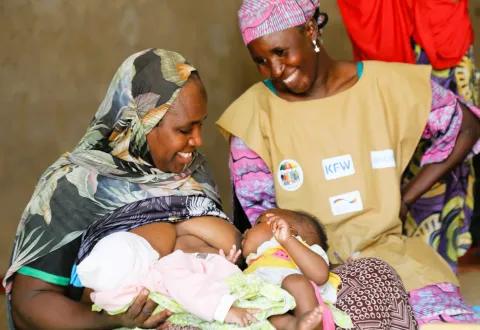
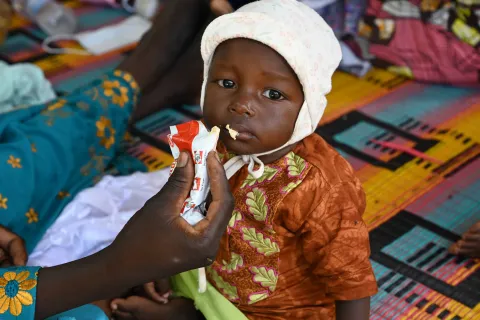
Thanks to this exceptional mobilisation, some 7,887,300 children have been vaccinated in Cameroon. Thousands more have received nutritional supplements, advice on infant feeding and growth monitoring.
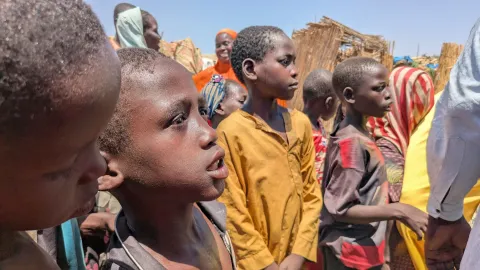
" What we're doing today is investing in our children's future," concludes Clarisse, as she looks towards a queue of children waiting their turn outside a health centre.