Youth voices help shape action on migration
UNICEF asked young people in Cambodia how decision makers can better support children affected by migration. It was a chance for youth to have a say on policies that directly impact their rights

- English
- Khmer
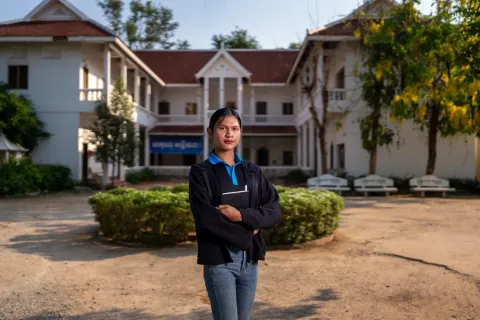
9 October 2025, Phnom Penh – “I feel like I've been able to speak what’s in my heart,” says 18-year-old Sreytheoun from Kampong Chhnang. It’s her first time in Phnom Penh, and it’s the first time she’s been asked to share her story. “And I feel a sense of relief now that I’ve spoken out.”
Sreytheoun was only nine when her parents migrated to Thailand. “I only knew that my family’s livelihood was very difficult. So, they had to work far away to earn money for us to study.”
The paddy rice field was too small to produce much income. The kitchen roof had holes. The family didn’t even own a single bicycle.
Sreytheoun and her two siblings were left in the care of her elderly grandmother and aunt. But even though she knew her parents left to give their children a better future, the reality of life at home didn’t improve.
“Living with them, I didn't have the same warmth as I had with my parents,” she says. “They didn't understand my feelings. They didn’t know what I wanted, or if I had enough money for school expenses.”
At home, her grandmother scolded her when she heard rumours of Sreytheoun skipping class, without first asking her if the stories were true. At school, her teacher questioned why no caregiver would attend parent meetings.

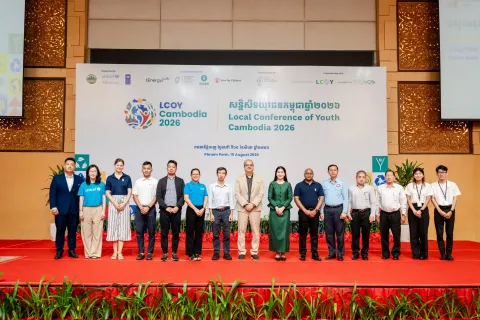
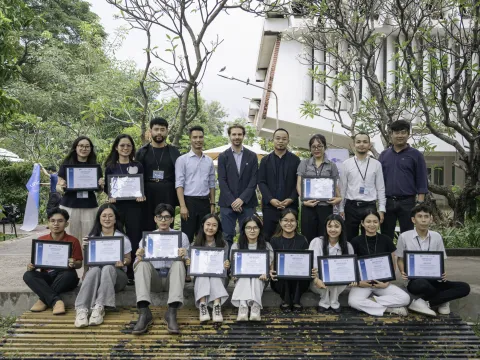
Sreytheoun opened up in front of a full conference room at a youth consultation workshop in Phnom Penh. UNICEF – together with the Ministry of Social Affairs, Veterans and Youth Rehabilitation and World Vision International – invited 30 young people from youth networks and schools around the country to share their opinions and experiences related to migration, its impact on children, and how decision makers can better protect and address their needs. The initiative is funded by the European Union through the PROTECT-Project (“Protection of the Rights of Women and Children in Labour Migration”).
The goal is to provide a platform for young people to have a say on policies that directly impact their lives and their rights. Insights from the workshop will be used to influence the regional plan of action for implementing the ASEAN1 Declaration on the Rights of Children in the Context of Migration. This landmark declaration, adopted in 2019, represents a commitment to safeguarding the rights and well-being of children affected by migration, while the 10-year regional plan of action aims to guide countries for its implementation. It emphasizes policies such as the non-detention of migrant children, family-based care for unaccompanied children, and strengthened cross-border cooperation and mechanisms that ensure continued access to essential services – including child protection, education, health, and justice – within and across borders.
One of the youngest participants of the workshop, 12-year-old Yanim, comes from the Kreung ethnic minority and travelled all the way from Ratanakiri, a far northeastern province. She says she’s never learned about migration before but can see for herself how her friends struggle without their parents, especially not having someone to help with homework. Her own father is a soldier, stationed far from home in another province, and she relies on poor phone signal to keep in touch with him.
“I miss him,” she says. “I worry about him.”

Southeast Asia is a major hub for both cross-border and internal migration. Children who migrate alone or with their parents face increased risks of exploitation and abuse, including child labour, sexual exploitation and trafficking, being in conflict with the law, and having limited access to services such as education and health care. Children left behind while their parents migrate also face threats to their welfare, mental health, and safety, including inadequate care.
In 2020, the region saw 1.3 million child migrants, driven by complex reasons like poverty, inequality, conflict, violence, climate change, and education. In Cambodia, most children move with their parents or caregivers, while some migrate independently, and it is estimated that millions remain at home while one or both parents migrate, usually in search of better economic opportunities. In 2025, almost 900,000 Cambodian migrants living in Thailand, including more than 15,000 children, returned home following the outbreak of conflict between the two countries in July.2 At the peak of the conflict, more than 170,000 people, mostly children, were internally displaced.2
UNICEF works with the Ministry of Social Affairs, Veterans and Youth Rehabilitation and partners to strengthen the child protection system, including by developing policies and laws that protect and support children affected by migration.
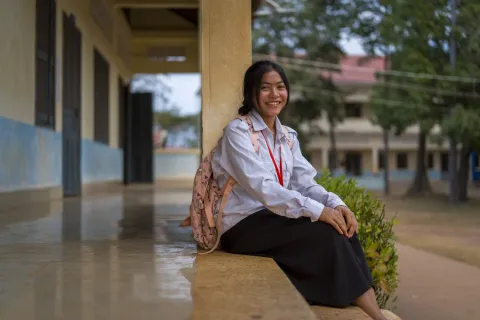
Every young person at the workshop had their own insights. Twenty-year-old university student Lina is from a Muslim community in Tbong Khmum province and says that many people from back home who migrate within Cambodia are able to find jobs but face challenges accessing Halal food, so they choose to go to countries like Malaysia instead. During their time abroad, some have faced arrests or labour trafficking.
When her sister and brother-in-law migrated to Thailand and found work on a construction site, their children were left in the care of their grandmother, Lina’s mother. Like Sreytheoun, she saw how her nephew lost his close connection with his parents, instead turning to social media for emotional support.
“When his mother was around, he was clingy,” says Lina. “But when he had to live far away from his mother, I observed that my nephew became more of an introvert. If one day he’s unhappy, he’s stressed, he tells his social media circle instead. He doesn’t tell his mother. I secretly told her this, which made her upset. But what can you do when they’re so far apart?”

At the workshop, participants were asked how they think authorities could better support children affected by migration, especially those recently returned from Thailand integrate into their communities and schools. They said they wanted protection from bullying and discrimination, food and nutrition support for poor families, road traffic and safety education, and remedial language classes or an online app to help children who don’t speak Khmer. They also wanted better mental health support for children of migrant parents who are left behind.
“For me, personally, I think that the Royal Government, as well as other relevant stakeholders, should ensure and create policies to allow all children to receive education, health care, and safety,” says Lina.
She welcomes the opportunity to involve young people in this process.
“I never used to pay attention to this topic,” she says. “But when you experience it firsthand, when you see it in your own family, and when UNICEF gives me the opportunity to have my voice heard by the world, to have them pay attention to this issue, I feel excited.”
1 Association of Southeast Asian Nations