Nurturing Care Boosts Indigenous Children's Health
How UNICEF's Nurturing Care programme is empowering Indigenous parents in Cambodia's Ratanakiri with vital early childhood development skills to combat malnutrition and improve child well-being.
- English
- Khmer
23 January 2025, O’ Chum District, Ratanakiri – In the dense forests of Cambodia’s northeastern Ratanakiri province, renowned for its rich red earth, young families face intense challenges: isolation, persistent poverty, and malnutrition that severely impacts children’s growth and development, limiting their futures.
According to the latest Cambodia Demographic and Health Survey (CDHS), nearly 39 per cent of children under five in Ratanakiri are stunted, meaning they are significantly shorter for their age due to chronic undernutrition. Another 15 per cent are wasted, dangerously underweight for their height. These severe figures rank among Cambodia's highest, alongside Oddar Meanchey and Preah Vihear provinces where stunting reaches 26 per cent and wasting exceeds 7 per cent. Kampong Chhnang has the nation’s highest wasting rate at 30 per cent, while its stunting rate is 19 per cent.
Stunting in children under 2 is often irreversible. The first 1,000 days—from conception to age two—are critical for growth and brain development. Without essential nutrients during this period, children’s bodies and brains can suffer permanent harm, and lost development simply cannot be recovered later.
To help tackle Cambodia’s malnutrition, UNICEF, WHO, and the World Bank introduced the Nurturing Care Framework in 2018. Developed by UNICEF, the programme unites Cambodia’s Ministry of Education, Youth, and Sport (MoEYS), Ministry of Health (MoH), Ministry of Women’s Affairs (MoWA), and Ministry of Interior (MoI) to address malnutrition and promote early childhood development through a unified approach. UNICEF guides the programme’s design, provides technical expertise, and supports collaboration among ministries to ensure effective service delivery.

Funded by the Australian Government through the Australian NGO Cooperation Program (ANCP), the programme equips parents and caregivers with essential skills in nutrition and child-rearing to improve health outcomes for children from birth to age six. Central to the programme’s success is its integration into early childhood care and development (ECCD) initiatives. UNICEF collaborates with its implementing partners to conduct workshops for parents on early childhood development, offering practical, actionable guidance in areas such as nutrition, responsive caregiving, early learning, and child safety. This approach has yielded tangible results, significantly improving the health and well-being of children aged 0 to 6 in underserved communities.The programme’s impact is undeniable.
“I used to think rice was enough for my child,” reflects Mangror Sreypich, a young Indigenous mother. “But now I know she needs meat, vegetables, and more attentive care to grow strong.”
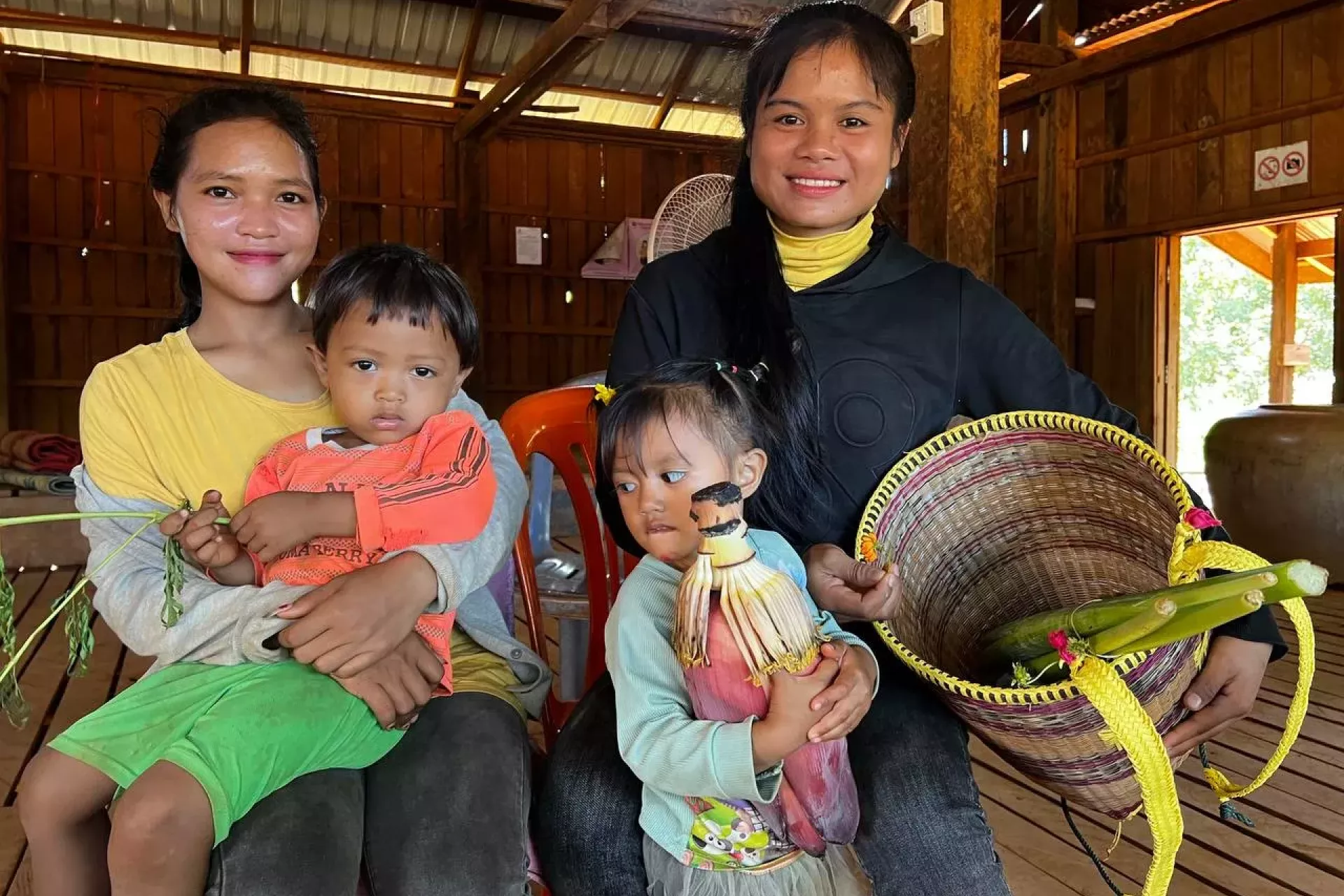
For Sreypich and her cousin, Chhoun Khorm, the programme has illuminated the value of balanced nutrition and early mental stimulation, laying a foundation for brighter and healthier futures. Both women are members of the Kreung community, one of Cambodia’s 24 Indigenous groups, estimated over 21,500 people. Altogether, Indigenous groups make up about 1.7 per cent of Cambodia’s population of over 17 million, according to the latest 2019 Population Census. Over 3,500 children in the Kreung community are under six years old, highlighting the community’s youthful.
For Sreypich, a 24-year-old single mother from the impoverished village of Kalai 3, the programme’s teachings have resonated deeply. Recently divorced, she is navigating the challenges of raising her 2.5-year-old daughter alone, determined to provide her with opportunities she herself never had. “I used to think raising a child meant keeping her fed and safe,” Sreypich explains. “But now, I see how her mind needs to grow too. I’ve learned that her first years are the most important.”
In addition to being a mother, Sreypich volunteers with the Ministry of Health’s malaria programme, where she conducts malaria screenings and draws blood samples from other parents at Nurturing Care Parenting sessions. For her, these workshops have become more than training— they open her world and give her knowledge, she reflects.
The sessions also address essential practices, such as using safe, clean water for food preparation and diversifying children’s diets to combat “hidden hunger” or micronutrient deficiency—a pressing issue, with one in three children aged 6-23 months in Cambodia consuming no fruits or vegetables, according to the CDHS 2022.
Across the sessions, mothers like Sreypich and Khorm, share their experiences, each bringing unique goals and perspectives. Khorm, 23, who has a three-year-old son, shares that the programme has completely reshaped her perspective on early education, showing her the power of learning activities that start right at home. “Before, my husband and I thought we’d wait until he was six to start school,” she says. “But now, I see how these early years shape his future.” Armed with new knowledge, she’s set to enroll her son in preschool this November, recognizing that early education builds the social, cognitive, and emotional skills essential for a strong start in primary school.
Khorm adds, “I knew a little about parenting, but I wanted to fill in the gaps,” she says. The topic that resonated most was responsive caregiving. “My son doesn’t always listen, so I wanted to learn ways to communicate better with him and encourage him to listen.”
Beside her, Ry Keo, an illiterate mother attending the first of eight workshops, joins the conversation with quiet determination. "I want to learn how to care for children with disabilities," she says, her gaze steady as she points to her crossed eye.

Strengthening Communities by Empowering Women
The Nurturing Care Parenting programme is more than nutrition; it empowers indigenous mothers with essential caregiving skills to lift their families out of poverty and give their children a healthy start in life. In communities with limited opportunities, these mothers are breaking cycles of poor health and shaping brighter futures for generations. In Ratanakiri, where caregiving falls mostly to women, these nurturing care sessions serve as a “resource centre” for caregivers, giving them practical skills to nurture their children while instilling confidence in themselves.
Ry Keo, 34, steps into her first session, her bold red wool hat with a wide brim catching the light, and a hand-woven basket backpack—locally called a kapha—strapped to her back as she carries her baby boy. Filled with excitement, the mother of four exclaims,
“I’m here to learn how to give my children a better life. Even though I can’t read or write, I want to know more, to grow stronger for them, and to discover new ways to be the mother they deserve.”
UNICEF’s programme fosters gender equality by empowering mothers like Sreypich, Khorm, and Keo to embrace their roles as caregivers with confidence and pride. “I’m not just learning about food,” says Sreypich, her voice brimming with pride. “I’m learning how to help my children grow strong, and with each session, I feel more capable as a mother.”
As the programme reaches more mothers across Ratanakiri, the impact is life-changing: children are thriving, and mothers are stepping up as champions of their families' health. “I want my children to grow up strong and go to school,” Sreypich adds, her eyes shining with determination. “Now, I have the knowledge to make that happen.”
With UNICEF’s support and MoEYS’s ongoing implementation, mothers like Khorm are forging a path toward a healthier future. Together, they are giving their children the tools to flourish and the courage to dream big under the vast night sky of Ratanakiri.
Reflecting on how much has changed since her own mother’s generation, Khorm smiles. “More people are educated now, and life is improving.” Her mother couldn’t read or write, but Khorm completed Grade 10, and her husband reached Grade 12. For her, the Smart Home Kit from the programme has been invaluable. “It has pictures and guidance for each age group,” she says, flipping through the pages. “I’m going to hang it in our bedroom, so I can use it with my son every morning, guiding him toward a healthier, brighter future.”