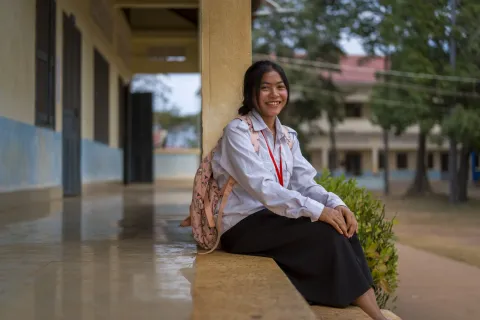
Girls are students, not brides, say youth advocates
Meet the young advocates wanting to end child marriage in Ratanakiri. With support from UNICEF, they’re teaching children early that education is the key to a better future.

- English
- Khmer
21 January 2026, Ratanakiri – “Because we are young, we shouldn’t marry. We must study,” says 12-year-old Soten.
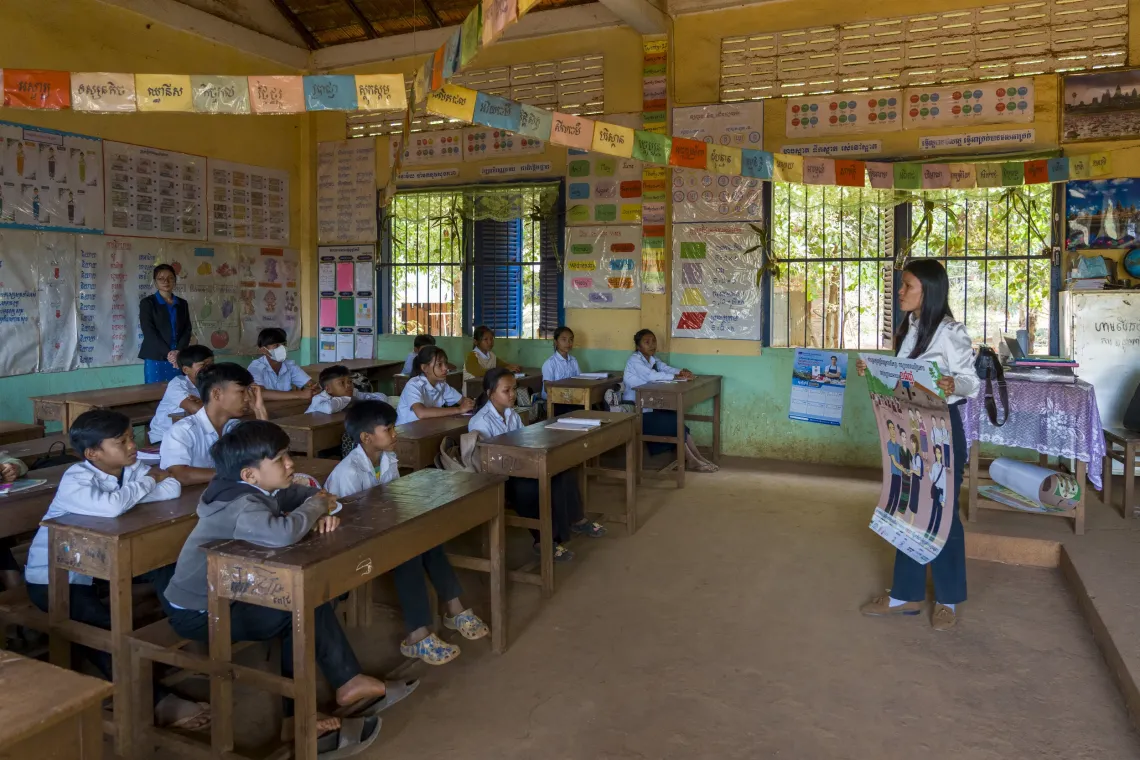
At a primary school in Ratanakiri province, Grade 6 students are learning about the risks of early marriage.
“We shouldn’t marry at a young age, because when we have children, we don’t know how to take care of them,” says classmate, 11-year-old Chornratanakchai, after the session. “We don’t know how to do farming, take care of our health, or earn family income.”
For these kids, it’s not hard to imagine how early marriage impacts the girls in their community, because they see it every day with their own eyes. Ratanakiri province has the highest rates of child marriage in the country, with almost half of girls aged 20–24 married before they turn 181.
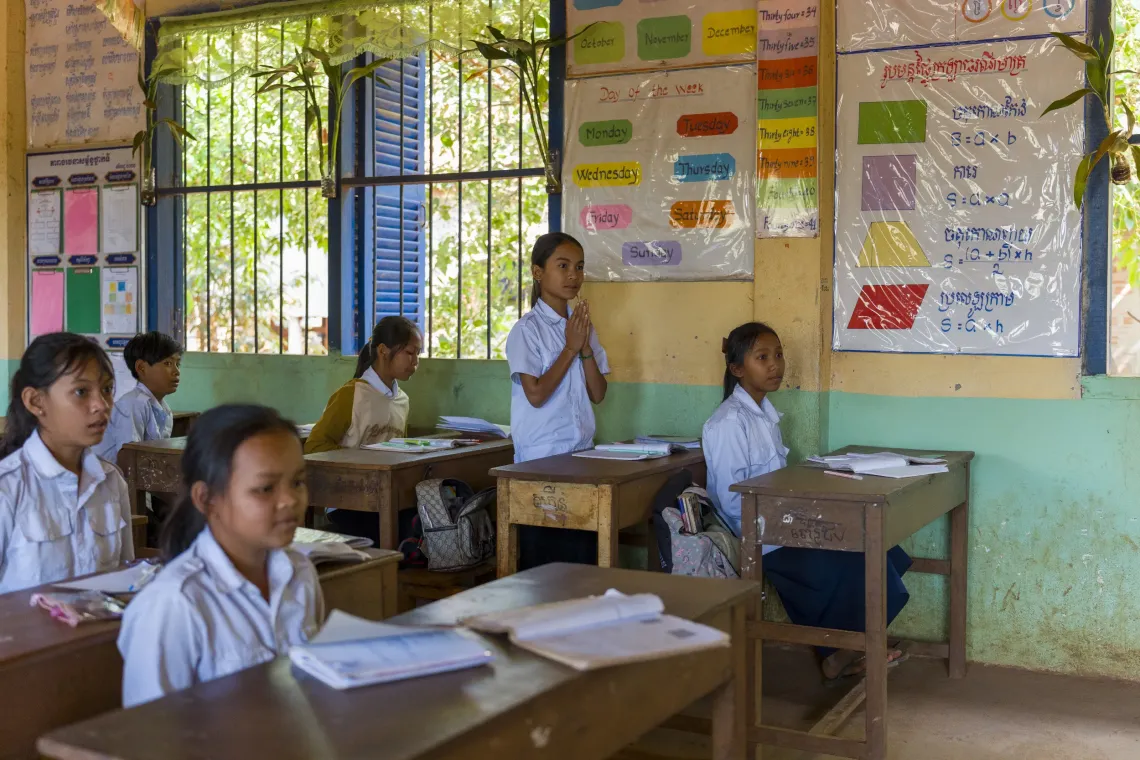
Twelve-year-old Marany’s cousin got married at 15, dropped out of school, and soon after had a baby.
“It’s difficult for her,” she says. “She doesn’t know how to earn money, she farms every day, and not much income comes in. When I see people marry, it makes me want to continue studying, I don’t want to be near it.”
Today’s class is led by 25-year-old Run Chantou, who says stories like these are everywhere among Ratanakiri’s indigenous communities. Many young girls see quitting school and getting married as a way to ease the financial burden on their parents. But the reality can trap them in poverty instead and leave them with limited opportunities to earn an income and improve their family’s livelihood.
Chantou has spent the last couple of months in schools and villages around the province offering girls an alternative future.
“I want children to understand the impacts, what problems occur when they marry young,” she says. “For me personally, I don’t want to see them have regrets in the future.”
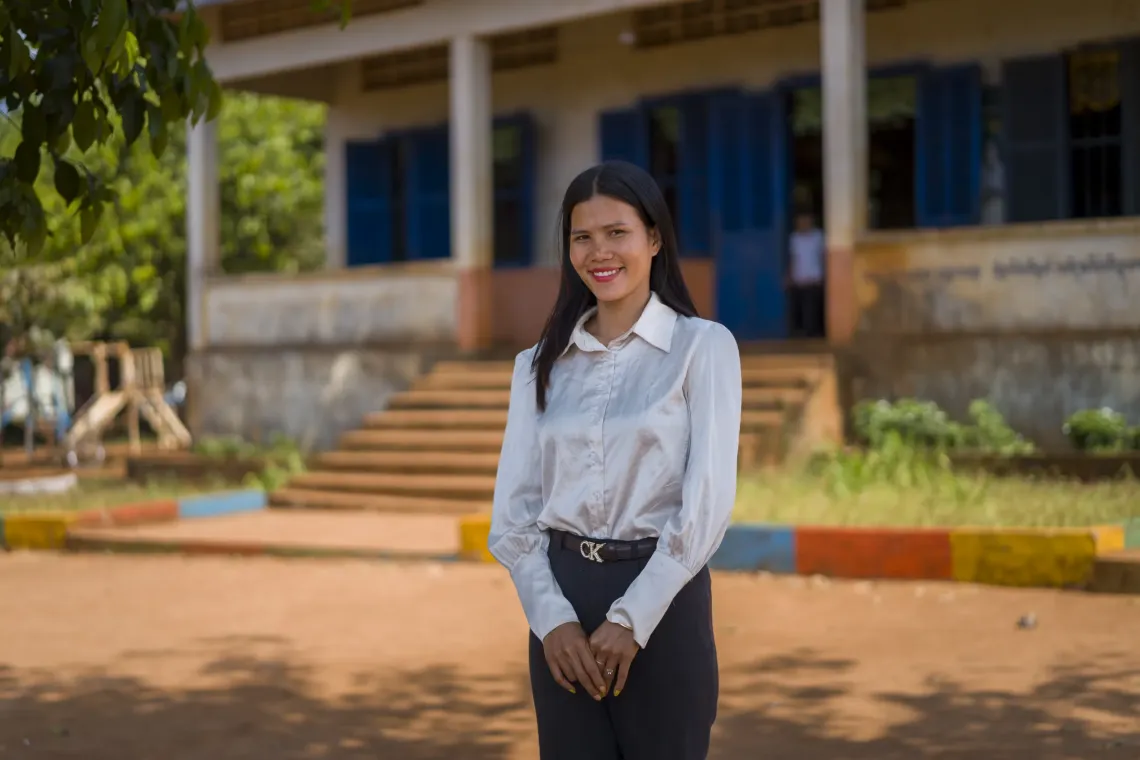
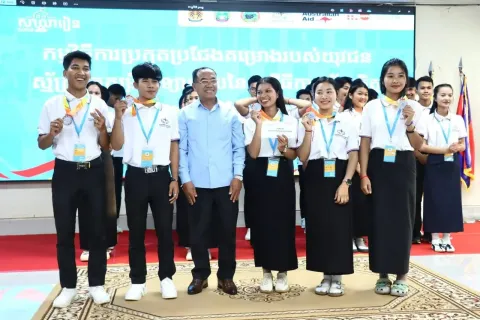
Chantou is the chief of the Adolescent and Youth Reference Group (AYRG) in Ratanakiri, a national youth network supported by UNICEF that champions young people as advocates for their rights. With support from the Australian Government’s Department of Foreign Affairs and Trade (DFAT), UNICEF is working with the Child Rights Committee Cambodia (CRC-Cambodia) to empower AYRG members to lead child marriage advocacy in their communities through school visits, group village outreach, and by visiting households door-to-door. In Mondulkiri and Ratanakiri provinces, more than 230 AYRG members have been trained in child marriage advocacy so far through CRC-Cambodia.
During the sessions, Chantou explains that early marriage takes away a girl’s right to make decisions about her own life, that girls face higher risks of domestic violence and health complications from early pregnancy, and that dropping out of school isolates them from their friends and community and limits their options for the future. Her message targets everyone—girls, boys, youth, caregivers, and every villager—but it’s the sessions at schools that she says are the key to changing mindsets early.
“From what I’ve observed, the younger children in school pay more attention and listen better,” she says. “In the community, once we’re done talking, it’s over for them. We can only spread the word to let them know, but we can't easily change their hearts.”
The rate of child marriage in Cambodia has declined only slightly over the past two decades, reducing from 25 per cent in 2000 to 18 per cent in 2022. In some provinces with high populations of ethnic minorities—including Ratanakiri (48%), Stung Treng (41%), Mondulkiri (33%), and Preah Vihear (33%)—the practice remains widespread1.
But while some of the underlying cultural reasons for child marriage haven't changed, Chantou says the risks facing children are shifting. Even in this rural corner of Cambodia, young people are more connected online than ever before, and many girls are meeting their future husbands through social media apps like Facebook. Chantou worries that this new trend can create new opportunities for grooming and exploitation, making it even more important to reach children early and help them recognise the dangers.
“Children in only Grades 3 or 4, who are 12 or 13 years old, set up dates with men in their 20s from other provinces to come and stay with them,” she says. “The parents aren’t there because they are away in the forest for rubber farming. It’s happened with three or four couples already. And they aren’t even from the same village. Sometimes the men aren’t even from the same indigenous group.”
She knows that changing deeply rooted attitudes will not happen overnight, but believes that consistent messages, delivered by young people who understand their communities, can gradually shift expectations about what a girl’s future can look like.
“Even as we carry out these disseminations, the issue persists. Early marriage is still happening,” says 17-year-old Soeum, an AYRG member from a nearby indigenous Kreung community who hopes to follow Chantou’s lead. “That’s why I want to work with AYRG, to get more support to help spread the message even further.”
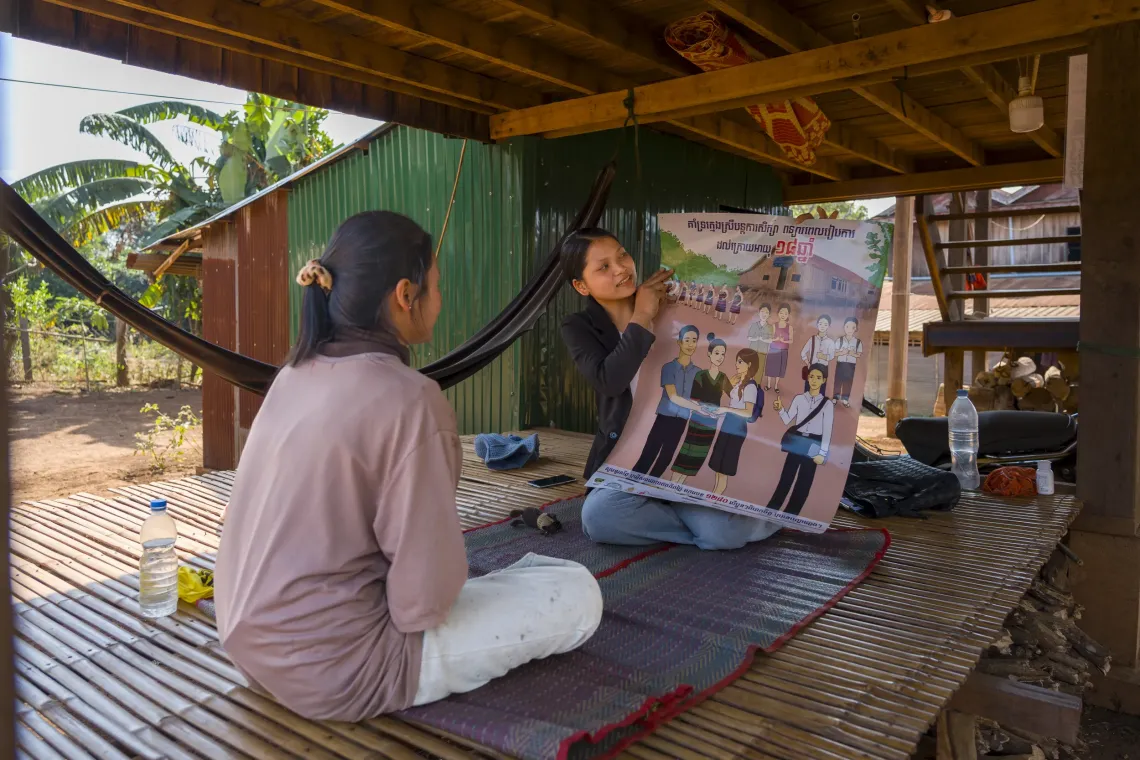
Like Chantou, Soeum has chosen a different life for herself. She has no plans to drop out of school, and thanks to a scholarship, hard work, and determination despite her own family circumstances, she’ll soon complete her studies at an upper secondary school near Ratanakiri town, around an hour from her village.
“To be honest, my family isn’t that wealthy, but I simply do not want to quit school,” she says. “Both my mother and father are illiterate. They have always pushed me to study. They know that without an education, it’s very hard to find work. They said that if someone truly loves me, they must wait.”
Now she wants to help others make the same choice. In the future, she hopes to see more parents encourage their children to keep studying, like hers did.
“I want to educate the parents. I want them to guide their children from a very young age,” she says.
Change is possible, she says. She’s not dreaming small, for herself or her community.
“I want to become the Commune Chief,” she says. Her first item on the agenda: “I would solve the issue of child marriage. I want to completely eliminate child marriage from the entire community.”
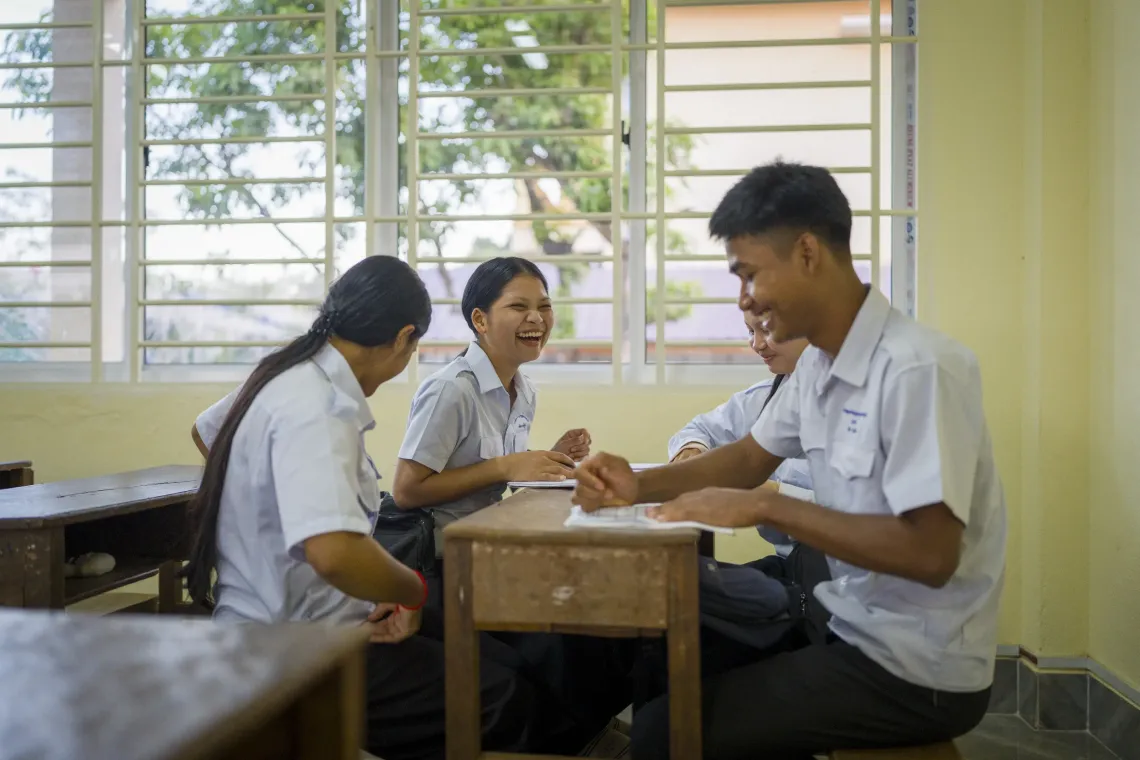
1 Cambodia Demographic and Health Survey (CDHS), 2021–2022