Connection, Not Correction: Cambodia's Parenting Rises
Parents drop the stick. Learn to listen. Transform family violence into love. One conversation at a time, Cambodia rewrites child-rearing.
- English
- Khmer
Siem Reap, August 5, 2024 — In the hard-to-reach village along the scenic Tonle Sap in Chi Kraeng district, Cambodian parents are embracing a new way of raising their children. They are putting down the stick and picking up gentler methods. This change, though difficult, is bringing profound benefits to families as they move away from traditional practices of physical punishment towards non-violent approaches.
For generations, strict discipline involving physical punishment was the accepted norm in Cambodian households. Phearun Sok, a 33-year-old mother of two, shares a painful memory involving her 9-year-old son, Thanin. "One day, Thanin went swimming in the lake without permission," she recalls, tears streaming down her face. "I was so angry that I hit his foot with a bamboo stick. It got infected, and we had to take him to the hospital. I felt so guilty afterward."
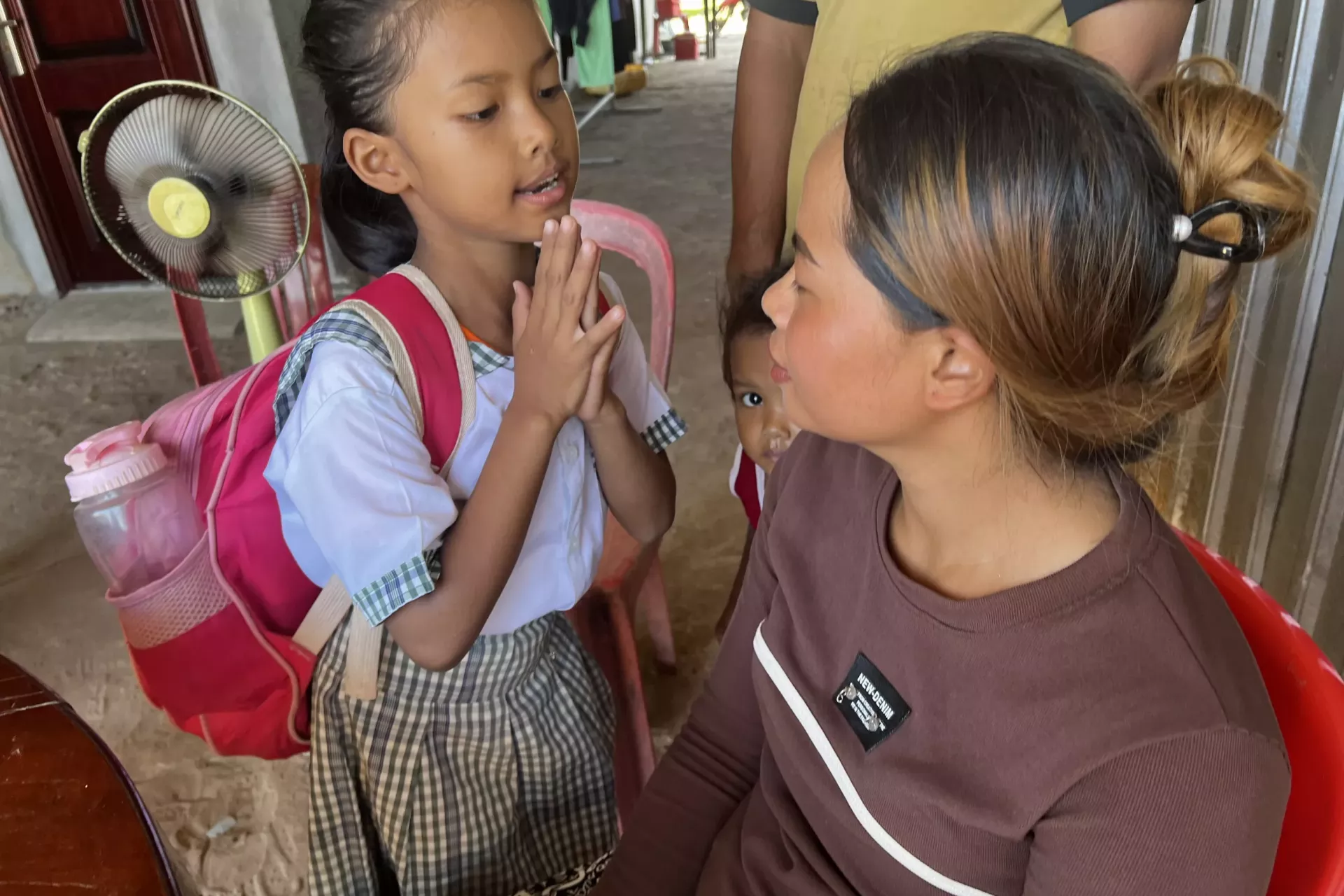
In another household, Path Korn and her husband, Phearith Kong, faced similar challenges. Path recalls her frustration when her 9-year-old daughter, Rachana, stole money to buy sweets. "Once, I hit Rachana's fingers with a stick, breaking her thumb," Path admits, hugging her daughter as she heads off to school.
Children in Cambodia face many protection challenges. It's estimated that around three million of them are at risk of violence, abuse, exploitation, and being separated from their families. Recent studies, including the latest Cambodia Demographic and Health Survey (CDHS) 2021-22, have revealed concerning levels of corporal punishment and emotional violence. These are often used as ways to discipline children in homes, schools, religious places, and in alternative care institutions. In response to these widespread practices, the Ministry of Women's Affairs, with support from UNICEF Cambodia and funding from USAID and the Australian Government's Department of Foreign Affairs and Trade (DFAT), launched the Positive Parenting Programme in 2018.
These efforts have benefited around 82,000 children, of whom 39,000 are girls and 70 have disabilities. The initiative's comprehensive training sessions aim to equip parents with the skills needed to adopt positive parenting techniques.
So far, Phearun and Path attended these sessions. They learned essential lessons: listening to their children, attending to their needs, using positive words to encourage good behaviour, avoiding blame and curses, and managing their own anger and stress. "I was surprised to learn that we could raise children without violence," says Phearun.
The programme’s impact has been significant. Initially, it was difficult for parents to change their ways, but they gradually began to implement what they had learned. Phearun began listening more to Rachana and explaining things calmly. Path started hugging her children and using encouraging words. Both mothers learned to control their anger and find alternative disciplinary methods.
"When my son comes home from school now, I ask him about his day and help with his homework," Phearun says. "I've noticed big changes in his behaviour. He's more respectful and does better in school." Path saw improvements too. "Now Rachana doesn't steal money anymore. She tells me what she wants instead."
The changes extended beyond the children. Phearun noticed improvements in her relationship with her husband. "We don't blame each other anymore," she explains. "Our household's number one rule now is to listen." Phearith, Path's husband, also observed positive changes. "Our family seems happier now," he says. "There's less shouting and hitting."
The Positive Parenting Programme is not just transforming individual families but is also breaking the cycle of physical violence passed down through generations. According to a survey conducted during the programme, 75 per cent of participants strongly disagreed that stress could be relieved by drinking alcohol, gambling, or hitting/yelling at children, indicating a shift towards non-violent coping mechanisms. Furthermore, correct answers regarding positive discipline increased from 60 per cent in pre-tests to 95 percent in follow-up tests.
"Please don't let anger control you by beating your children," Phearun advises other parents. "It's wrong. Instead, try to understand your child, talk to them, and show them love."
As more parents adopt these new skills, the hope is that Cambodia's next generation will grow up in happier, healthier homes. The change continues one family at a time, proving that positive parenting can lead to meaningful improvements for entire communities.
The Positive Parenting chatbot, developed by the Ministry of Women’s Affairs (MoWA) and the National Committee for Early Childhood Care and Development (NC-ECCD) with financial and technical support from UNICEF, is an innovative tool designed to make parenting advice accessible to all. By scanning a QR code, caregivers can instantly receive tips on positive discipline, communication, and child development through Telegram. The chatbot is user-friendly, offering both text and audio options, empowering parents to nurture their children in a safe and supportive environment. Get expert parenting tips right at your fingertips. Here’s how:
- Telegram Chatbot: Scan the QR code to access MoWA and MoEYS’s chatbot with UNICEF support for quick parenting advice.
- Call 1279: Receive voice-guided tips anytime, anywhere!
- Talk to Local Volunteers: Get direct support from your community.