Young survivors’ fight to rebuild their lives.
Young girls in Buterere, supported by UCBUM, are breaking isolation through listening and learning, thanks to a project supported by the Spanish National Committee for UNICEF.

- English
- Français
As we walk through a vast expanse littered with dumped rubbish, trash, and filth, the landscape suddenly changes. Amid this challenging environment, a group of young girls gathered catches our attention. Curiosity drives us to find out what they’re doing. In the center of the group, a teenage girl immediately catches our eye. “Here, we’re sorting plastic bottles by color,” she explains confidently as we approach her.
This young woman is Edine. At 19, she is one of 58 teenage girls in the Buterere area identified as survivors of severe violence. She has a difficult past: when she was barely 14 years old, she was held captive and abused by a man. After being raped, she became pregnant and developed health problems. Threatened with death by her abuser, she was forced to flee and seek refuge at her father’s home, only to face rejection there from her stepmother. Feeling doomed to a life of misery, Edine contemplated suicide. Her life took a turn for the better the day she happened to run into a woman who was a member of the child protection committee. Moved by compassion, the woman quickly referred her to the Buterere Vocational Training Center, run by the NGO UCBUM with funding from the Basque government through the National Committee for UNICEF Spain.
Today, Edine’s life has changed dramatically thanks to the “Duhagurukire Hamwe Duterintambwe” project. Welcomed at the vocational training center, where she could choose the training program she wanted, she quickly opted for recycling, determined to help address the waste problem in her neighborhood.
“Joining this recycling program was a real turning point in my life. Before, I used to wonder how I would provide for my family’s future, but today I wake up every morning feeling proud. Not only am I helping to make our neighborhood cleaner and healthier, but I’m also learning real trade. Thanks to the skills I’m developing here, I know I’m now able to provide for my loved ones and build my own future independently,” she says with a broad smile.
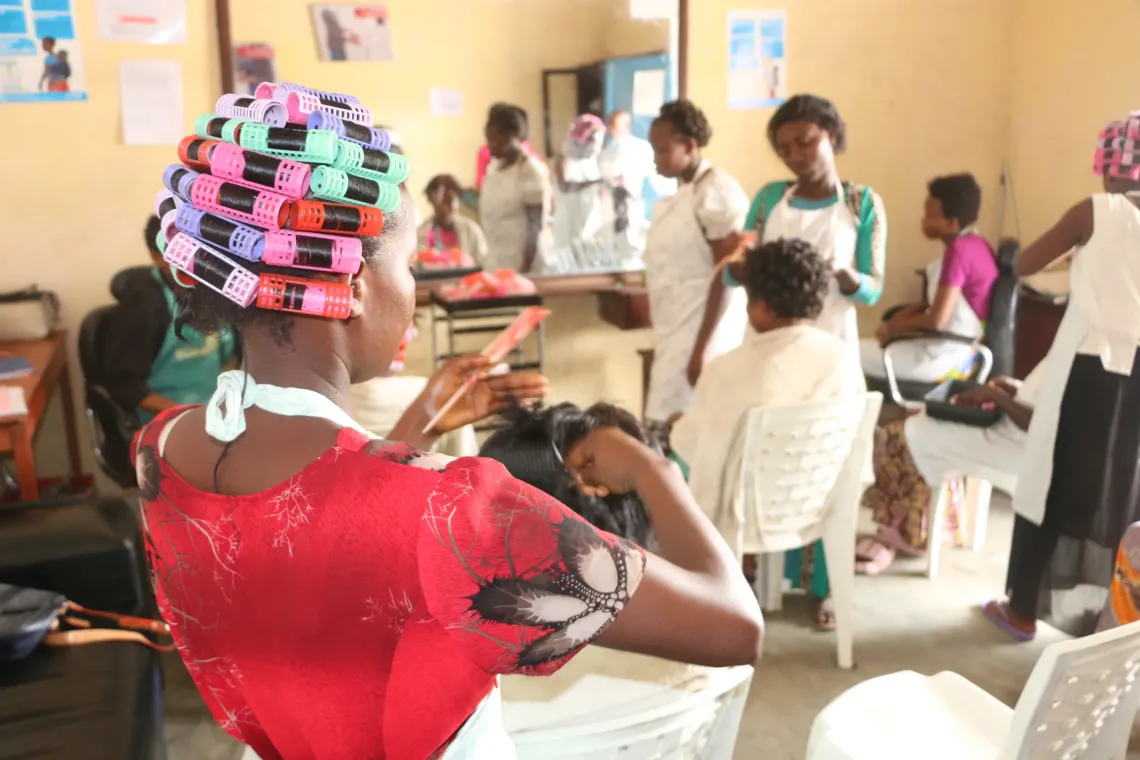
The NGO UCBUM, supported by UNICEF through funding from the Spanish National Committee for UNICEF, also provides psychosocial and legal support to these girls who have survived violence. Through individual or group counseling sessions led by psychologists and social workers, these teenage girls find a confidential and supportive environment where they finally feel understood, respected, and valued.
Rose, 13, had long been fleeing her stepfather’s abuse. Hoping to find refuge with her paternal aunt, she instead faced exploitation and exhausting forced labor. Despite the violence, she returned to her mother’s home, where a neighbor who witnessed her ordeal alerted a member of the local Child Protection Committee. When Rose arrived at UCBUM, she had withdrawn into silence. “She was deeply desperate and did not want to talk to anyone,” recalls Bernadette, a psychologist at UCBUM.
The turning point came when Rose began learning hairdressing. As she practiced and interacted with clients, she gradually opened to the world. “I feel like I’ve found a new family. Keeping busy learning new techniques helps me avoid being overwhelmed by memories of the past,” she says with a smile.
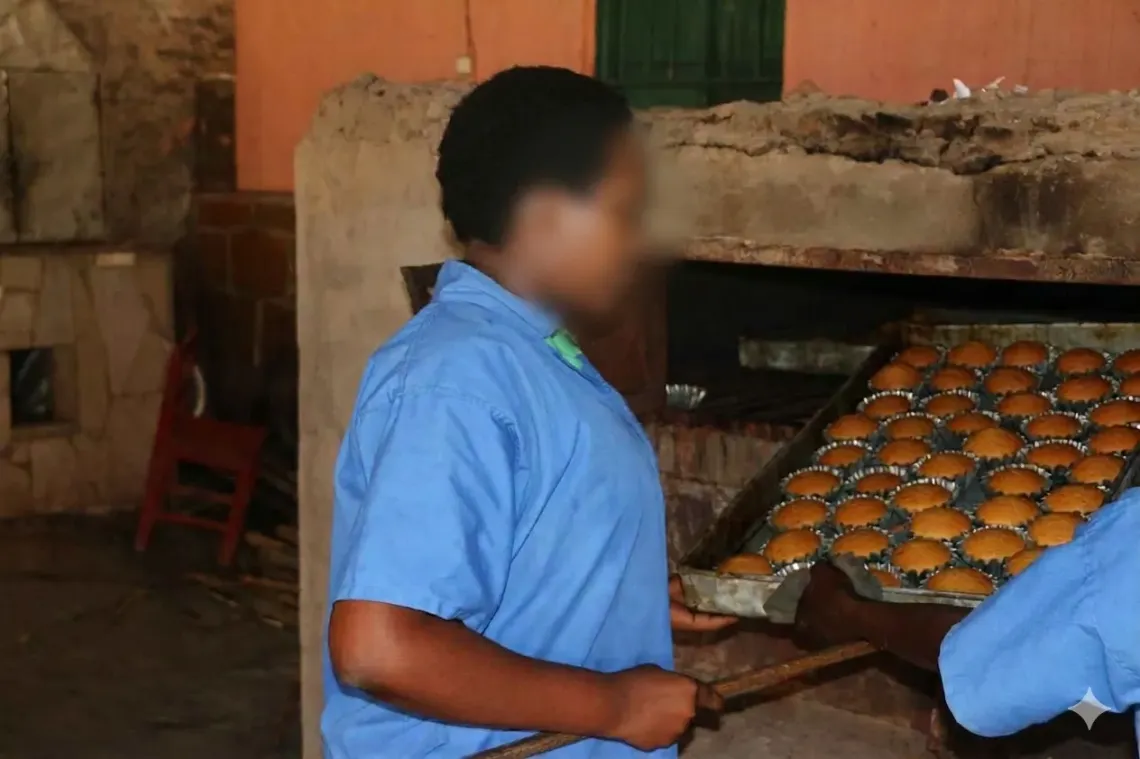
As for Yvette, 19, her story is marked by abduction and an early pregnancy. Abused by the father of her child, she sometimes spent nights sleeping outdoors under the stars. Her life changed the day she met a social worker at the market who was identifying vulnerable children. Taken to the NGO UCBUM, she found the keys to rebuilding her life there.
“I received compassionate support that helped me rebuild myself from the inside out. Thanks to the guidance of the social workers, my trauma has been replaced by the joy of knowing how to make bread and doughnuts that can feed hungry children,” she says.
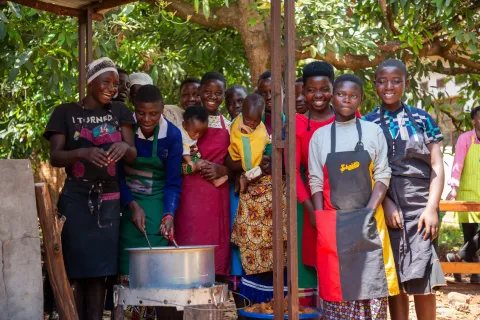
In the Buterere region, where debris and tears once piled up, an incredible force of life is now taking root. Edine, Rose, Yvette, and the 147 other young women enrolled in various training programs - hairdressing, welding, recycling, and baking - are no longer helpless victims of fate; they have become agents of their own destiny.
Supported step by step toward professional reintegration, these young girls now share a clear and common dream: to start their own small businesses within their communities. By transforming the pain of the past into skills for the future, they are proving that even in the darkest of circumstances, the hope of an independent, dignified and brighter life is always possible.