From Trauma to Dignity: Adolescent Girls Rebuild Their Lives in Ngozi
At the Ngozi rehabilitation centre and within surrounding communities, adolescent girls are rebuilding their lives after violence and deprivation of liberty, with support from UNICEF.

- English
- Français
Many of the girls said that the training had restored their hope and helped them envision a new beginning.
In Ngozi, adolescent girls who have experienced various forms of violence, as well as girls in conflict with the law, are gradually rebuilding their lives, both within the community and at the rehabilitation center. Through psychosocial support and vocational training in baking and tailoring, they are regaining self-confidence and preparing for their social and economic reintegration.
In a training room filled with the aroma of freshly baked bread, adolescent girls carefully knead dough before placing their first loaves in the oven. Nearby, others concentrate on learning to operate sewing machines, paying close attention to every stitch. Behind these gestures lie experiences of violence, trauma and conflict with the law, but also a shared determination to build a different future.
In Ngozi, the UMWIZERO program, implemented by Terre des Hommes with funding from the German National Committee for UNICEF, assists adolescent girls in conflict with the law, including those deprived of their liberty. It offers a comprehensive package of psychosocial support, personal development activities and vocational training. Alongside individual counseling and peer support groups, the girls select a vocational pathway, such as baking or tailoring, to prepare for their social and economic reintegration.

For one of the girls currently deprived of her liberty, tailoring represents far more than learning a trade.
“While deprived of my liberty, I have had the opportunity to receive vocational training in tailoring. The skills I am acquiring give me hope and confidence that I will be able to support myself and my family after my release. With the start-up kit provided as part of the training, I plan to establish my own business in my community and begin a new chapter in my life.”
As they develop skills for their future, the girls are also receiving support to address the emotional impact of their experiences.
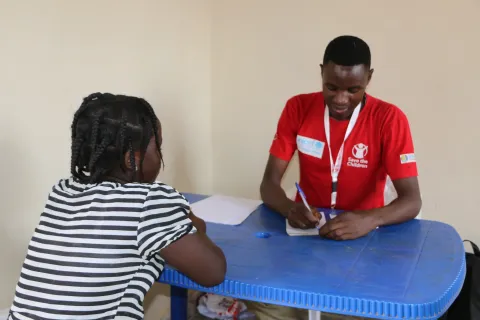
Terre des Hommes’ social workers facilitate individual counseling sessions and peer support groups where each participant can share her experiences, express her emotions, and receive support in a safe environment. These protected spaces play a vital role in their recovery.
Another girl deprived of her liberty described the impact of this support:
“The peer support groups, counseling sessions, singing and sharing activities helped me realize that I was not alone in dealing with my trauma. Listening to the experiences of other girls restored my hope and made me feel understood, respected and valued.”
She added with emotion:
“Today, I feel much better prepared and more confident about facing the next stage of my life.”

The program’s support extends beyond the rehabilitation center. In surrounding communities, adolescent girls facing difficult circumstances also receive assistance to strengthen their independence and build safer futures.
One of them is Nishimwe Huguette, the eldest of eight siblings. Following the murder of her father, she was forced to leave school and help her mother provide for the family. She worked as a casual laborer in the fields, performed domestic work, and carried water for small payments. These difficult circumstances left her at heightened risk of sexual exploitation.
After being referred to the UMWIZERO program by a member of the local Child Protection Committee, Huguette received entrepreneurship training and start-up capital to establish a small business selling bananas and beans.
“Thanks to this business, I can now meet my family’s essential needs. I buy food, soap, and clothes for my younger brothers and sisters, and I have even started saving money. Most importantly, I no longer feel vulnerable to people who once tried to exploit our poverty. Today, I have regained hope for the future.”

Huguette’s business continues to develop, helping her meet her family’s needs, expand her activities and strengthen her financial security. This economic independence has also reduced the risk of exploitation she previously faced.
Beyond vocational training, the UMWIZERO program provides comprehensive support combining psychosocial care, life-skills development, entrepreneurship training and economic reintegration. With funding from the German National Committee for UNICEF, the program is enabling adolescent girls who have experienced violence, exclusion or deprivation of liberty to restore their dignity, strengthen their financial independence and rebuild their lives as active members of their communities.
*Names have been changed to protect the identities of the children and their families.