World Toilet Day: Progress made, but persistent sanitation challenges remain in Burundi
On World Toilet Day 2026, celebrated under the theme “Sanitation and Gender Equality”, UNICEF highlights the importance of safe and inclusive sanitation for children’s health, dignity, education and protection.

- English
- Français
In Burundi, significant progress has been made in recent years through investments in Water, Sanitation and Hygiene (WASH) infrastructure. However, substantial needs remain, particularly in schools, health facilities and the most vulnerable communities. Inadequate sanitation facilities disproportionately affect women and girls, compromising their safety, privacy and dignity and, for adolescent girls, negatively impacting school attendance, especially during menstruation.
According to the latest data from the Joint Monitoring Programme for Water Supply, Sanitation and Hygiene (JMP 2025), 45% of the population has access to basic sanitation services, while 2% still practices open defecation or relies on limited sanitation facilities. As a result, a significant portion of the population still lacks access to improved sanitation services and facilities.
In addition, significant disparities remain between urban and rural areas, highlighting the need for continued investment and sustained behaviour change efforts.
With the support of its partners, UNICEF is assisting the Government of Burundi in improving Water, Sanitation and Hygiene (WASH) services across the country.
As a result of this support in 2026:
- 555,758 people gained access to basic sanitation services, including internally displaced persons, for whom 163 household latrines were constructed;
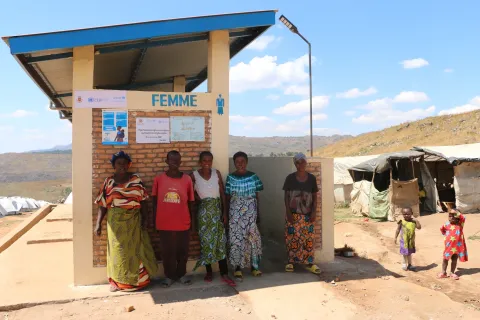
- 23 permanent sanitation blocks were built at the Busuma refugee site;
- More than 100,000 students in 1,444 schools benefited from improved sanitation infrastructure.
These investments help reduce diseases linked to unsafe water and poor hygiene, improve school attendance, particularly among girls, and provide greater safety, privacy and dignity for communities. They also contribute to a more inclusive school environment, where adolescent girls can manage their menstruation in dignity and continue their education.
“A safe, clean and accessible toilet is much more than infrastructure. It protects children’s health, preserves their dignity, supports school attendance and helps prevent disease. As we have entered the rainy season, it is critical to invest in sanitation to prevent waterborne and faecal-oral diseases such as cholera,” said the UNICEF Representative in Burundi.
Through its programmes and partnerships, UNICEF continues to support the Government of Burundi in achieving universal access to quality water, sanitation and hygiene services. These efforts are aligned with national priorities, including the Presidential Compact for Water, Hygiene and Sanitation and the ambition to eliminate open defecation by 2029. The goal is to ensure that every child can grow up in a healthy, safe and dignified environment.