"UNICEF and its partners are transforming nutritional status in Muyinga thanks to local foods".
"Under French funding, WFP, ONUFEMMES and UNICEF support local companies to diversify food and improve nutritional status".

- English
- Français
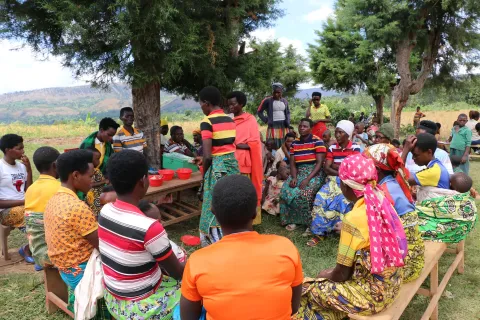
As part of the programmed food aid project, the WFP, UN Women, and UNICEF agencies, in collaboration with their partners CARITAS and World Vision International, organized a high nutritional value food fair on May 29, 2024, at the Mwakiro commune stadium in Muyinga province. The aim of the fair was to enable participants to discover and appreciate local nutrient-fortified foods produced by small and medium-sized value-added companies (SMEs).
The fair launched with a visit to a cornfield belonging to the Twitwararikane cooperative on Mwakiro hill and to the Twitambutse Association on Butobwe hill. The members of these groups were delighted to share their story: "We started out with a small group of women who performed paid farming work. With the income received, the group quickly grew into an association and then into a cooperative," rejoices Florence Nduwayezu, member and president of the Twitwararikane cooperative.
These women used to rent small areas to grow crops. With the income from the sale of the crops they produced, they decided to expand to larger areas. "We are now producing 500 kg of maize with 4 kg of seed, and a ton of beans with 100 kg of seed," says a member of the Twitambutse association. It was also a good opportunity for communities and administrative stakeholders to learn about the benefits of food diversity.
The administrator of the Mwakiro commune encouraged the people attending the event to follow the good example of these women for innovative initiatives. "Before, harvests were inefficiently managed. But now families know that their crops can serve as raw material for local food processing companies," she said. After this inspiring visit, the participants proceeded to the Mwakiro stadium, where the fair was in full swing. The dances and songs of the joyful women entertained the crowds attending the ceremonies. The stadium was surrounded by the stands where SMEs were exhibiting their products to the great delight of buyers and fair visitors.


"Maize and other cereals collected from farming cooperatives are blended with nutritional fortifiers to make composite flours, peanut paste, and cookies," shared Mélyse Manirakiza, Managing Director of With God Company (WiGo). The fair enabled participants to promote the use of these products and to establish business relations between associations of raw material producers, traders, and processing units.
Vincent Curis, representing the French Embassy in Burundi, appreciated the joint efforts of all those involved in the project. "I'm very happy to be able to see these good results, which are the fruit of the efforts of each and every one of you," he remarked, as he congratulated the participants. On behalf of the three UN agencies, Gilles Peyron emphasized the vital importance of this project for community development and the healthy nutrition of the Burundian population: "This project has made a major contribution to improving the diet and nutritional status of vulnerable groups in Muyinga province, through a value chain," he said.


This project, jointly implemented by the WFP, UN Women, and UNICEF agencies and financed by France under the "L'Aide Alimentaire Programmée" (AAP) 2022 fund, has been very successful. At least 20 agricultural cooperatives have been created and supported in the communes of Gasorwe and Mwakiro. 56 agricultural producers and members of processing units have been trained in agro-food processing techniques to improve the nutritional quality of their products. 12 composite flour production units have been supported and have been able to produce 18,400 kg of flour, which is then provided to vulnerable households.
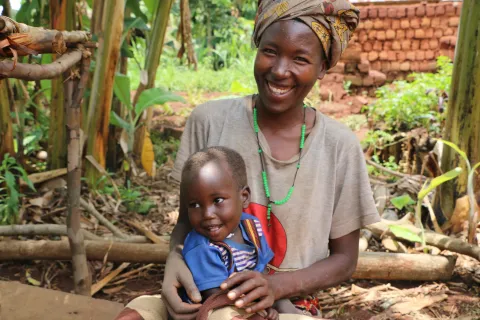
The purpose of the fair was to stimulate social and behavioral change in favor of nutrition for pregnant and breastfeeding women, and supplementary feeding for children aged 6 to 23 months. The fair highlighted the importance of supporting community-based SMEs to develop innovative, competitive, and accessible agri-food initiatives with high nutritional value. The fair closed with a distribution of high nutritional value foods to identified vulnerable households.