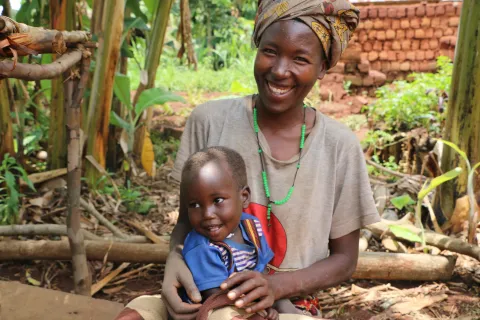
Tackling malnutrition in Burundi
How multisectoral interventions are transforming the lives of communities

- English
- Français
On September 15, the second Steering Committee (COPIL) meeting of the project “Fighting malnutrition through multisectoral interventions in vulnerable communities in Burundi” was held in Kayanza.
This project, funded by the Swiss Agency for Development and Cooperation (SDC) to the tune of 9 million Swiss francs, has been jointly implemented by the Government of Burundi, UNICEF, WFP, and FAO since December 2021. With a duration of 5 years, it aims to reduce chronic malnutrition in children under 5 years old in the provinces of Ngozi, Kayanza, and Muyinga, where about 1.5 million people live.
More specifically, the project targets 45,000 pregnant and breastfeeding women, 55,000 children from 0 to 23 months, 145,000 children from 0 to 59 months, as well as 4,450 vulnerable households composed of 22,250 individuals. It plans multisectoral interventions such as micronutrient supplementation, promotion of breastfeeding, food diversification, nutritional education, access to drinking water and sanitation, as well as strengthening livelihoods.
This third phase follows two initial phases carried out in the province of Ngozi between 2013 and 2021, which achieved significant results. During her speech, the UNICEF Representative in Burundi recalled some of these encouraging results. For UNICEF, this includes micronutrient supplementation that reached more than 40,000 children, as well as the care of 1,500 children suffering from severe acute malnutrition. The WFP, for its part, improved the resilience of more than 6,000 households through savings and credit activities. The FAO provided agricultural and livestock inputs to more than 7,000 households.


Thanks to this multisectoral approach, the prevalence of chronic malnutrition was reduced in the province of Ngozi, as were the rates of anemia in children under 5 years old and women of childbearing age. Dietary diversity also improved among young children and women.
Building on these promising results, this third phase aims to reach 60% of the target population in the health districts of Ngozi, Buye, Kiremba, Gahombo, and Gashoho. It aims for a reduction of at least 5% in the prevalence of chronic malnutrition in these areas.
During their field visit the day before the COPIL meeting, the committee members were able to see the progress made since the launch, less than two years ago. In addition to the results already mentioned, other advances were highlighted, such as the improvement of access to basic sanitation for nearly 150,000 people, or the production of 890 tons of fortified flour by the supported mills.
The participants in the COPIL meeting welcomed this progress while recognizing the remaining challenges. The difficult economic context in Burundi, with rampant inflation, affects the purchasing power of vulnerable households and risks compromising food security. Climate change also has a negative impact on agricultural yields and access to water in some localities.
The members of the COPIL have committed to redouble their efforts and strengthen multisectoral collaboration among all stakeholders, national and international, to meet these challenges. The goal remains unchanged: to help break the intergenerational cycle of chronic malnutrition and give future generations in Burundi the best possible start in life. The road is still long, but thanks to the comprehensive and integrated approach promoted by this project, the hope of achieving it remains intact.