Strengthening the Oxygen Therapy System saves lives in Burundi
UNICEF, with funding from its partners, including the Norwegian Government, is supporting Burundi with oxygen therapy equipment, including Oxygen Production Units.

- English
- Français
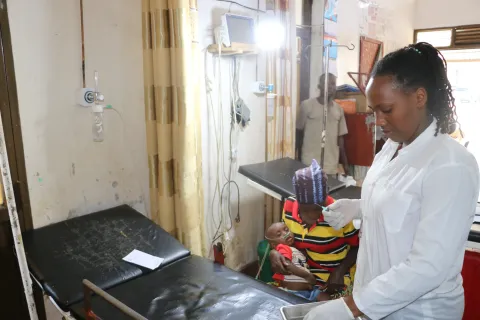
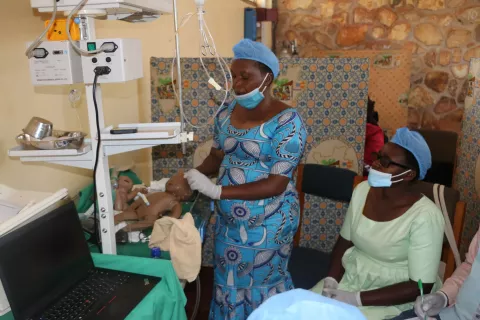
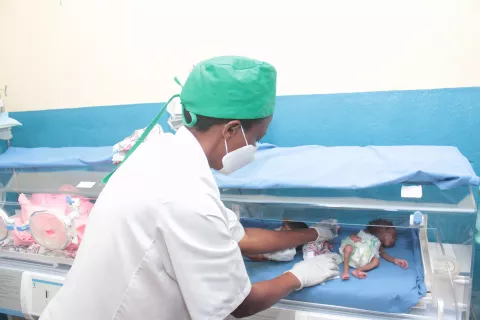
It is around 9 am. In the neonatology service, some mothers, accompanied by the nursing team, came to spend time with their babies, premature babies still in incubators. It's bath time; each mother waits her turn, while enjoying this quality time with her little one.
Emmanuella Hakizimana, in her fifties, holds one of her week-old triplet granddaughters because her daughter is still suffering. The babies, born at only 32 weeks of pregnancy, had breathing difficulties, and required oxygen services to improve their breathing.
If it wasn't for the medical support, my granddaughters would no longer be alive", says Emmanuella, with a voice full of emotion, remembering the difficult moments that her daughter lived during her 3rd pregnancy, which unfortunately was preceded by 2 abortions. "For me, it is a miracle to see my granddaughters alive. It is God who wanted to compensate for the losses we have suffered", rejoices Emmanuella.


Next to Emmanuella stands Annick Emerusabe, another mother whose child's life was saved by oxygen therapy sessions in the neonatology service. Referred urgently to the Gitega Regional Hospital due to pregnancy-related complications, she had to give birth at 33 weeks by caesarean section. According to Jeanne d'Arc Bigirimana, Head of the Neonatology Service, the baby was born very tired with cyanosis of the extremities (blue coloration of fingers, lips, and ears) and was put on oxygen for over a week. “Now my child is better, and I hope he will grow up well”, says Annick.
According to Dr Joëlle Azosenga, from the neonatology service, the support of oxygen therapy equipment has improved the quality of services offered to new-borns. "Before, due to lack of oxygen concentrators, we had to put two or three children on one machine, which meant that each baby had to be weaned momentarily", she explains.
In the framework of the “Strengthening of Oxygen Therapy Systems” in Burundi, UNICEF, with funding from the Norwegian Government, supported Burundi with oxygen therapy equipment such as oxygen concentrators, oxygen cylinders and pulse oximeters. This support was provided in the context of COVID-19 to improve the management of respiratory complications, which are the first cause of hospitalization and death of patients suffering from the disease. Furthermore, it will strengthen the health system and more specifically the maternal and neonatal health, where the use of oxygen is very constant.
It is within this framework of Reinforcement of the Oxygen Therapy System, the Regional Hospitals of Bururi, Gitega and Ngozi as well as the District Hospital of Cankuzo will, very soon, benefit from Oxygen Production Units. This support will enable them not only to cover their oxygen needs, but also to distribute the surplus to the surrounding health structures, in exchange for a contribution to the operating costs of these same units.


“Once the Oxygen Production Units are operational, we will no longer have any oxygen problems, because there will no longer be any stock shortages or other difficulties, particularly related to transport; the cost of an oxygen therapy session will also decrease for the patients'', rejoices Dr Eric Ndihokubwayo, Director of the Gitega Regional Hospital.

The approach has been welcomed by the Ministry of Public Health and the Fight Against AIDS, which has already instructed the beneficiary hospitals to build on their own resources, the shelters that will host the Oxygen Production Units.