Improving basic mmergency obstetric and neonatal care to save lives
As part of efforts to reduce maternal and neonatal mortality in Burundi, UNICEF is supporting the health districts of Mukenke and Kayanza by strengthening the skills of maternity service providers.

- English
- Français
Despite progress made in maternal and neonatal health over the past decade, Burundi continues to face alarming mortality rates. The neonatal mortality rate remains relatively high, with 23 deaths per 1,000 live births, well above the 2030 target of 12 per 1,000. To address this public health emergency, the Government of Burundi, through the Ministry of Public Health and the Fight Against AIDS, has developed a national roadmap to accelerate the reduction of maternal and neonatal deaths. One of the key strategies identified focuses on strengthening the availability and quality of Basic Emergency Obstetric and Neonatal Care (BEmONC) services, using an evidence-based approach.
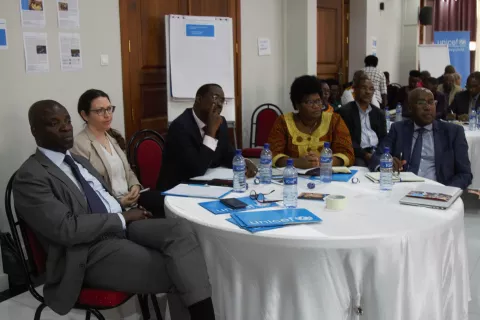
In this context, a capacity-building initiative was launched through the training of maternity service providers from the Mukenke and Kayanza health districts. Held from 9 to 14 June 2025 at the Gitega Paramedical School, the training aimed to enhance the technical capacity of health workers in managing obstetric and neonatal emergencies, thereby contributing to the reduction of preventable deaths.

The six-day training was led by five qualified trainers, all with expertise in maternal and neonatal health. It combined theoretical input with hands-on exercises, promoting an active, skills-based learning approach. Participants were divided into two groups to encourage interaction and practical application. The sessions used anatomical models adapted for the context, allowing participants to simulate emergency obstetric and neonatal care scenarios.
In one training room, a group of providers gathered around a table as a trainer, dressed in a white coat and medical cap, demonstrated a resuscitation technique using a mannequin representing a woman in labor. “Here, we learn how to resuscitate a pregnant woman or one who has just given birth under complicated conditions,” the trainer explained. This kind of practical training is crucial in contexts where the management of obstetric complications remains a major challenge, especially in rural areas like Mukenke and Kayanza.
“In complex situations, we are often forced to make difficult decisions on our own, which involve risks. Thanks to this training, I feel more confident in handling these situations effectively and saving the lives of mothers and babies,” said Ferdinand Ndayisaba, a midwife at the Gishubi Health Center in Kayanza Province and one of the participants.

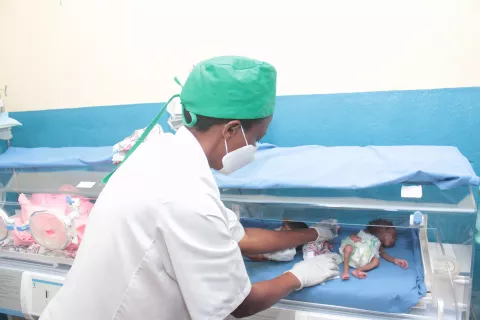
In another room, members of a team took part in a training session aimed at recognizing commonly observed symptoms and signs. The trainer also demonstrated how to assess the diagnosis of possible urgent complications and implement simplified protocols for the care of a woman during and after childbirth. “I’m going to give my best to save lives. This training is invaluable to me. Given the lack or absence of incubators in many health facilities, I will be able to use Mother Kangaroo care to preserve the life of the newborn,” said Godelieve, a training participant and nurse at the Tonga health center in the Mukenke health district.
This testimony clearly illustrates the worth of strengthening the skills of healthcare personnel in contexts where resources are limited. Thanks to adapted methods like Kangaroo Mother Care, it is possible to significantly improve the survival chances of premature infants while fostering the mother-child bond. The commitment of professionals like Godelieve shows that even in the absence of sophisticated technologies, simple and well-taught gestures can make all the difference.

The training focused on action, not just knowledge, through a competency- and performance-based approach grounded in participants’ previous experience with BEmONC. Focus groups were used to build participants’ ability to identify complications during pregnancy, labor, and the postpartum period, while encouraging collective learning and peer support.
“The practical exercises on anatomical models, along with case simulations, will help participants make sound clinical decisions to prevent maternal and neonatal deaths,” said Josiane Nijimbere, Head of Clinical Services at the National Reproductive Health Programme (PNSR) and trainer during the session.
This training, organized in collaboration with UNICEF and funded by the Swiss National Committee for UNICEF, has strengthened the skills of 50 maternity service providers in the health districts of Mukenke and Kayanza. While awaiting the provision of essential neonatal and maternity equipment in these areas, the trained professionals are now equipped to put their new skills into practice,improving maternal and neonatal care and contributing to the survival and well-being of children.