Musenyi strengthens health and WASH systems with UNICEF support
Health, water, hygiene, and sanitation services are improving in Musenyi: a look back at the handover of Musenyi II Health Centre and a visit to the WASH facilities supported by UNICEF

- English
- Français
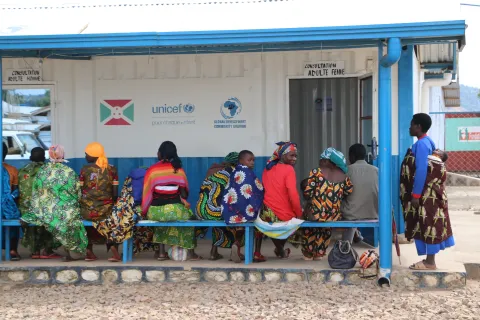
On Wednesday 17 December, Musenyi was buzzing with renewed hope. In an atmosphere of jubilation and conviviality, a large crowd gathered to attend an event for the community: the official handover ceremony for the Musenyi II Health Centre. The joy was palpable in the eyes of those present, and the applause reflected their enthusiasm for a place where access to healthcare is no longer a privilege but an effective right.
Government and administrative authorities, development partners, community leaders and residents were all present and expressed their satisfaction with this infrastructure, which is set to significantly improve public health in Musenyi II. This achievement is the result of a strong partnership between the Government and UNICEF, with funding provided by the World Bank and the Global Health Thematic Fund - UNICEF.
The Musenyi II Health Centre was officially handed over to the Minister of Public Health, Dr Lydwine Baradahana, by the UNICEF Representative in Burundi, Ms France Bégin. This symbolic gesture carried a strong message: health is a common good that is built through collective commitment.


In her speech, the Minister of Public Health praised the constant support of partners, while calling on everyone to take responsibility. "The sustainability of health infrastructure depends above all on responsible and sustainable management," she stressed, emphasizing the central role of beneficiary communities. "These achievements must be embraced by the population itself in order to ensure their continuity and long-term impact," she added.
For her part, Ms France Bégin highlighted the already tangible results of UNICEF's interventions at the site. "Since 1 November, the mobile clinic, which operates 24 hours a day, has already provided more than 6,000 consultations," she said. She explained that the clinic offers an integrated package of services, including childbirth, vaccination, prenatal consultations, laboratory tests and obstetric care. "These services meet the vital needs of the most vulnerable populations," she said.
The NGO Global Development Community Burundi, which is responsible for managing the health centre, also pointed out that the facility not only serves refugees at the site, but also welcomes people from surrounding communities, thereby strengthening cohesion and equity in access to healthcare.
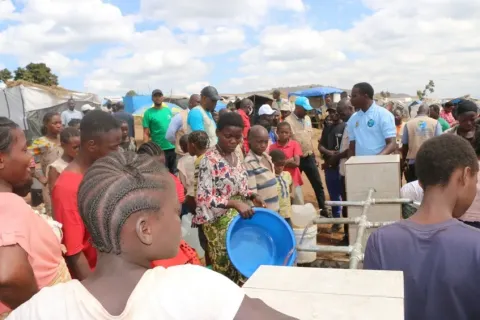
The ceremony also featured a field visit by the Minister of Health and the UNICEF Representative to the Musenyi I and Musenyi II refugee sites. This visit provided an opportunity to see first-hand the health infrastructure put in place by UNICEF through its partners COPED and AIDE. A total of 160 latrines and 80 gender-sensitive and disabled-friendly showers have been built. In addition, 2,000 vulnerable households have received hygiene and sanitation kits.
In partnership with the Burundian Agency for Hydraulics and Sanitation in Rural Areas (AHAMR), six drinking water reservoirs with a total storage capacity of 60,000 litres were installed to ensure sustainable access to drinking water and maintain ownership of the latrines and showers in Musenyi I and II.
These facilities are making a real difference to the daily lives of nearly 4,000 people, including 2,300 in Musenyi I and 1,700 in Musenyi II, by improving hygiene, public health and respect for human dignity. Their completion was made possible thanks to financial support from the United Nations Central Emergency Response Fund (CERF) and the Government of Aragon, illustrating once again the power of partnerships in delivering sustainable humanitarian responses.
In Musenyi, beyond the walls and facilities, a powerful message is being sent; when commitments are translated into concrete actions, health becomes a pillar of resilience, a vector of hope and a lever for dignity for all.