Create, Empower, Thrive: vulnerable girls are building a safer future.
With the support of the German National Committee, UNICEF, in partnership with the NGO Terre des Hommes, is helping at-risk and survivor girls rebuild their lives through income-generating activities.

- English
- Français
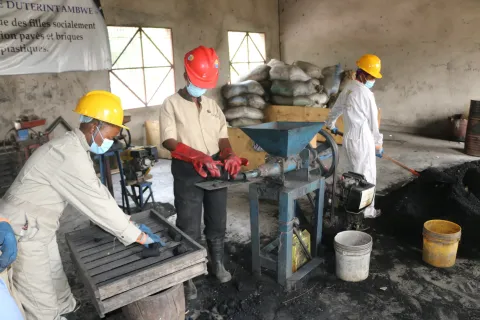
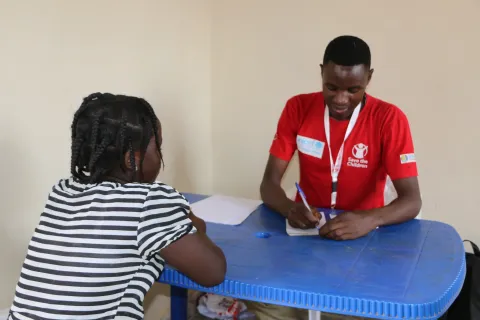
In Ngozi, in northern Burundi, hope is taking shape through concrete actions. Here, the NGO Terre des Hommes (TDH), with support from UNICEF, is implementing an ambitious project to help vulnerable girls—including those at risk of violence and survivors—rebuild their lives through a comprehensive protection package that includes socio-professional reintegration.
Trained in various trades and entrepreneurship, the girls develop income-generating project proposals, which are reviewed and funded once approved.
In Mivo, a neighborhood in Ngozi commune, 11 girls who completed vocational training have opened a hair salon. Inside the salon, we meet Aisha, styling a customer’s hair. “At least once a week, I come here to have my hair done. I like her cuts and the way she works—very professional,” says the client, pointing to Anifa.
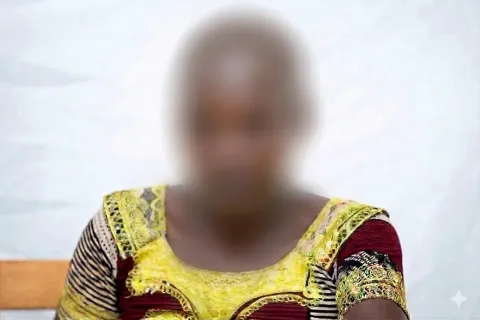
Anifa is a single mother and a survivor of sexual violence. Now safe from abuse and stigma, she takes pride in the woman she has become: “Before, I didn't feel like I belonged in my own home. I felt like a stranger in my own family. With a child to care for, I had to find a way to provide for us on my own. Thanks to my work as a hairdresser, I can now earn a decent living.”
Through training in both entrepreneurship and hairdressing, the girls developed a business plan, which was reviewed and approved, allowing them to receive start-up funding. Today, they run the salon in pairs, taking turns each week to keep the business operating smoothly.

“I completed the hairdressing training with strong determination. I had only one goal: to be free, financially independent, and able to stand on my own,” says Mélissa, one of the salon’s co-owners.
With a monthly income of over 700,000 BIF, the team is now planning to expand the salon with a loan from a microfinance institution, where they already handle regular banking transactions. Vanessa, another business partner, explains: “When I’m not on duty at the salon, I sell vegetables just outside. That small business helps me make a little extra money.”
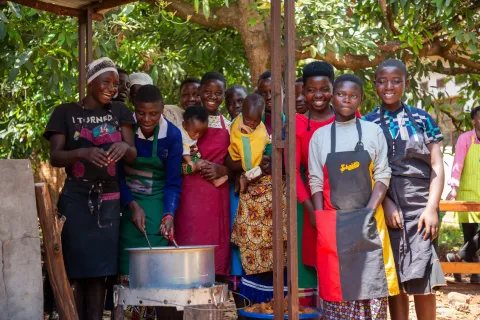
In Kanyami, a popular neighborhood in Ngozi, four other adolescent girls have launched a cafeteria. Like their peers, they received entrepreneurship training, created a business plan, and received two million Burundian francs to kickstart their venture. Each of them had dropped out of school for different reasons.
Emelyne, one of the cafeteria’s co-owners, shares her story: “My family lives in poverty. I left school at 12 and a half. My aunt, who raised me, made me work very hard, and I barely had anything to eat. Thanks to this small business, I can now afford decent food and clothes.”

Beyond economic support, the project—funded by the German National Committee—also plays a crucial social role: changing mindsets, reducing stigma, and helping survivors of violence regain their rightful place in their communities.
So far, 58 girls have been trained, 52 projects have been launched, and more are awaiting funding. In Ngozi, vulnerable girls supported by the project are now starting businesses, managing income, saving money—and, most importantly, rebuilding their lives.