Creatable: UNICEF initiative for the development of teenagers' entrepreneurial and innovative skills
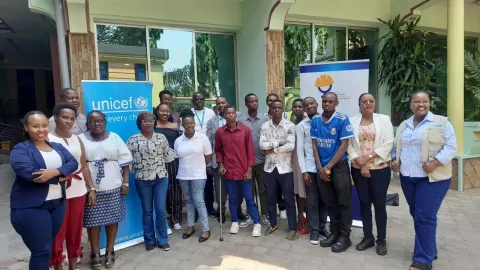
Ten teachers from ten provinces and ten local education departments received training to capitalize on their experience in creativity and innovation as part of the second phase of the Creatable project.

- English
- Français
Since 2013, Burundi has implemented a major reform of its education system. The former primary school (6 years) and lower secondary school (4 years) were merged into a single 9-year block of basic education, divided into four cycles: three two-year cycles covering the former primary education, and a fourth cycle running from grades 7 to 9. Basic education, therefore, covers nine years of instruction; the former 4th year of middle school was definitively abolished at the start of the 2016 academic year.
The primary objective of this educational reform is to equip learners with the skills to be resourceful and create their own employment opportunities. This involves apprenticeships, the development of vocational schools, and promoting behaviors that lead to self-employment, among other initiatives.
The Ministry of National Education and Scientific Research (MNERS), in collaboration with UNICEF, with support from the Australian Government through the Australian NGO Cooperation Program (ANCP), has been implementing the first phase of the Creatable – Science and Technology for Innovation and Entrepreneurship project since 2020. Its aim is to develop the entrepreneurial spirit of young people in Burundi, thereby supporting the reform of basic education.
As part of the second phase of the project, teachers from the experimental phase received training to enable them to train additional teachers from 24 schools.

A total of 15 participants, including the MNERS Technical Operational Team and 10 teachers from 10 provinces and 10 DCEs, participated in the training.
Led by Professor Alexis Banuza, a teacher-researcher at the University of Burundi, the training featured exchanges of experience between teachers from the experimental phase. It enabled them to self-train on successful modules, identify strengths and areas for improvement for phase two, and develop strategies to ensure its success.
"The program's main theme, science and technology for innovation and entrepreneurship, came at just the right time. Students are trained to develop their skills to become entrepreneurs. Before this project, education faced a major learning challenge, with teachers relying on theory. Now they are trying to integrate the elements of the Creatable program and teach students techniques that will enable them to get by in life," said Aloys Dushimirimana, Creatable teacher-trainer at ECOFO Nyamirambo, DCE Bukeye, Muramvya province.

The activities of the second phase of the Creatable project will focus more on solving the problems faced by teenagers, particularly in terms of economic and entrepreneurial opportunities, employment, and dialogue with the economic sector. The aim is to train job creators, not job seekers.
Jeanne Habonimana, Pedagogical Advisor at the Bureau d'Étude des Curricula et des Programmes de l'Enseignement Fondamental, is pleased that students are benefiting from this project in two ways.
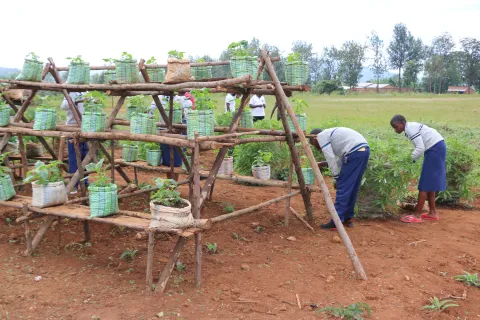
"Students have understood the value of learning science and technology, and this has helped to reduce the school dropout rate, thanks to the summer camp, which is one of the Creatable program's activities. This camp brings together students who have completed the 4th cycle of basic education (9th grade) and others who have likely dropped out of school to engage in income-generating activities. The program covers participants' travel expenses, and some students have used the funds to buy small livestock and start farming," she explains.
Jeanne added that students have realized they are no longer learning just to memorize and forget after the exam, but are acquiring practical skills for their daily lives. At the end of each module, each student has a clearer idea of what they want to do in the future. In her opinion, the course has also improved teacher engagement. All teachers participated actively, and each had the opportunity to present at least one module of the Creatable program.
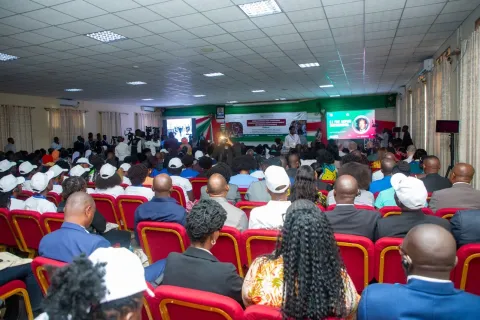
The teacher training workshop took place from January 27 to 31, 2025, at the Rehoboth Training Center in Gitega.