Communities in the Cibitoke province are rallying together to combat the cholera outbreak
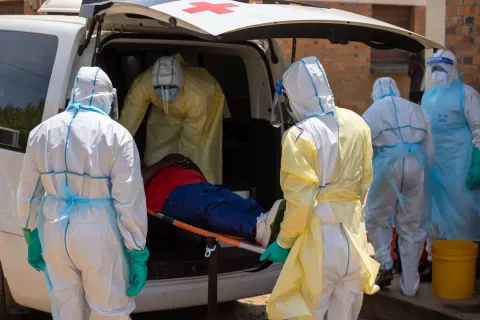
Thanks to funding from USAID, UNICEF, through its partner Social Action Développement (SAD), is helping the community of Rugombo in the province of Cibitoke to control and limit the spread of the cholera disease.

- English
- Français
On the road to Rugombo, the UNICEF team crosses a large plain covered with rice fields. After an hour and a quarter's travel, we reach the capital of Cibitoke province. Every year, cholera has become almost chronic in the localities of this region of the Imbo plain, of which Cibitoke province is a part.
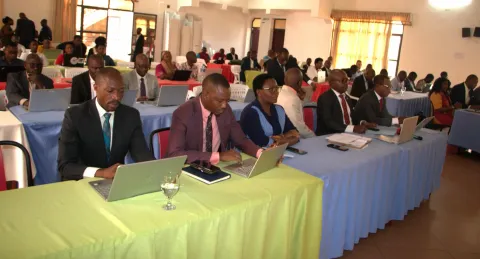
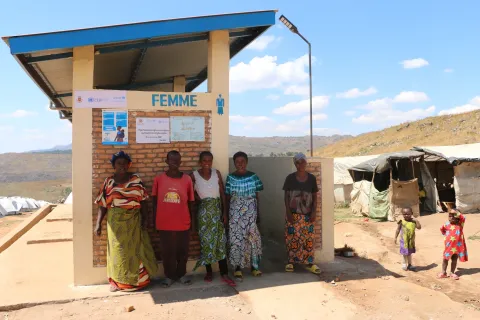
Upon arriving in Cibitoke, we were invited to follow an agent of the NGO SAD on a protocol visit to the Administration. The Permanent Executive Secretary of the Rugombo Administrator, Firmin Habumuremyi, welcomed us into his office. He gave us an overview of the health situation in his commune. We learned that the lack of drinking water is the main cause of cholera. "The lack of water points, dried-up water sources, lack of water conservation containers, inadequate or unsafe latrines... are all part of a more precarious health situation for the inhabitants of Rugombo," he explains.


To control the spread of this outbreak in June 2023, the NGO SAD was involved at community level to help people to protect themselves. Through awareness-raising sessions, the population learned the basic principles of hygiene.
Viviane, a rice seller at Rugombo market, clearly understands the importance of adopting hygienic practices. "I have to make sure that my customers and fellow merchants carry out essential hygiene measures correctly. I've installed a hand-washing station next to my rice stand to check regularly that everyone is using it," says Viviane, urging us to wash our hands.
As well as the market bringing many people together, the number of person-to-person contacts is higher, increasing the risk of contamination. Near Viviane's stall, we met Afuwa Ntahorubuze, one of 15 community volunteers from the NGO SAD in Cibitoke province. "Eating raw foods like fruit can be a source of cholera spread. Every day, I go to the market to make sure that the women who sell fruit understand the risk of eating fruit without washing it, especially the children", explains Afuwa.


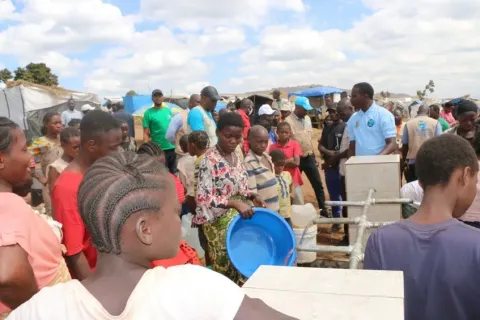
In Mparambo I, people say they can go a whole week without seeing a drop of water coming out of their taps. The population of Mparambo I is forced to collect water from the Nyakagunda river. "In situations where we lack drinking water, several methods can be used to treat water collected from other sources such as rivers. For example, we can boil the water before drinking it. Raising awareness among the population that uses water from the Nyakagunda river is critical to stopping the spread of this disease", says Déus Manirakiza, a local administrative authority we met on site.

Despite this critical situation, administrative authorities are delighted with the synergy between community structures (Mamans Lumières, Health Promotion Technicians, Community Leaders), local authorities, Civil Protection services and partners working in the health sector. They are all aware that the spread of the disease can be interrupted by improving drinking water supplies, sanitation, and hygiene.
UNICEF is continuously stepping up its efforts on integrated community case management, which brings a package of life-saving interventions closer to children, families, and homes in Burundi.