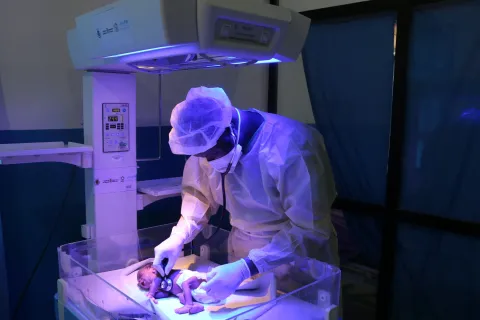
In Busuma, dance, song, and play help heal the scars carried by children
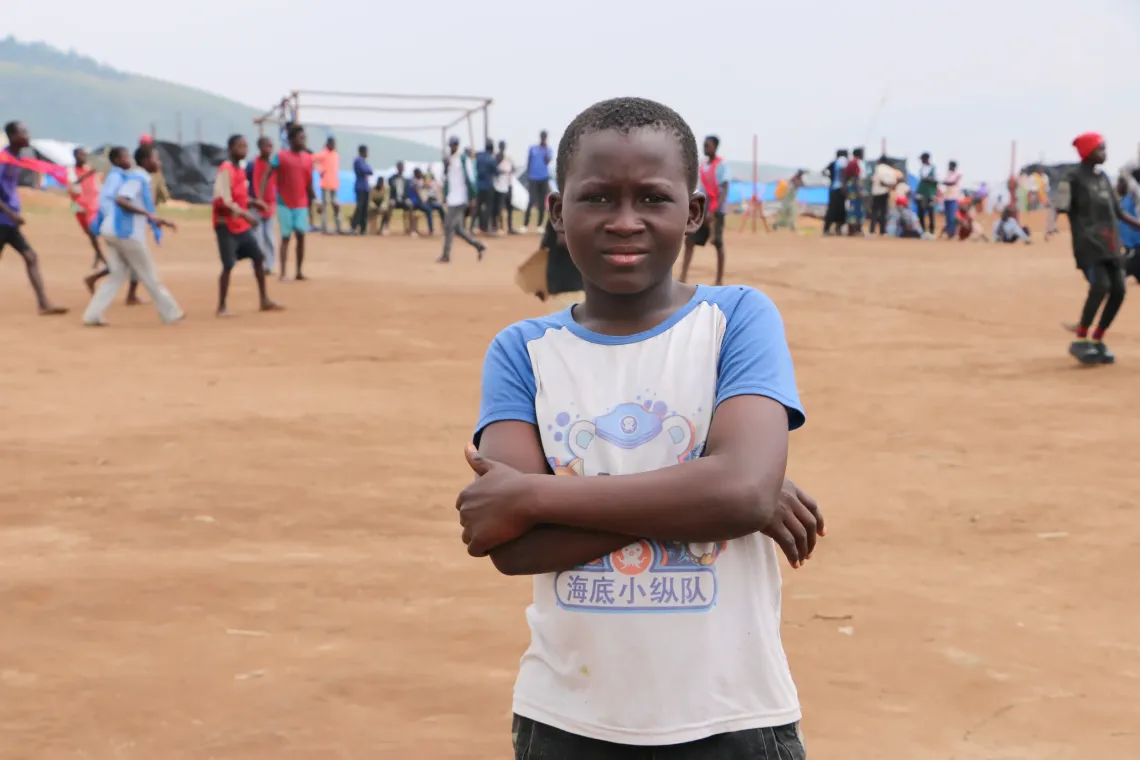
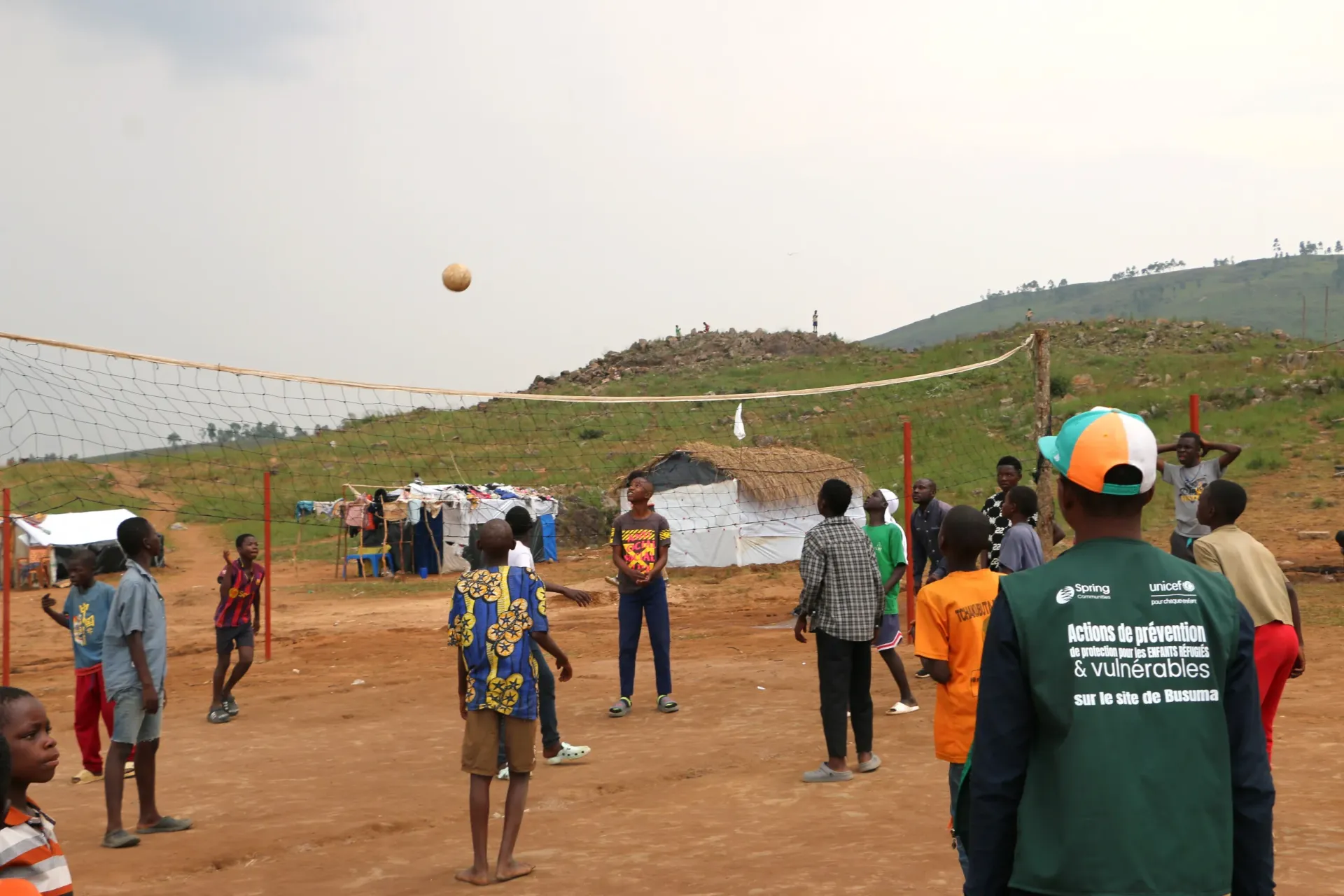
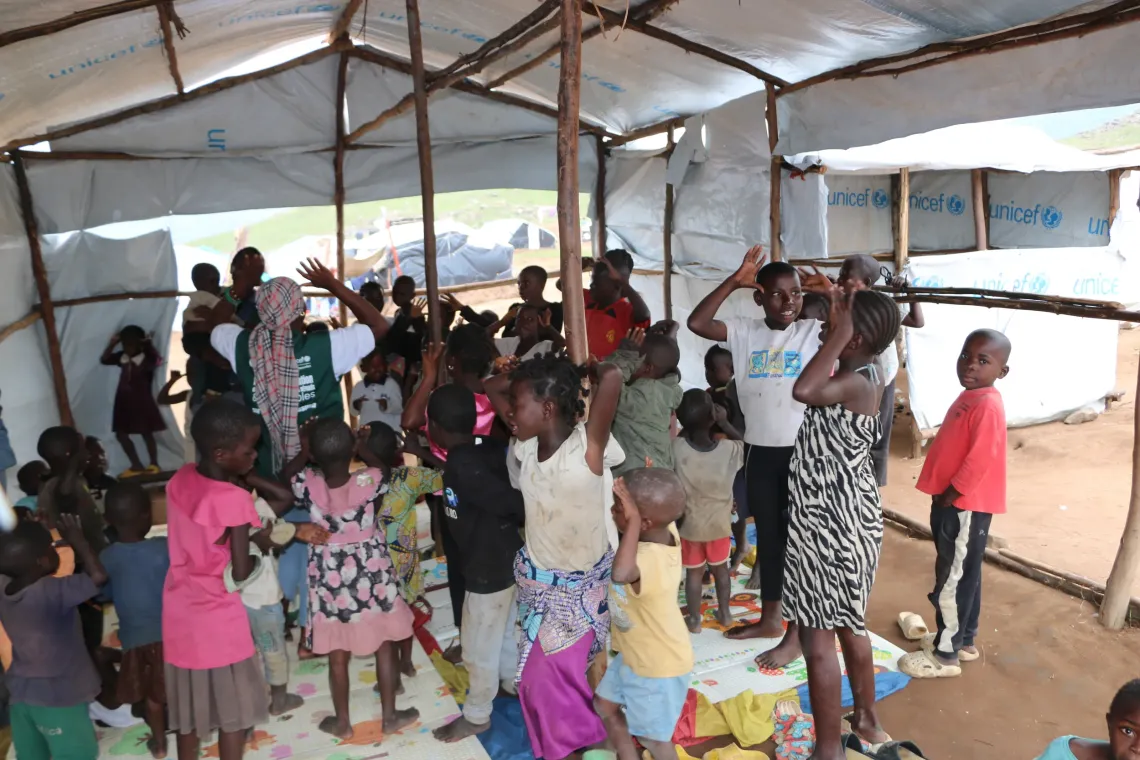
The sports and socio-recreational activities of the Child-Friendly Space, supported by UNICEF and funded by the Government of Navarra, help promote the psychosocial well-being of refugee children in Busuma.
- English
- Français
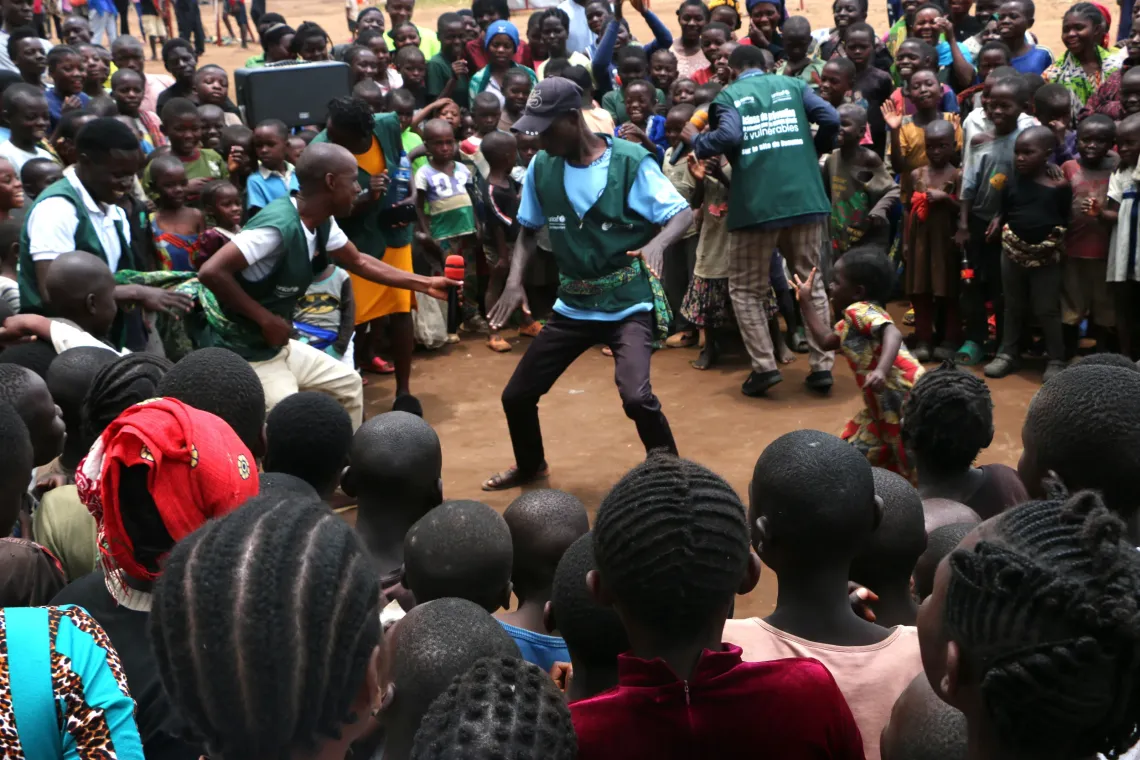
In the heart of Busuma’s Congolese refugee camp, a melody rises among the tents. Children, teenagers, and adults gather around two young community volunteers, dancing to the music with boundless energy, their faces glowing with joy.
“Here, it’s more than dance. We fight the silence and the painful memories these children carry from fleeing war in their home country. Through dance, song, and play, we show them that those difficult times are behind them, and remind them they have the right to simply be children,” one volunteer explains, wiping sweat from his brow after the performance in the Child-Friendly Space.
For Rachel, who coordinates activities at the Child-Friendly Space, these moments are essential to identifying and supporting children in distress.
“By observing how children engage, we can identify those who remain withdrawn, whose minds seem elsewhere. These moments help us recognize deep trauma. A child who cannot play is a child calling for help. We gently take their hand and guide them toward psychological support,” Rachel told us.
Ilunga is only 14. He carries the heavy weight of his escape from Baraka, in the Democratic Republic of the Congo. But inside Busuma’s Child-Friendly Space, that burden begins to ease.
“My painful memories are fading each time I come here. I’m no longer just a lonely refugee, I’m a friend, a teammate. This space has truly become my family,” he shares, his voice filled with hope.
A short distance away, on a sports field in Busuma, 13-year-old Karim swings his tennis racket, cheered on by his peers. For him, physical activity is a way to release tension.
“Playing relaxes both my body and my mind. And during breaks, the supervisors guide us on how to carry ourselves with dignity and remain respectful when we return to our families,” Karim said after his match.
Recovery does not stop at play. For teenage girls like 16-year-old Riziki, this space has also become a vital place of learning. Through informational sessions and open discussions, she and her friends break taboos around sexual and reproductive health, learn about protection mechanisms against abuse, and understand how to report it.
“I have learned how to protect myself and understand my rights since I started coming here. When I go back to my neighborhood and share what I’ve learned with other girls, I feel useful in my community,” Riziki said proudly.
Today, Busuma camp is home to more than 67,000 people. Yet behind the tents lie invisible wounds. The trauma caused by physical and sexual violence often leads to frustration and distress, affecting the mental well-being of many, especially children and young people. These challenges are sometimes worsened by difficult living conditions.
“When a child stops smiling, I know they are carrying a heavy burden,” explains Oswald, the project lead behind Busuma’s Child-Friendly Space. “Through our activities, we identify the most vulnerable children and connect them with psychological and psychosocial support. Some arrive here in tears, but they leave with laughter,” he adds with a smile.
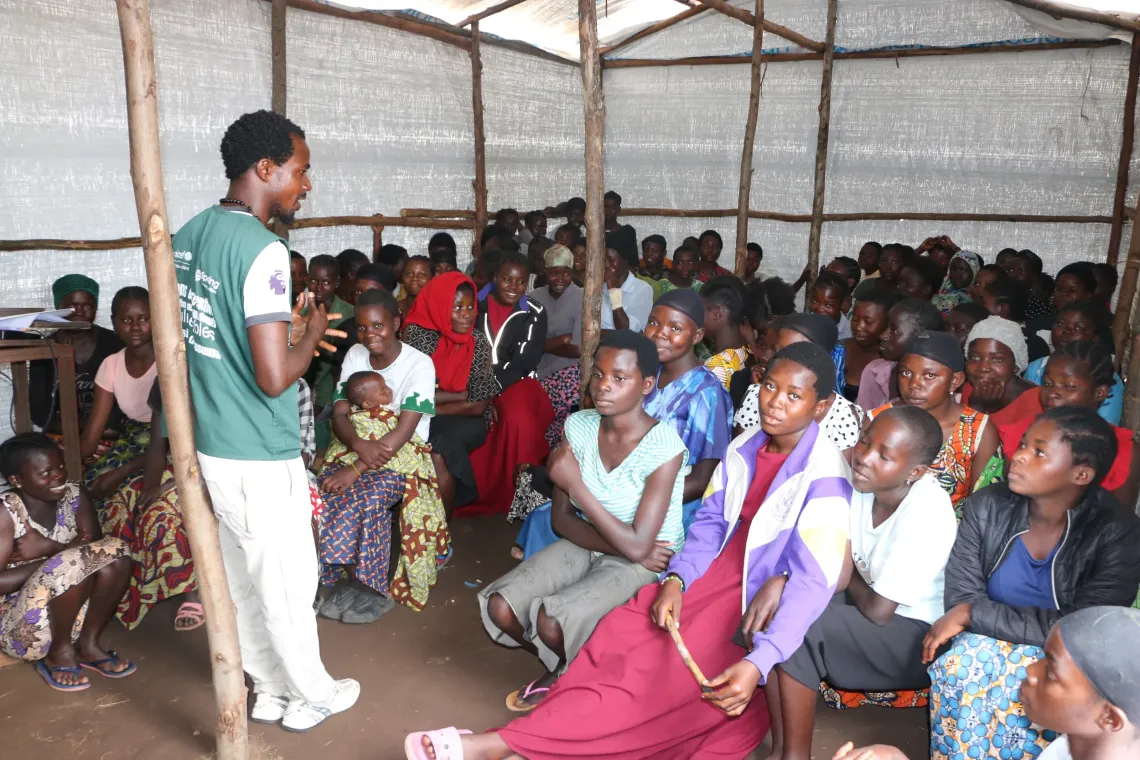
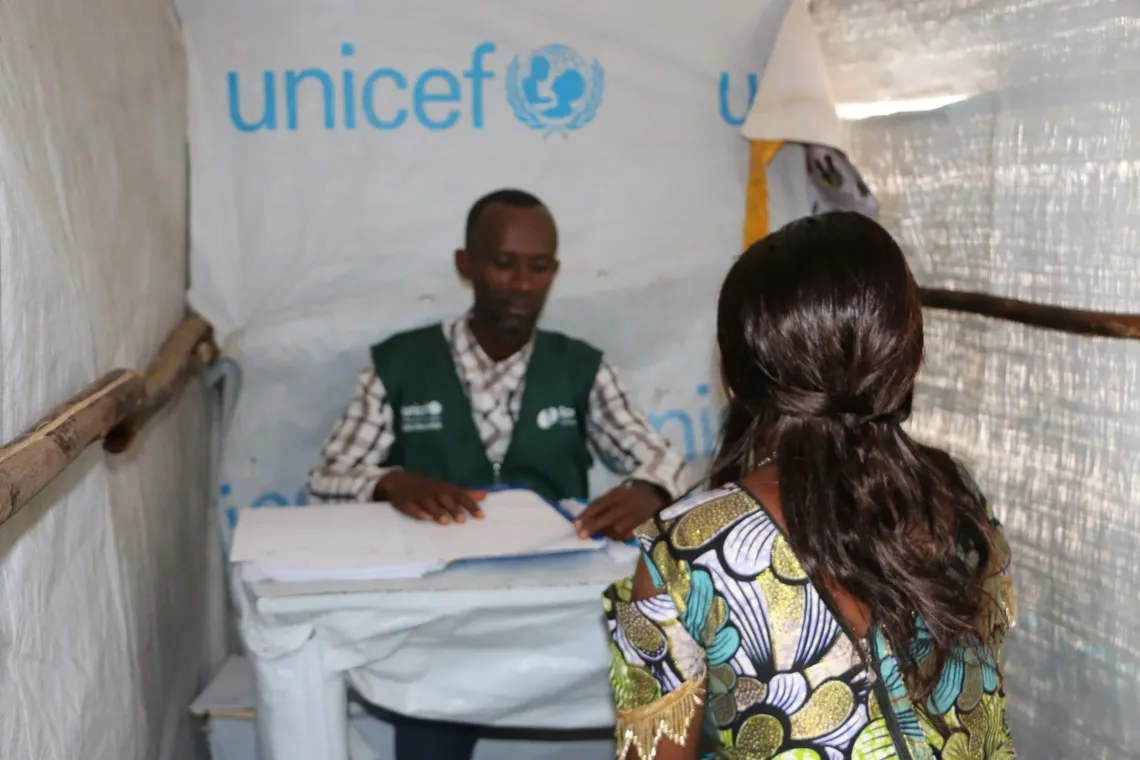
In Busuma, playgrounds, sports matches, and community gatherings are far more than simple distractions. They have evolved into spaces where children rediscover joy, rebuild confidence, and feel protected. These safe environments also empower them to express themselves and stand up for their rights.
Each activity fosters social interaction, stimulates cognitive development, and helps reduce the stress associated with displacement, opening pathways to hope and resilience.
Before leaving Busuma, 12-year-old Amina could not hide her joy.
“I used to stay alone and never wanted to talk to anyone. But here, I’ve found friends. I play soccer, and I feel safe,” she said with a bright smile.
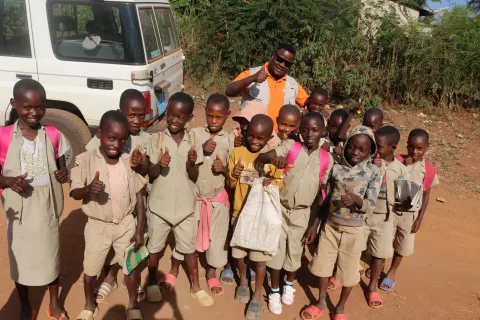
Every day, more than 650 children participate in activities in Busuma’s Child-Friendly Space, while over 250 young people benefit from games and sports facilities. These moments, simple yet invaluable, help restore a sense of normalcy and life within a community that has chosen not to be defined by suffering, but by hope and resilience.
In Busuma, despite the challenges they face, children have found a place to heal and dream again. The Child-Friendly Space, implemented by Spring Communities with UNICEF’s support and funded by the Government of Navarra, offers them safety, hope, and the opportunity to rebuild their lives.