Burundi integrates malaria vaccine into its routine Immunization Programme
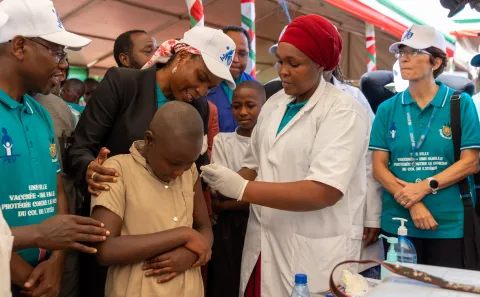
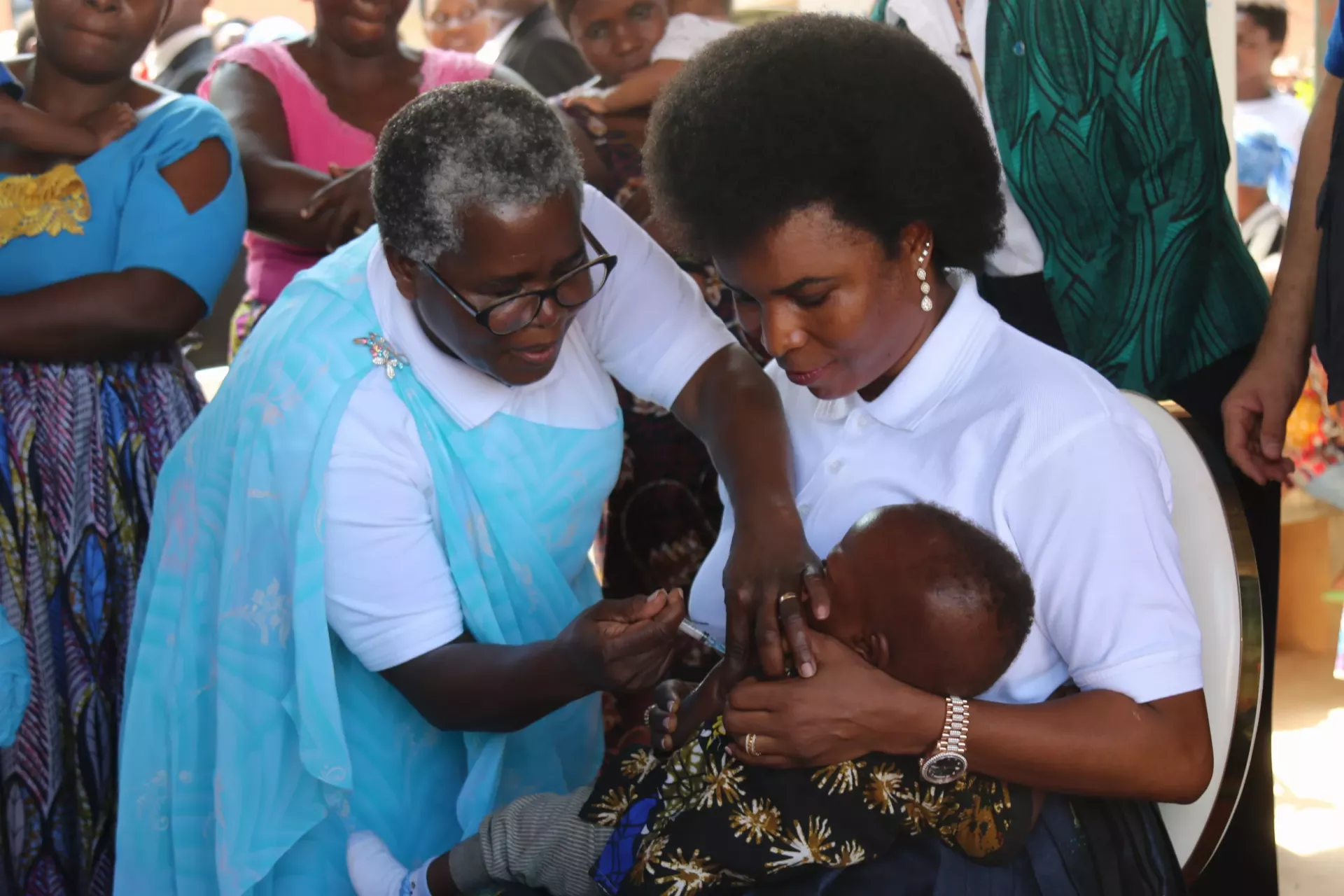
The official launch ceremony, hosted by Burundi's First Lady, took place in Mpanda on 17 March 2025 under the theme “The malaria vaccine is available in Burundi—let’s vaccinate our children.”
- English
- Français
On the morning of 17 March 2025, the atmosphere was festive at the Mpanda General Hospital, in Bubanza province—the site selected to host the official launch of malaria vaccination in Burundi.
The choice of Bubanza was certainly no coincidence, as this province, like others on the Imbo plain, has high malaria prevalence. In his welcome address, the Governor of Bubanza Province noted that in 2024, the number of people hospitalized for malaria represented 1.2% of the provincial population. This explains the immense joy expressed by the people of Mpanda, who turned out in large numbers to witness this historic moment—marking a crucial step toward reducing malaria cases.
The malaria vaccination initiative comes at a time when, according to WHO’s latest annual report, countries in the WHO African Region, including Burundi, continue to bear the greatest burden—accounting for 94% of global malaria cases and 95% of related deaths in 2023.
On behalf of the health sector partners, WHO Representative in Burundi Dr. Xavier Crespin welcomed Burundi’s commitment to this strategy, which will make a meaningful contribution to reducing malaria-related morbidity and mortality among targeted children.
According to the latest data from the National Health Information System (SNIS), malaria remains one of the leading causes of morbidity and mortality, with an incidence of 399.1 cases per 1,000 inhabitants in 2023.
In response to this situation, the Ministry of Public Health and the Fight Against AIDS, with support from Gavi, the Vaccine Alliance, UNICEF, WHO, Dalberg, and other partners, has introduced the malaria vaccine into the national routine immunization programme.
"Today, malaria—one of the world’s most devastating diseases—has become vaccine-preventable, thanks to scientific progress and the commitment of the international community (...) We are pleased to support Burundi in this first phase of rollout, a historic milestone for public health and the fight against malaria,” said Mario Jimenez, Gavi’s Country Manager for Burundi.
Thanks to Gavi’s financial support, 1,445,500 doses of the RTS,S vaccine have been secured for Burundi, with 543,950 doses already delivered to the country.
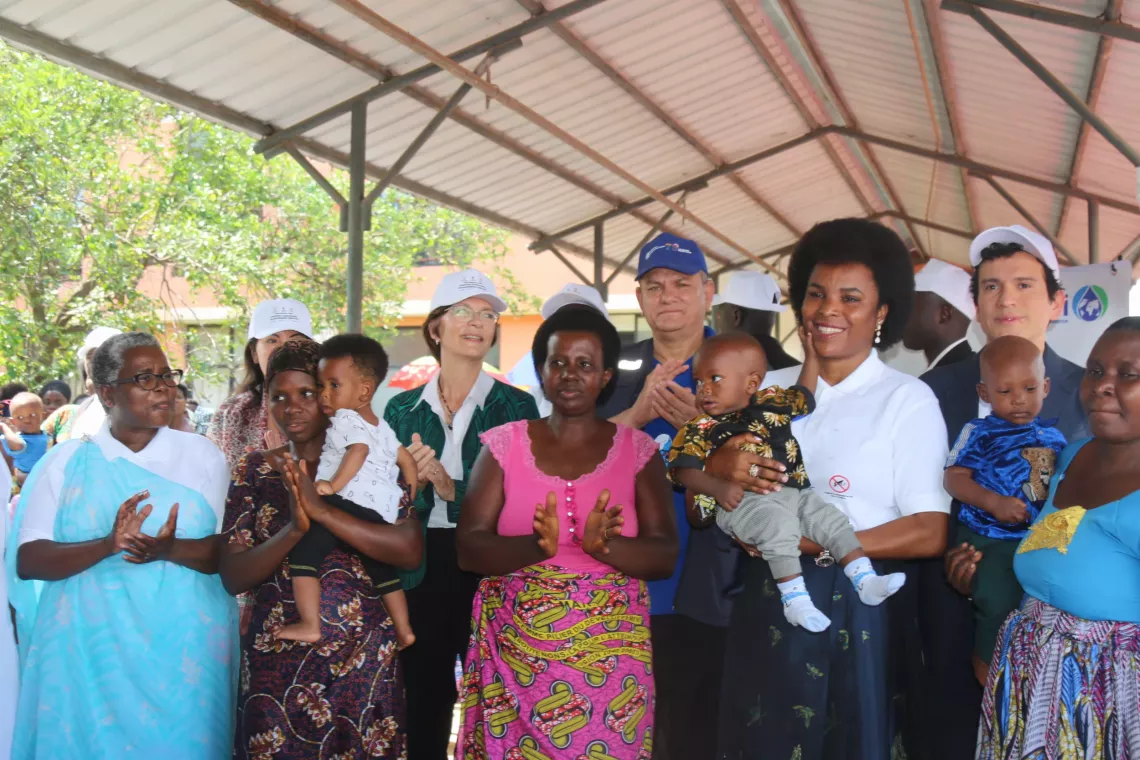
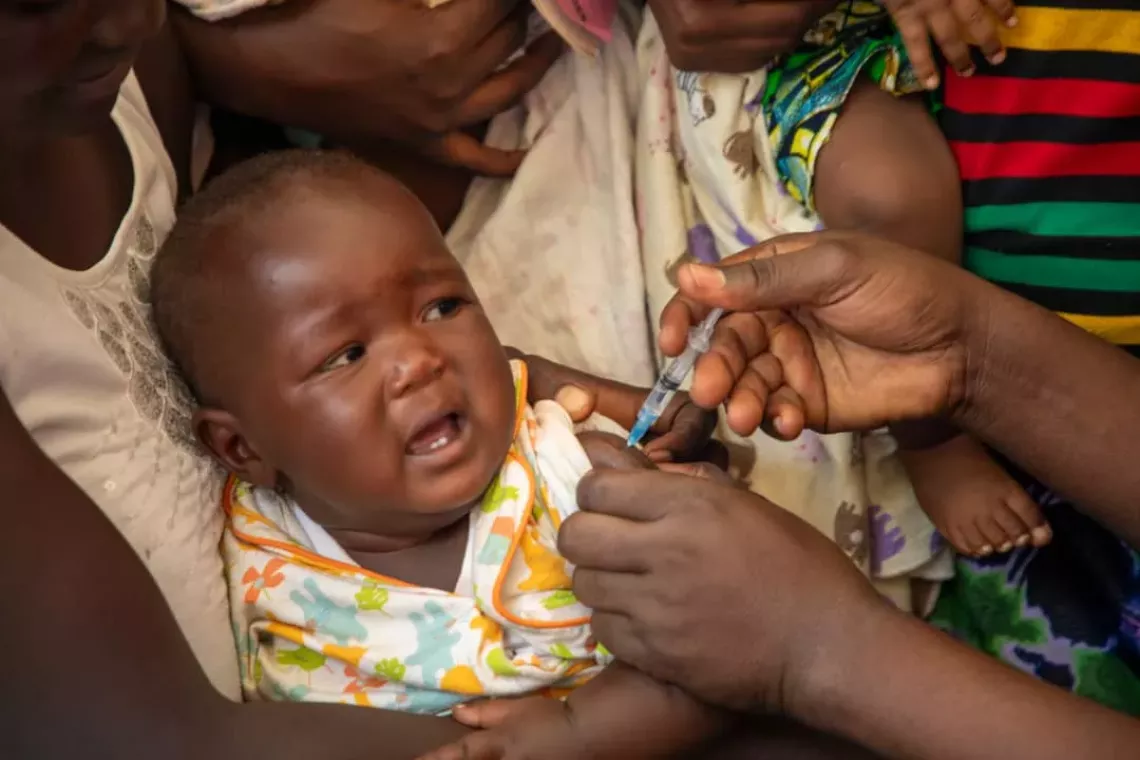
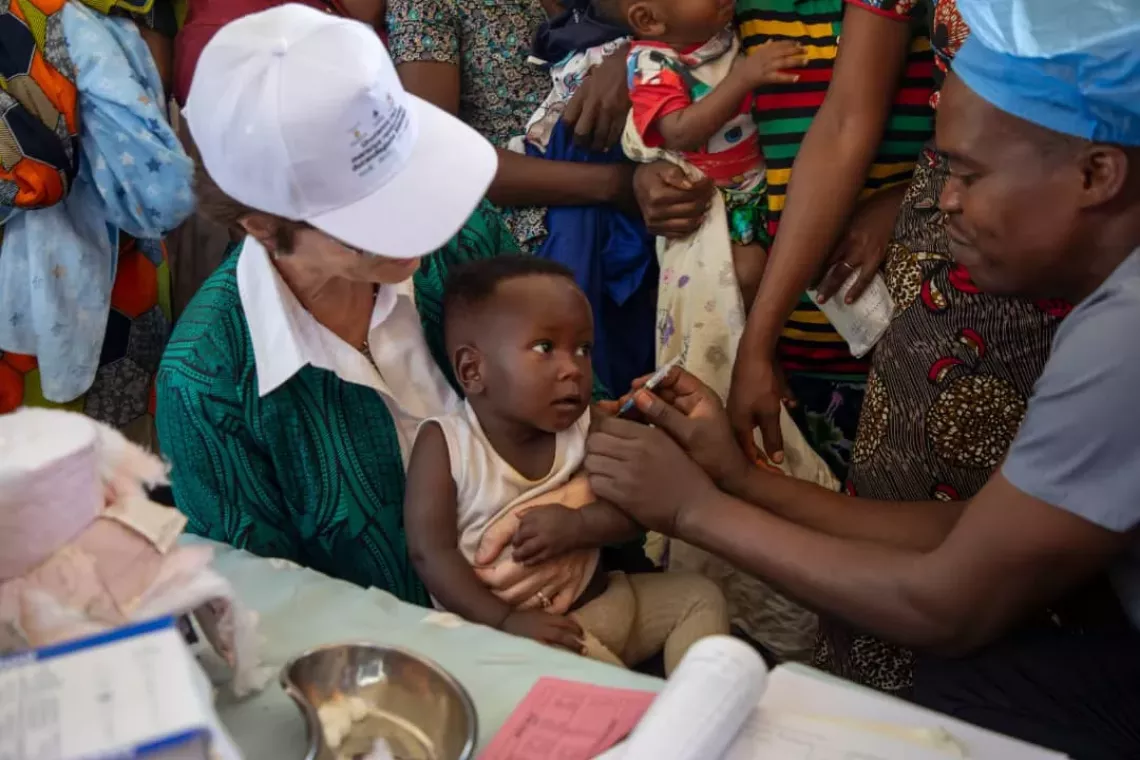
During this first phase, the malaria vaccine will be administered to children aged 6 to 11 months in 25 health districts across 9 provinces: Kirundo, Ngozi, Muyinga, Bubanza, Cankuzo, Cibitoke, Karuzi, Rutana, and Ruyigi. These provinces were selected due to the high prevalence of malaria and elevated mortality rates from the disease.
The Minister of Public Health and the Fight Against AIDS, Lydwine Baradahana, stressed that this vaccine does not replace existing malaria prevention methods, but rather complements them. “We must continue using mosquito nets, carrying out indoor residual spraying when necessary, and providing preventive treatment to pregnant women,” she emphasized.
In her address, the First Lady of Burundi, H.E. Angeline Ndayishimiye, urged the population—particularly those in the 25 districts targeted during this first phase—to ensure their children aged 6 to 11 months are vaccinated.
Burundi is now the 18th African country to integrate the malaria vaccine into its routine immunization programme with Gavi’s support. Fourteen countries introduced the vaccine in 2024, including Cameroon, Burkina Faso, Sierra Leone, Benin, Liberia, Côte d’Ivoire, South Sudan, Mozambique, Central African Republic, Niger, Chad, the Democratic Republic of Congo, Sudan, and Nigeria.
Between 2019 and 2023, the RTS,S/AS01 vaccine was used in Ghana, Kenya, and Malawi, where more than 2 million children received the four-dose vaccine through routine immunization. According to WHO, this led to a 13% reduction in overall child mortality and a 22% decrease in hospitalizations due to severe malaria in eligible children. Coverage of at least one malaria prevention measure increased to over 90%. In 2025, six to eight additional countries are expected to introduce the vaccine as part of Gavi’s malaria vaccination programme.