In Cibitoke province, improved hygiene practices have saved lives
UNICEF contributes to the prevention of cholera and Covid-19 in areas at risk of Ebola virus disease through the promotion of hygiene and water supply in schools and health establishments

- English
- Français
Cibitoke-Rugombo. NTAMAVYARIRO Elias is 63 years old, and lives with his wife and 4 children. We meet him, sitting in front of his house, washing his hands on his return from the fields.
Elias is one of the beneficiaries of the cholera and Covid-19 prevention project supported by UNICEF and facilitated by AIDE (Integrated Action for Development and Environmental Protection). A project that aims to prevent and respond in the event of a cholera epidemic in areas at risk of Ebola virus disease (EVD), within the community, health establishments and schools. The project targets the communes of Rugombo and Buganda in the province of Cibitoke, Gihanga and Mpanda in the province of Bubanza and Mutimbuzi in the province of Bujumbura. These localities were targeted because the risk of contamination is the greatest there due to the importance of border movements of people with the DRC and its surroundings.
“Since we have been made aware of the mode of transmission of these diseases, no one enters the house without washing their hands, even the children know it. It became a rule after the lessons learned on the prevention of cholera and Ebola,'' Elias told us.
According to Elias, hygiene promotion is one of the most important tools to reduce the spread of cholera because it is the foundation of basic practices.
“We were taught to wash our hands with clean water, and especially to wash ourselves every time we use the toilet. We were also taught how to maintain the latrines, which is important in the fight against cholera. The community health workers accompany us and ensure that we apply the good hygiene practices learned,” says Elias.
Different strategies to improve hygiene practices were taught to the community as well as schools and health facilities in Rugombo, including hand washing, menstrual hygiene management and food hygiene.
Jacqueline Uwamahoro says that since learning water treatment techniques, particularly boiling, her children's health has improved as they suffer more from verminosis and diarrheal diseases. ‘'Drinking clean water has saved our children from diseases. There is a severe lack of clean water in our village. So, we get water from a river near our home. Before the project, we used to drink it as it was. But through the project we have learned how to treat the river water properly before consuming it. And the kits we received allow us to keep it well, we drink clean water, we wash our hands whenever necessary, which has reduced chronic diseases in our community," she added.


The headmaster of Rugombo 1 Basic School says the washing facilities installed in his school are helping to improve the performance of pupils in class. ‘It is important that every child attends a school where the environment is clean and safe. When clean water, toilets and handwashing facilities are not available at school, children spend more time looking for water than in a classroom, which has an impact on school results and school attendance of students.’’
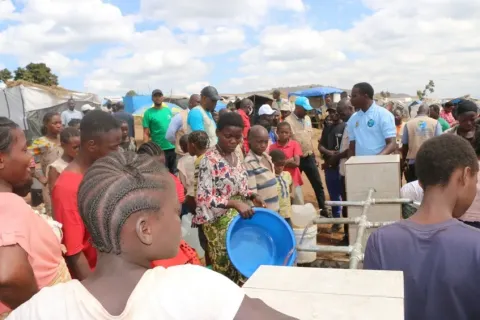
Indeed, awareness raising on these preventive measures has been done through the provision of hygiene kits and water supply in schools and health centres. Risk communication activities around water, sanitation and hygiene were also carried out, with a particular focus on behavioural change and community involvement in adopting measures to reduce the risk of disease.
‘’We teach our children all the methods to prevent cholera, so that they don't get sick. And believe me, since these lessons, we don't get this kind of disease anymore,'' says Jacqueline.

‘’Before the project was implemented, it was difficult for us because we had no latrines for patients, which increased the spread of these diseases,'' says Aline Ingabire, director of Rugombo Health Centre, a project beneficiary.
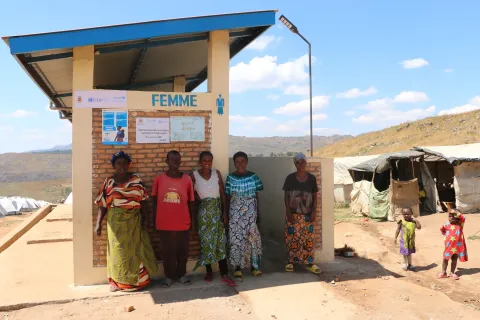
In addition to sensitisation in communities and schools on hygiene promotion, the project has put in place a minimum WASH service package, including water supply, sanitation, waste management facilities or infection prevention control kit (IPC/WASH) in health centres.
‘’At the end of every year we had recurrent cholera outbreaks in our commune, since we started the sensitisation the situation has improved a lot,'' added Aline.
Although positive changes have been observed in the commune of Rugombo, the community and health officials fear that they will not be able to easily manage this epidemic if one day it breaks out, as the supply of potable water remains a problem in this community, due to the recurrent water cuts in this commune.
Sensitization on Covid-19 was also carried out. The community confirms that covid 19 did not reach them, because precautions were taken in advance.
UNICEF in partnership with AIDE (Integrated Action for Development and Environmental Protection) has supported the project technically under the funding of the Spanish National Committee.