The Safe Space in Gourga: Rebuilding the Dignity of Women and Girls
A Refuge of Hope and Strength for Displaced Survivors of Gender-Based Violence in Northern Burkina Faso

It is 9 o'clock a.m. Gusts of dry and dusty Harmattan wind blow over the site for internally displaced persons (IDPs) in Gourga, reducing visibility. Women, faces covered with scarves to protect against the dust, leave their shelters in a hurry and head to the safe space for women and girls.
Inside the space, women and girls are gathered. Latifatou Sawadogo, standing with a poster in hand, explains to the assembly how to protect themselves against violence against girls and women. "The fight against violence that we women and girls are victims of is not only the responsibility of public authorities but also of each of you. Remaining silent increases the risks. Act responsibly and report any abuse or indecent behavior," she emphasizes.

Gender-based violence (GBV) against girls and women remains a concern despite various laws adopted by the state and interventions by humanitarian actors. The taboos surrounding it make it difficult to grasp the extent of the problem, which could further burden internally displaced women and girls due to the security crisis.
Anta (a pseudonym) is a mother of five children. After fleeing her village in 2023 following repeated attacks by armed groups in Titao, she found refuge with her family in Gourga. While experiencing a difficult pregnancy with her twins, she was abandoned by her husband, who went on to marry another woman. Left with her children and without resources, Anta is determined to fight to provide for her children.

During an awareness session at Women and girls’ safe space in Gourga, where she was invited by a friend, Anta confided in Latifatou, a professional facilitator in charge of GBV at APADE (All for Peace And Dignity), a non-governmental organization. Now accustomed to the space, Anta testifies: "This space is everything to me. I have been able to measure my suffering against the light of those endured by my sisters whom I meet. There are even more cruel dramas that some experience, so I can put mine into perspective to better cope," she exclaims. Anta is grateful for the kindness, attentive and empathetic listening, the knowledge gained, and the economic support she received to establish her small soap business, which provides her with an income.
The Women and girls’ safe space in Gourga was opened in September 2022. Located within an IDP site, it was rehabilitated in January 2025 by UNICEF, thanks to the financial support from the Swiss Committee for UNICEF. Run by APADE, the space offers protection, well-being, and support for the empowerment of women and girls who are survivors or at risk of gender-based violence and who often do not have access to safe places.
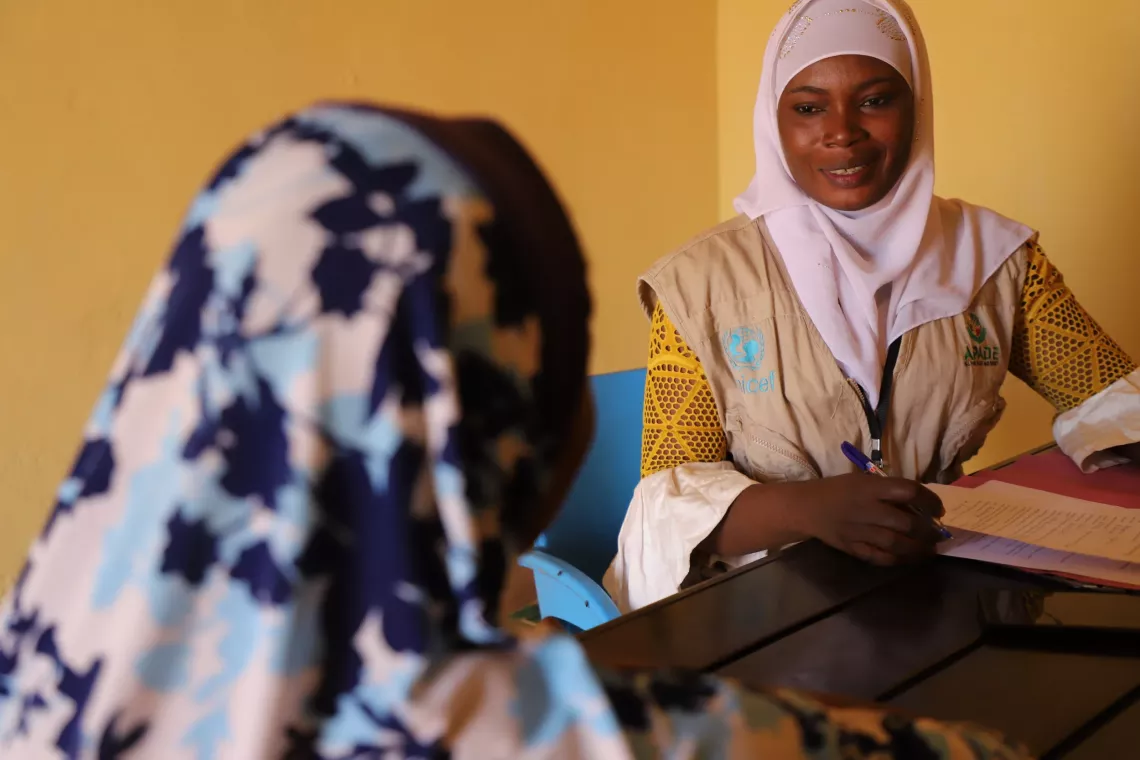
Korotimi Sawadogo is a Counselor at APADE. For her, the safe space for women and girls is primarily a place where they feel physically and emotionally protected and where they receive support tailored to their specific needs. "When we receive women or girls who come to confide in us, we create the necessary conditions to build their trust. We prioritize counseling through active listening and accompany them. For the most complex cases, we refer them to other external structures for appropriate care," says Korotimi.

Exclusively reserved for women and girls, the space welcomes 70 to 100 women and girls per day. In addition to awareness sessions, training in life skills and income-generating activities (IGA), several women and girls are placed in town in workshops for sewing, weaving, dyeing, pastry, and many other trades where they are apprentices.
17-year-old Amira (a pseudonym) is from a blended family. After her parents' divorce, she lived with her father and stepmother in Kimbara in the Boucle du Mouhoun region. Promised in marriage to a man, she ran away to join her mother, who had found refuge at the Gourga site following the security crisis that affected her village located further north of Ouahigouya.

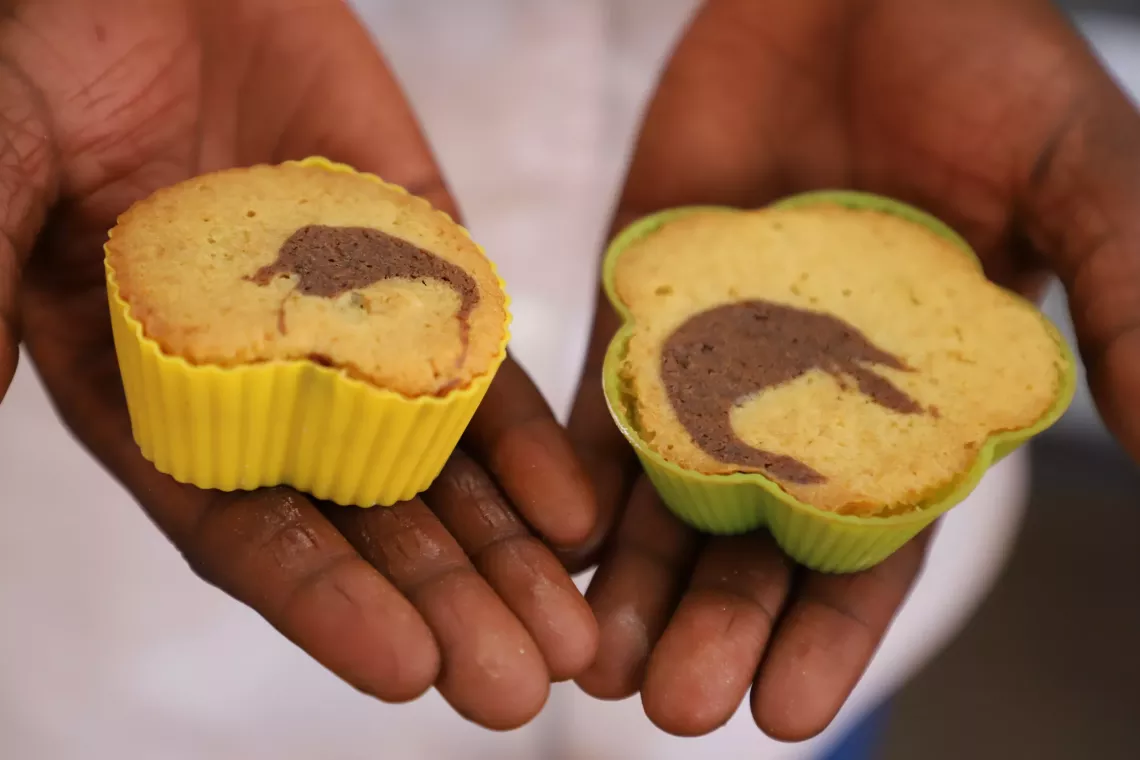
Amira is the first girl to be placed in a workshop to learn pastry and baking. Cakes, sweets, and other refined bakery products were not part of her diet. She did not even dream of making them. And yet! In five months of training, Amira mastered the process of making bread, tarts, fried or baked cakes. From kneading the dough to baking, she works independently and no longer seeks the help of Rachel, her workshop supervisor. "Amira manages on her own now. She learns quickly and is very hygienic. I no longer need to intervene in her kitchen, so I can attend to other tasks. However, she is very shy," says Rachel.
When asked what she wants to become later, Amira replies: "I want to become a great pastry chef and teach other girls how to make good cakes. I hope to have my own equipment to work independently."

At the Women and girls’ safe space in Gourga, UNICEF prevents and responds to GBV in the northern region, significantly reducing its psychosocial impact through holistic care for survivors. "By supporting the establishment of these spaces to ensure the protection and empowerment of vulnerable women and girls, UNICEF supports government initiatives to prevent and protect these women and girls from abuse, violence, and exploitation. It is also about engaging state and non-state actors to take the lead in the fight against these practices. Women alone cannot fight this battle," says Aissata Diallo, GBV program officer at UNICEF.
Thanks to this project, 1,468 women and girls have been sensitized to prevent GBV, and 900 women and girls have received mental health and psychosocial support services, 300 women and girls have been trained in life skills, and 100 community leaders have participated in training on positive masculinity. Solar lamps have been provided to girls and women survivors or at risk of GBV. Additionally, the health districts of Ouahigouya will be equipped with post-rape kits (Pep Kits) for rapid medical care for women or girls who are victims of rape.