“A School Where Students Graduate with the Baccalaureate in Their Bag and a Trade in Their Hands”
With support from the Government of Japan, 26 lower secondary schools combining general education with technical and vocational training have been built and equipped since 2022, creating opportunities for more than 50,000 learners over 15 years.

- Français
- English
“There used to be a real problem.
Many of our parents, older brothers and sisters
graduated with the BEPC or the Baccalaureate,
but stayed in the neighbourhood jobless.
They had ideas in their heads, but their hands did not know how to make anything.
At the same time, the country was looking for masons, electricians
and motorcycle mechanics, and could not find them.
So we said: stop!
We need a school where students leave with two strengths:
the Baccalaureate in their bag and a trade in their hands.
They can choose to go to university or open their own workshop.
The door is never closed.”
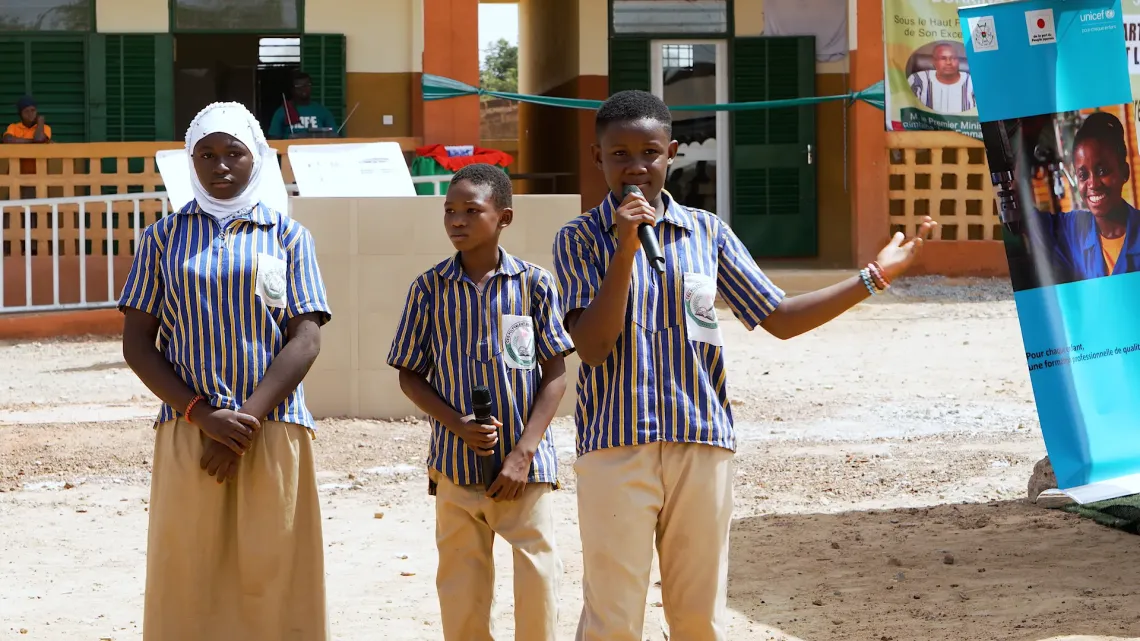
That slam excerpt, performed by Astride Sam Ketsia and two of her classmates during the inauguration of eight new schools offering general education alongside technical and vocational training, captures the promise of a new model of learning. Astride’s school, one of the newly built institutions, hosted the official ceremony.
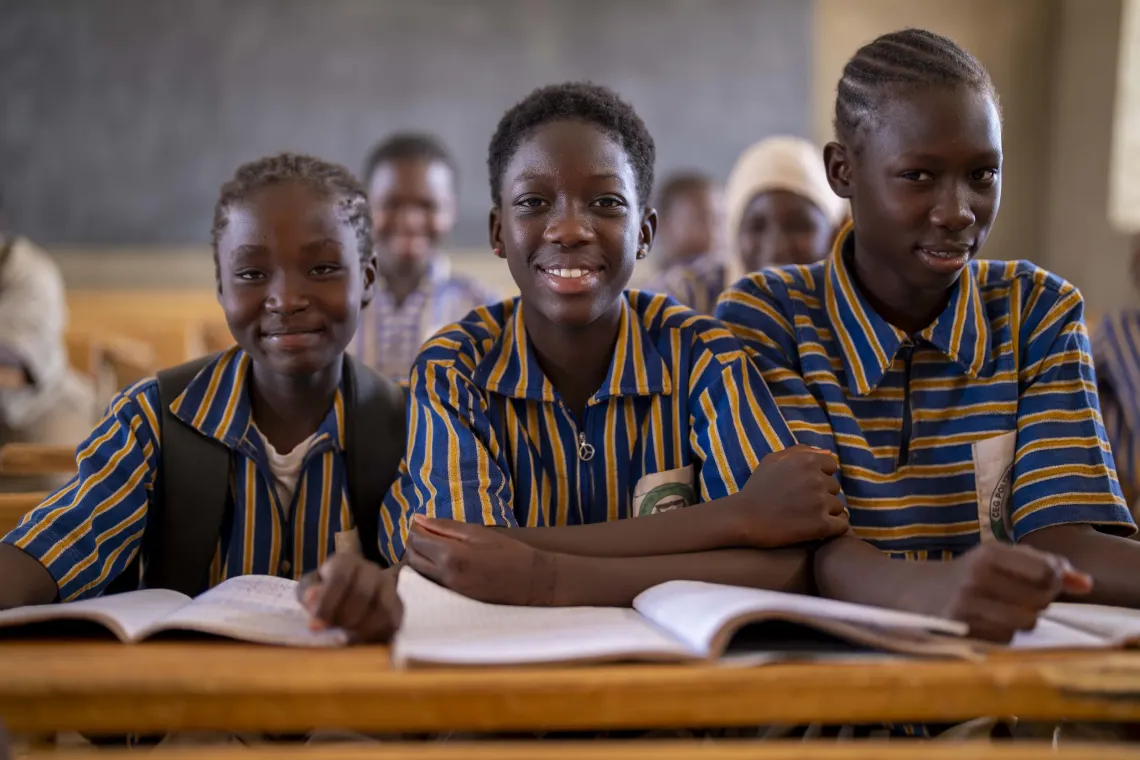
At just 12 years old, Astride Sam Ketsia has already chosen her path: she wants to become a doctor and care for people who are ill. She is equally proud that her friends can now pursue courses that are often seen as male-dominated.
“I like mathematics and life and earth sciences because I want to become a doctor and help people who are sick. But I have friends who want to study mechanics because there are still not many women in that field. They also want to study electricity,” she says with a smile.
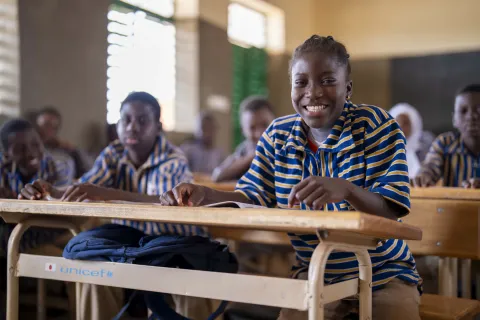
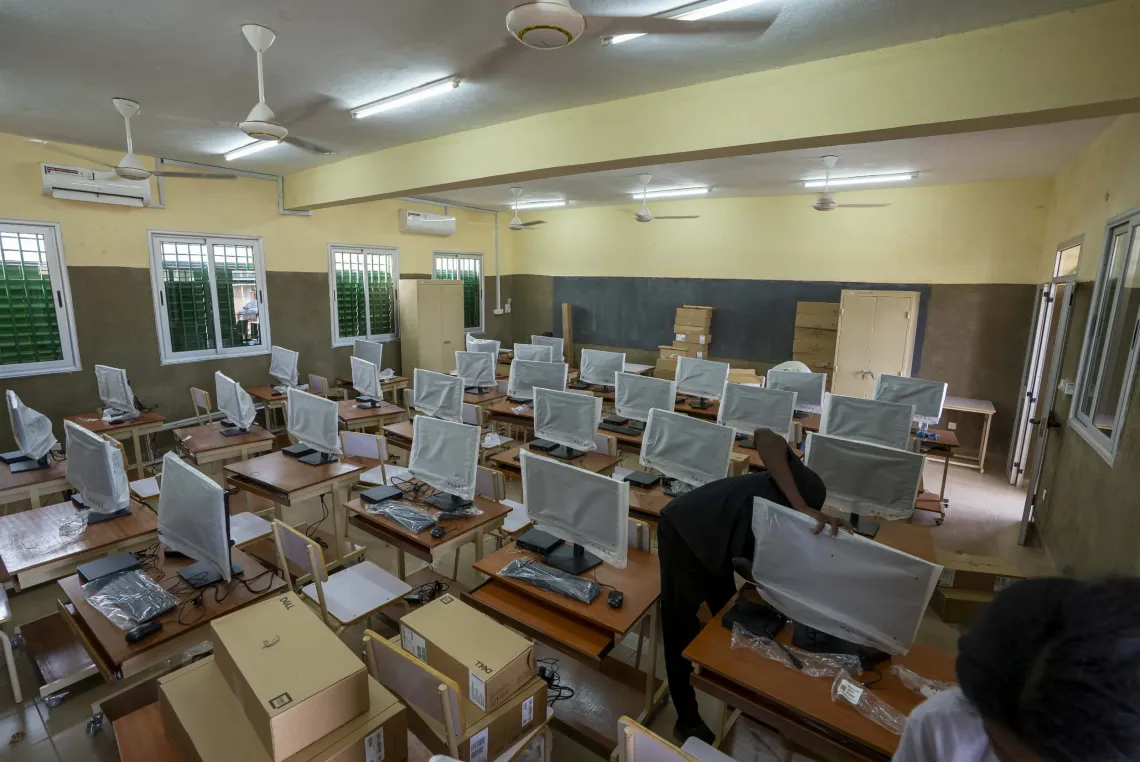
Astride attends Koumdagnonré lower secondary school on the outskirts of Ouagadougou, the capital of Burkina Faso. She recently visited the school’s new computer lab, equipped with brand-new computers. Clean and air-conditioned, the room offers far better conditions for learning. Around 30 girls and boys will attend classes there. Her dream of a school that prepares students for the jobs of the future is now a reality.
"Koumdagnonré is a good school. The teaching is strong. It is a school where students have the chance to study technical subjects. They can learn to use computers, study electricity and mechanics, and even train in construction,” she says with determination.
On 19 May 2026, the Government of Burkina Faso, UNICEF and the Japan International Cooperation Agency (JICA) inaugurated five lower secondary schools and three multipurpose schools offering general education alongside technical and vocational training. Over the next 15 years, the eight schools are expected to serve around 10,000 students. Two are located in the communes of Ouagadougou and Koubri in the Kadiogo region, while the other six are in the communes of Bingo, Ramongo and Koudougou in the Nando region.
In Burkina Faso, around 42 per cent of school-age children are out of school, and more than 60 per cent do not complete lower secondary education, partly because of the lack of educational infrastructure and equipment. The eight new schools inaugurated in 2026 build on 18 institutions already completed in 2023 in the Kadiogo and Nazinon regions, all financed by Japan with more than US$21.6 million (3.4 billion Japanese yen).
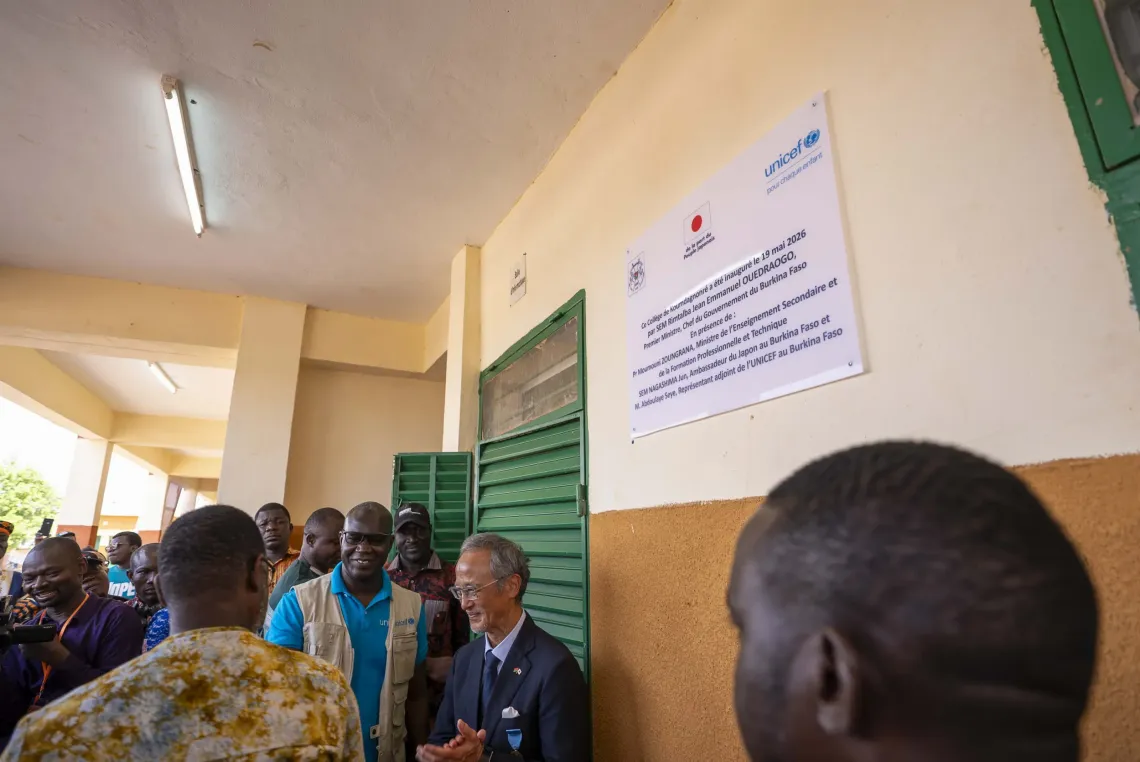
“These investments represent one of the essential building blocks for improving the education offer and creating a safe, inclusive and stimulating learning environment. Education is a key pillar of cooperation with Burkina Faso, and I can reaffirm Japan’s readiness to support Burkina Faso in its development efforts,” said His Excellency NAGASHIMA Jun, Ambassador of Japan to Burkina Faso.
The schools are equipped with modern training materials, appropriate classroom furniture and computer labs. They also include autonomous water points and inclusive sanitation facilities, with separate amenities for girls and boys. All are built within primary school compounds, helping learners move more easily from primary to lower secondary education.
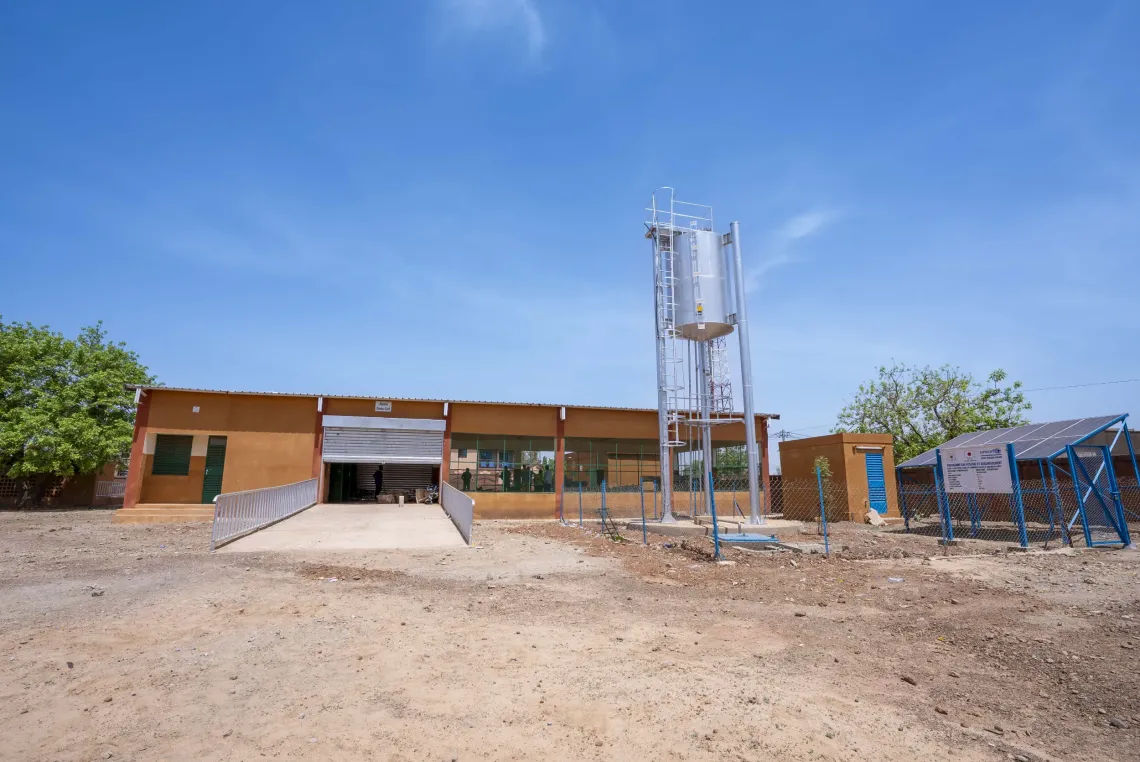
The construction of these modern schools reflects government efforts to strengthen post-primary education. In Burkina Faso, only 5 per cent of young people aged 16 to 35 currently benefit from technical and vocational education and training. The national ambition is to raise that proportion to 60 per cent by 2050. In his inaugural address, Emile Zerbo, the Minister in charge of Territorial Administration, recalled the Government’s strategic vision: “This education offer is no longer an alternative, but an absolute necessity for consolidating our growth and economic sovereignty.”
Together, the 26 schools include 26 administrative blocks, 152 classrooms, 114 latrines, 8 autonomous water points and 19 sports grounds. Over the next 15 years, they are expected to benefit 50,000 children, half of them girls.
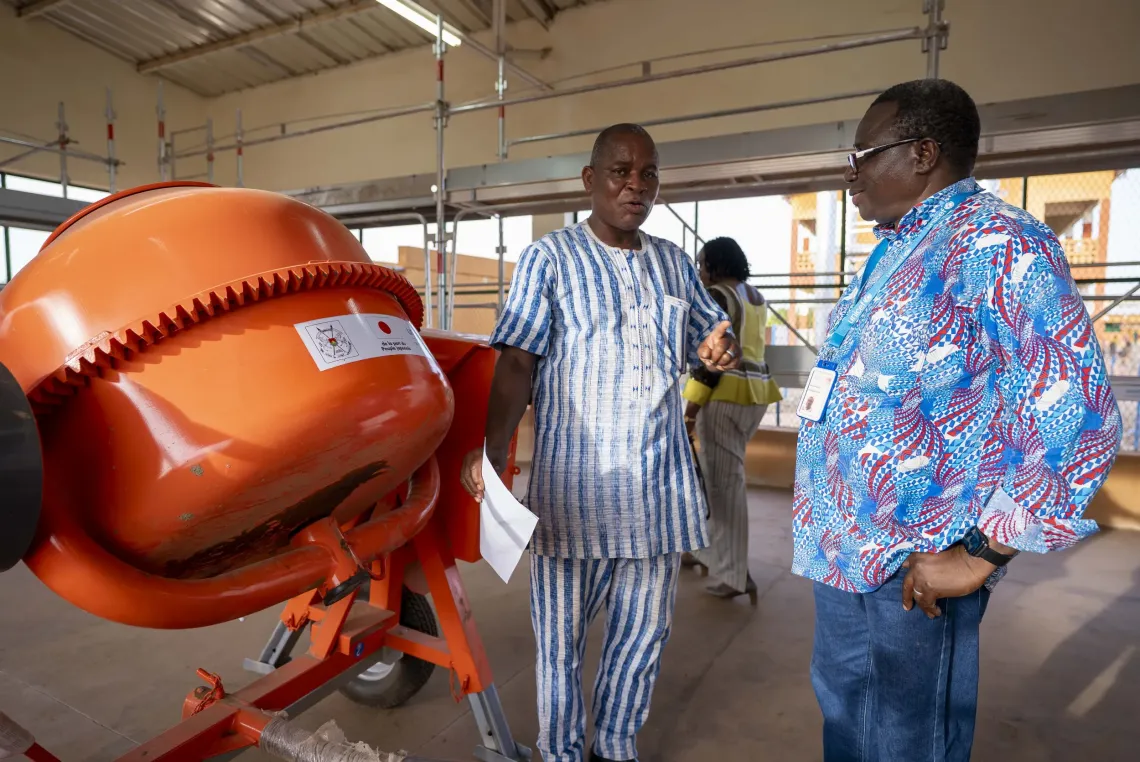
Koumdagnonré school offers a civil engineering stream, while other schools specialize in electrical engineering or mechanics. With access to laboratory materials, computers and technical equipment, adolescents and young people now have the opportunity to pursue pathways that lead to the jobs of the future.
“In a context marked by inadequate school infrastructure, demographic pressure and the effects of the security crisis, investing in education is not only a necessity, but an urgent priority. I thank the people of Japan for financing these schools, which combine general education with technical and vocational training for the benefit of thousands of children and adolescents in Burkina Faso,” said Abdoulaye Seye, UNICEF Deputy Representative.
In total, 234 teachers and 780 community members were trained in the use of technical equipment, participatory management and climate change adaptation, helping to advance quality education for children in Burkina Faso.