“I want to become a teacher”: Odette’s journey back to school after displacement.
Originally from Zongo, in the Kuilsé region of Burkina Faso, Odette and her family were forced to flee their locality because of insecurity.

- Français
- English
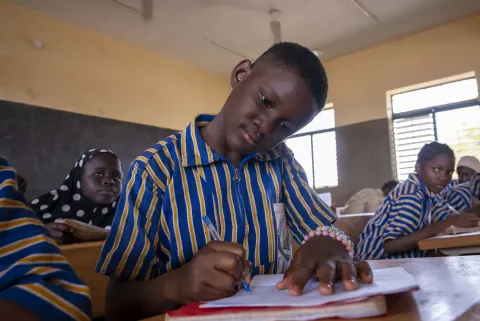
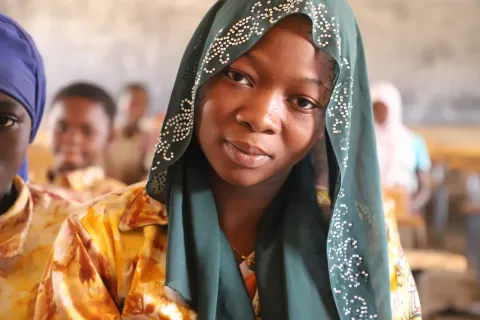
At just 12 years old, Sawadogo Odette speaks about her future with striking confidence. Seated among her classmates at the learning centre in Kaya, she carefully works through her mathematics exercises. When asked what she hopes to become, her response comes without hesitation:” After my studies, I would like to become a teacher and pass on my knowledge to children.”
Yet just a few months ago, that dream seemed out of reach.
Originally from Zongo in Burkina Faso’s Kuilsé Region, Odette and her family were forced to flee their community due to insecurity. Like many families affected by the crisis, they sought refuge in Kaya, far from their home and familiar surroundings. The displacement disrupted every aspect of their lives, and for a time, school was no longer part of Odette’s reality.
But the young girl never stopped believing in the importance of education.
“I thought school was important, and I asked my mother to enroll me,” she recalls.
Her mother, Sawadogo Neimata, remembers that difficult period clearly.
“We came from Zongo, and unfortunately, we had nothing to do- nor did our children. It was the desire for knowledge that motivated my child to attend the centre,” she explains.
This request from a determined little girl marked the beginning of a new journey.
Finding the path back to learning
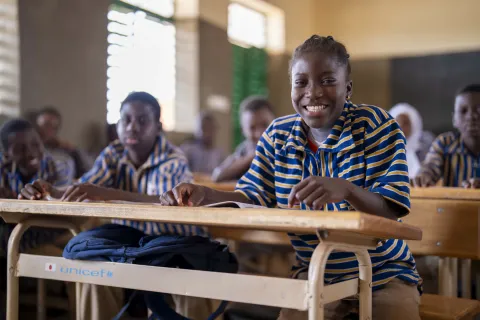
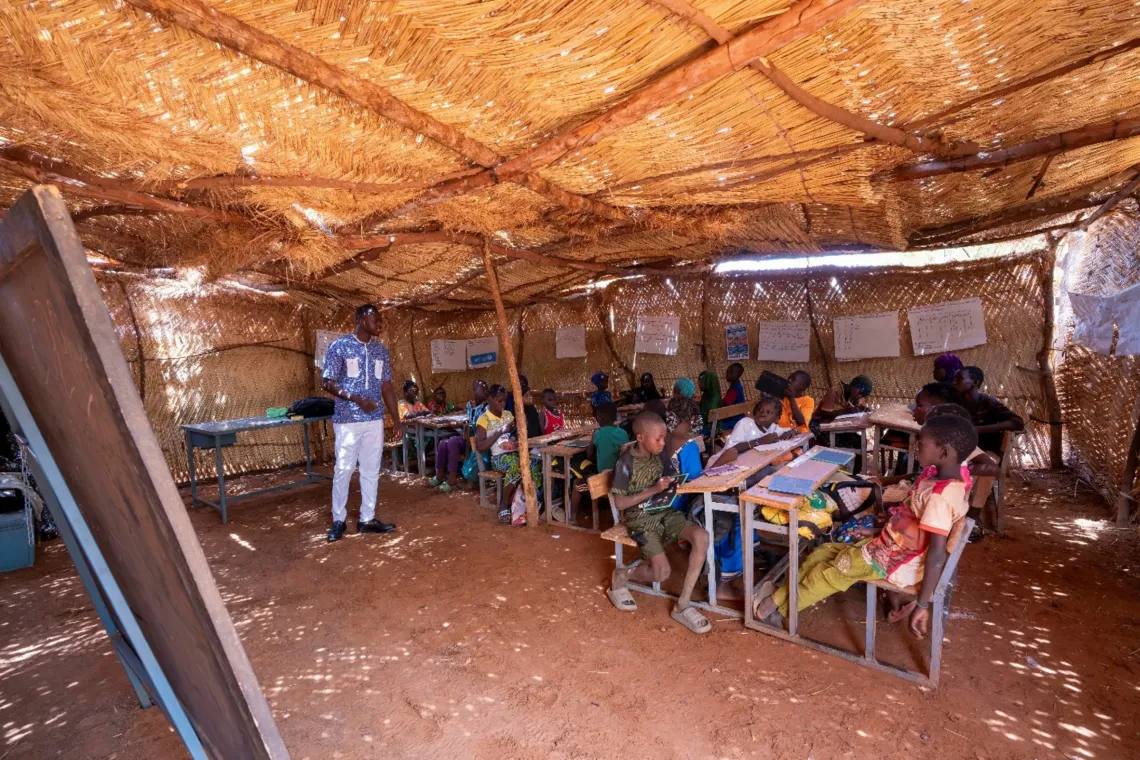
Nine months ago, Odette joined an Accelerated Schooling and Bridging Strategy (SSAP) centre, supported through the Multi-Year Resilience Programme funded by Education Cannot Wait (ECW) and the Government of Japan, and implemented with the support of the Ministry of Education, UNICEF and its partners. Designed for out-of-school children aged 9 to 12, as well as children whose education has been interrupted, the programme offers an accelerated curriculum before transitioning into formal education.
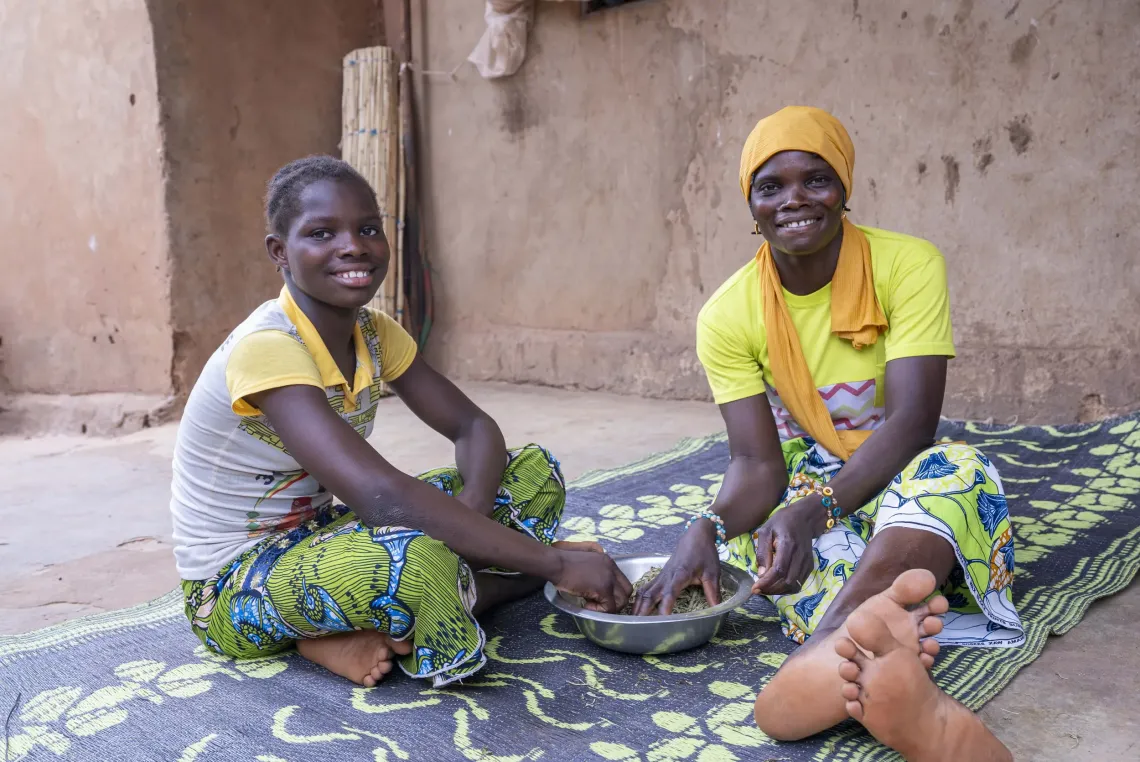
Today, Odette is in Grade CE1.
Every day, she learns French, Mooré, reading, mathematics and problem-solving, her favourite subject. Over the months, she has gained confidence and independence.
But the changes go far beyond academics. “At the centre, I have made friends. I am no longer worried, and I am no longer afraid,” she says. “I also receive guidance from my teacher, and I learn many new things.”
For her mother, the transformation is evident in everyday life. “Since she started attending the centre, Odette has changed,” says Naimata. “She is happy to learn. In the evenings, she reviews her lessons and shows me things that I did not know. I am proud of her, and we thank God.”
At the centre, Jean-Marc Ouedraogo works with children whose education has been disrupted by crises. “We enroll children who have dropped out of school, while others never had the opportunity to attend because of insecurity,” he explains.
“We support them so that, at the end of the programme, they can join CE2 and continue their education in the formal school system.”
According to him, the impact extends far beyond academic performance. “Children can now read, write and do calculations. Parents know where their children are during the day, which also contributes to their protection and safety” he explains.
Odette is part of a generation of children who refuse to let crisis define their future.
Education as a promise for the future
Like Odette, other children are finding hope again through education. At Bankieme Bangré School, also supported by the project, Sayouba Ouedraogo dreams of becoming a health worker so that he can care for others- knowing that education is the first step toward achieving that goal.
“I would like to become a health worker to treat people,” he says. “To become a health worker, I must work hard in school and listen to my parents and teachers.”
Today, their dreams are being supported through concrete investments in education.
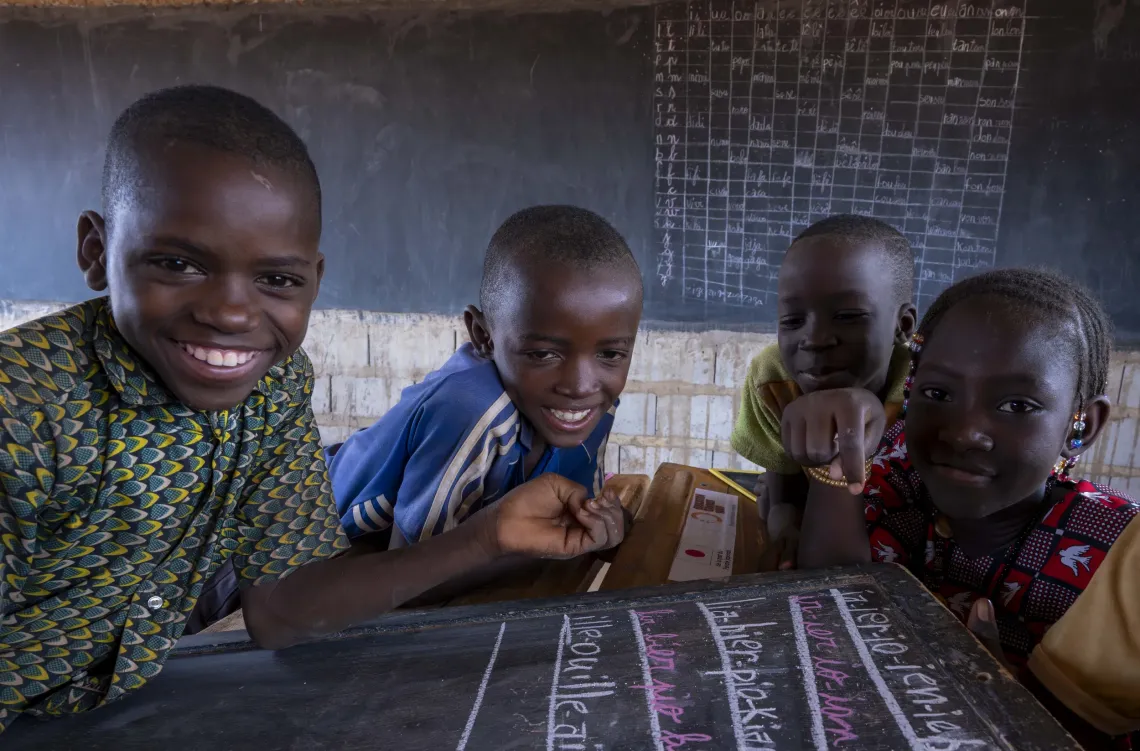
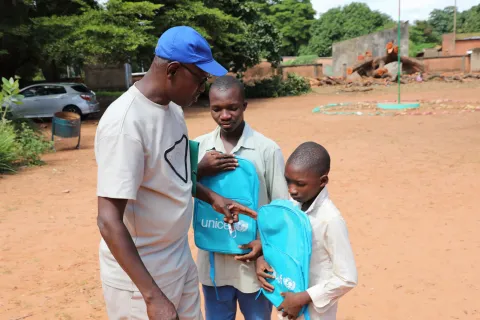
During the recent implementation period(November 2024-December 2025), the ECW programme enabled more than 24,800 crisis-affected children to access formal and non-formal learning opportunities. Support also included the distribution of school supplies, backpacks, exercise books and teaching materials, helping children learn in better conditions.
Odette understands the value of these opportunities.
“I would like to thank everyone who contributed by providing us with school bags, pens, desks, blackboards and many other items that make learning easier,” she says.
Her hard work is already paying off. Despite starting her education later than most children, she finished second in her class. This achievement reflects both her perseverance and commitment. Today, when she thinks about the future, Odette no longer focuses on displacement or the hardships of the past. She thinks about a classroom. She thinks about the children she hopes to teach one day. And she thinks about supporting her family through her future profession as a teacher. “With the money I earn, I will help provide for my family,” she says.
For Odette, returning to school was not only about resuming her education. It gave her the opportunity to build a future. Her story is a reminder that behind every statistic is a child who, once given the chance to learn, is also given the chance to dream again.