Catch up with out-of-school children by modeling Koranic schools in Burkina Faso
Modeling Koranic schools in Burkina Faso
- Français
- English
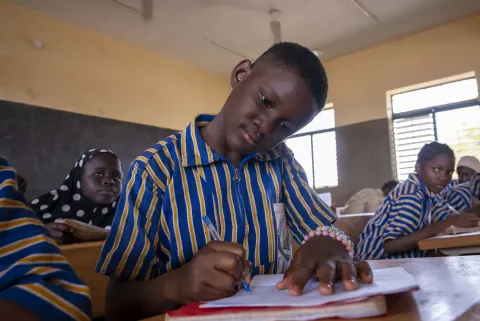
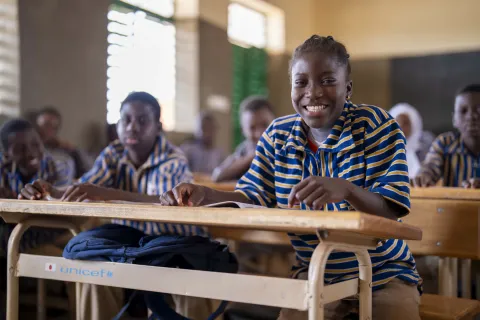
It is 9 a.m. The students of the Koranic school of Bagagnan Yacouba located in sector 13 of Ouahigouya have just returned to lessons barely an hour ago.
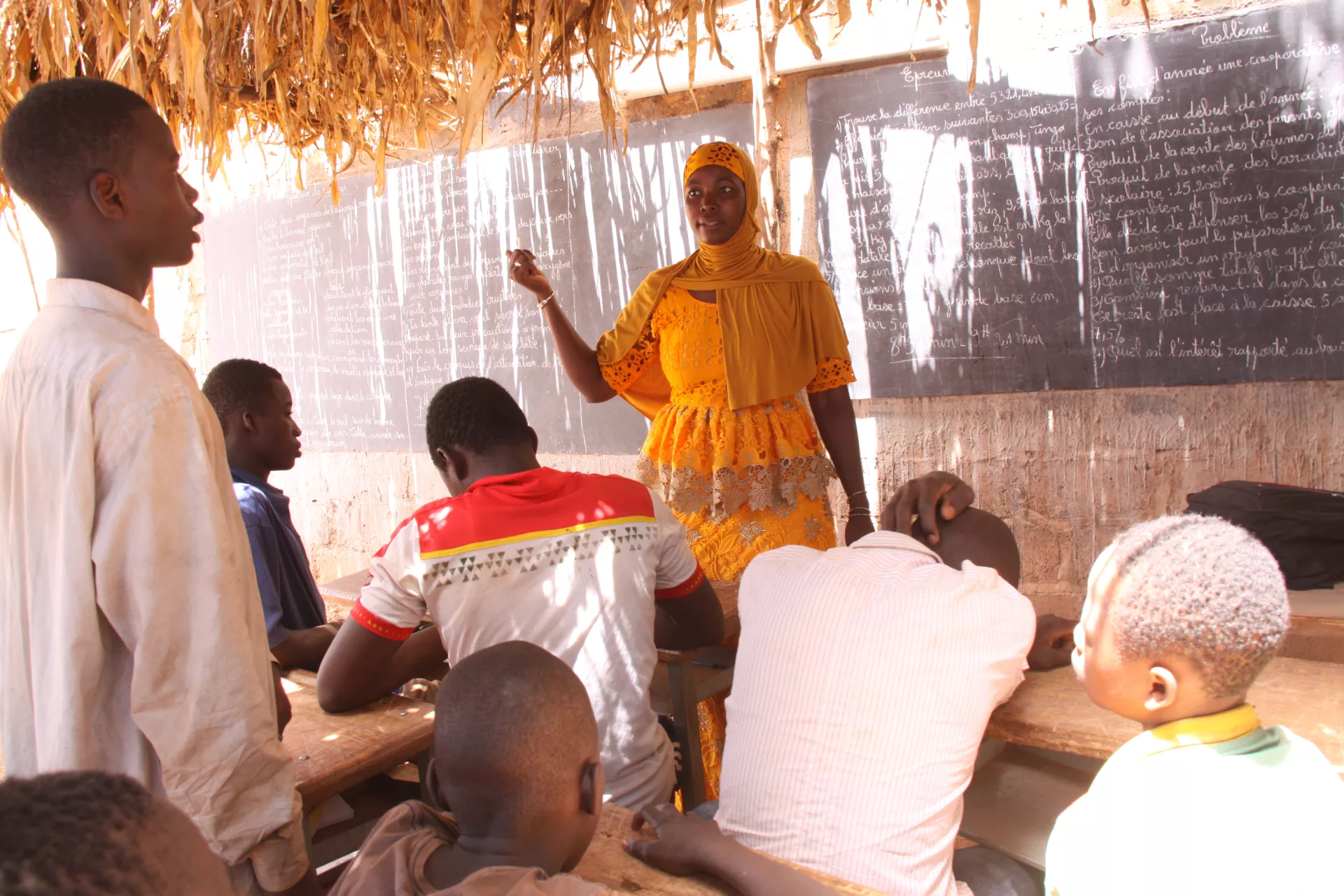
Ramata Diallo, chalk in hand, moves back and forth between the two wooden beams supporting the straw shed under which the students are seating. “Who can spell the word “cart”?”. No sooner has she finished her sentence when hands are raised to dispute the answer.
Two years ago, no one would have imagined a facilitator who, moreover, a woman administering a French lesson in a Koranic school whose main mission is to learn the Koran in Arabic. Yet, like Yacouba’s Koranic school, other Koranic schools in the city of Ouahigouya, in addition to learning the Quran in Arabic teaches French and many other modules to children.
According to Mr. Seni Sanfo, coordinator of the project and working for Association d'Aide aux Enfants et aux Familles Demunies (ADEFAD), an implementing partner of UNICEF, this is an accelerated education program adapted to Koranic schools in order to allow out-of-school children to integrate the normal school cycle. “It's a matter of fairness,” he said.
In fact, thanks to the support of UNICEF, an accelerated schooling strategy has been implemented with the ministry in charge of national education in the North region to integrate children who have not been educated into the school system. not the chance to go to school and who are the prime targets of recruitment of non-state armed groups which are present in the region.
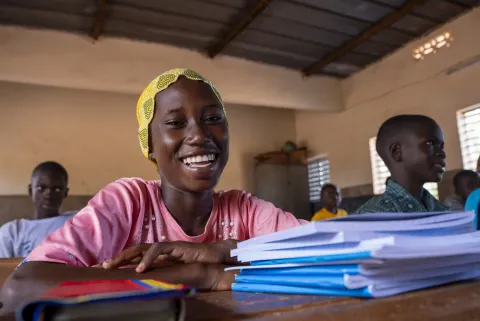
Nourou Sanfo Abdoul is 12 years old. Coming from Kongoussi, he was placed by his father to Yacouba Bagagna, a Koranic master living in sector 13. “I am learning to read the Koran. We are also taught French and Mooré, the local language. I am in my second year at this home and am passing the Primary School Certificate exam this year”, he says proudly.
Nourou is happy to be in the school where he learns to read the Koran with his comrades. Like Nourou, most of his comrades come from other regions like Koungoussi, Kaya, and even Ouagadougou. "I have been teaching the Koran to children for 23 years," said Yacouba, the Koranic master. But when I see my students today writing their own name in French or having a conversation, it makes me proud and happy. We must make God known through the teaching of the Koran but we must also give our children the skills to cope in our rapidly changing society "he confides.
The Koranic school has an enrollment of 29 students ranging in age from 10 to 16 years old. All children are under his responsibility. Two years ago, Yacouba decided to do some gardening not only to occupy the children but above all to face the loads of his school. Begging for him is certainly a source of income to provide for the needs of the children but he does not encourage it because according to him, this practice is not provided for anywhere in religious texts.
Then, from 7 am the young people go to the garden to work and then meet at 10 am for classical school lessons before starting to learn the Koran at 1 pm after lunch.
Ramata, the schoolteacher, was recruited by ADEFAD. She is in charge of a program of 3 classes for one year. Literacy in the Mooré language, the preparatory course program which concentrates the programs of grade 1, grade 2 and grade 3 and the program of grade 4, grade 5, and grade 6 for those who are in their second year of enrollment.
This year Ramata has the chance to lead her first cohort for the primary study certificate exam. She is confident but nevertheless remains realistic because it is on her first attempt.
For the provincial director in charge of national education, the strategy is a success. Classical school classes taught in Koranic schools not only help to strengthen learners' current life skills but also allow the content taught there to be monitored. In addition, education for peace and civic and moral instruction which are modules taught in the Koranic schools also contribute to the peace culture, tolerance, and social cohesion among learners.
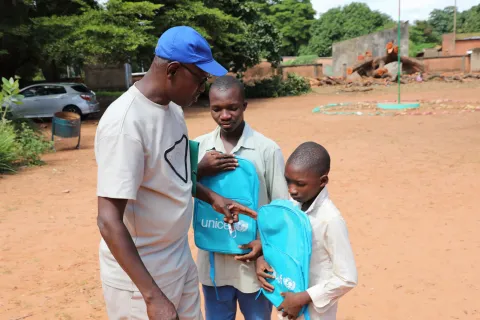
Regarding the security context, the improvement of Koranic schools must be integrated into a vision of reducing social crises. Thanks to Peace building fund UNICEF supports government initiatives through the training of 500 learners (talibés) in 20 Koranic schools in the northern region (Yatenga and Loroum provinces), of which 30% of girls are trained according to the curricula of the accelerated schooling strategy.