Svako dijete treba porodicu.
“Djecu izmjestiti iz institucija i osigurati im priliku da žive u svojim porodicama i porodičnom okruženju”

- Bosanski/Hrvatski/Srpski
- English
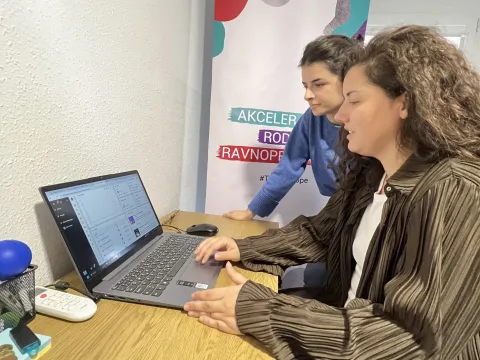
A two-day workshop entitled "Every child needs a family" organized by UNICEF Bosnia and Herzegovina in cooperation with the Ministry of Civil Affairs of Bosnia and Herzegovina, the Ministry of Health and Social Protection of the Republika Srpska and the Federal Ministry of Labor and Social Policy was held in Sarajevo on March 15 and 16.
Concrete proposals related to the prevention of children entering the system, the transformation of institutions for the placement of children, foster care and the strengthening of the capacity of employees in children's and social protection services were a result of the workshop and will be the basis of further work on the development of the final road map towards the transformation of social welfare institutions and the deinstitutionalization of children.
"We want society to have a realistic and complete picture of children growing up without parental care, we need you to believe in our potential, and that's why we want to be involved in decisions that concern us and are important for us, especially relating to education, health, employment, housing and other important issues. We want to participate in the decision-making about what is the best form of care, to strengthen our cultural identities. We ask that the importance of bonding with the environment and family of origin be promoted, that the rights of children and young people be respected regardless of where they live, and that the needs of each child be treated individually because we are all different individuals," said Bilal Kovačević, one of the participants, at the opening of the Workshop. and president of the Association for Children and Youth "Iuventus".
Jovanka Vuković, the deputy Ombudsman for children in Republika Srpska, also underlined the importance of children's participation in decision-making:
"We are professionals and we know that it is in the best interest of the child to participate in the decisions that concern them, per the UN Convention on the Rights of the Child, as well as in accordance with their age and maturity, and this is possible even if it does not seem so at first if we have top psychologists who will reach out to find out what the child wants. Practice shows that this does not always happen, that the child's opinion about things that concern them should be voiced somewhere, and that this is their basic right".
Biljana Čamur - Veselinović from the Ministry of Civil Affairs of Bosnia and Herzegovina emphasized that it is necessary to "continue to empower communities, families, professionals, foster parents and potential adoptive parents so that they can, through their decisions and actions, support the right of every child to live in a family, and above all in their own family."
"Our common priority is protecting the best interests of the child, preventing the separation of the child from their family, and that only if necessary and is in the best interest of the child, we promote the right that the child should be placed in a family form of alternative care. The guidelines also recommend the concept of a comprehensive deinstitutionalization strategy, in which we see the need for further joint work," said Biljana Čamur - Veselinović, underlining that it is important to "keep the reform of the protection of children without parental care and families at risk of separation in the focus of decision-makers at all levels of government .”


UNICEF consultant Natia Partskhaladze said that it is especially important to have all the key actors who work daily on the ground for the betterment of children and their families in one place:
"No one knows better than you how important families are in children's lives, for their development and opportunities. I sincerely believe that this meeting, as well as everything you do in your organization, contributes to that. Our goal is to once again help each other better understanding why it is so important to contribute to the reform of the child protection system in Bosnia and Herzegovina and why it is important to move children from institutions and ensure they have the opportunity to live in their families and family environment, and all this the work will result in a road map that will summarize the priorities based on which action plans can later be developed to implement the road map in the future".
"UNICEF, together with the EU and numerous partners, has been supporting governments and civil society in this region for a long time to move away from large institutions for children towards family and community care systems. These reforms are complex but directly contribute to the improvement of childcare and social protection systems. Our goal today is to learn about the achievements during the last phase of child protection reform, to hear you, your advice and recommendations, your lessons learned through that process, and to hear key recommendations from key stakeholders for our next steps in the reform. In Bosnia and Herzegovina, we need a common vision for the reform of child protection, and I hope that we will succeed in developing a road map for the deinstitutionalization of children and the strengthening of family and community services", said Veronika Vashchenko, deputy representative of UNICEF BiH.
The head of the department for the development of social activities in the EU Delegation to Bosnia and Herzegovina, Gianluca Vannini, underlined the support of EU processes:
"It is very important that Bosnia and Herzegovina, as a candidate country for the EU, makes all necessary efforts to end institutionalization. We have a common goal to find out what works and what doesn't work in this process. We must be able to recognize and understand the problem and make additional efforts to continue the reform. The EU is here to support authorities in providing equal access to rights and services for all. We need to work together, in the best interest of all citizens", said Gianluca Vannini, adding that four key priorities in Bosnia and Herzegovina have been defined:
“Preventing the separation of children from their parents and families whenever possible is key. More investment is needed to provide support services for children and families. Second, children who cannot be raised in their own family and for whom an alternative family environment has not been prepared can be placed in institutional care, but this should only be used as a last resort and a temporary measure, and more institutions are needed to provide care in the family and community, especially foster homes, and homes for smaller groups. The third is ending the sending of children under the age of three and children with disabilities to institutional care. Fourth, related to the parliaments and their members, who can and should be among the champions of raising awareness and advocating for the realization of the right of every child to grow up in a family environment".